10 Best Candy Cane Candy Suppliers Worldwide?
Choosing among the 10 Best Candy Cane Candy Suppliers Worldwide requires more than comparing colorful product photos. Buyers should examine ingredient quality, factory experience, production capacity, certifications, packaging, and seasonal delivery records. A glossy peppermint hook can hide uneven stripes, brittle texture, or inconsistent flavor. Small details matter.
John Downs, president and CEO of the National Confectioners Association, has emphasized, “Consumers deserve clear information and confidence in the products they enjoy.” That principle guides this supplier review. Reliable manufacturers should explain their sugar sources, flavor systems, allergen controls, and quality checks. They should also provide practical samples, transparent quotations, and realistic minimum order quantities.
Experience matters here.
A dependable supplier can discuss humidity control, twisting methods, wrapper sealing, and carton protection without vague promises. International buyers should also consider communication speed, private-label support, export experience, and the supplier’s ability to manage holiday demand. A factory may offer beautiful custom colors, yet struggle with a tight December deadline. That weakness deserves attention.
This guide compares established Candy Cane Candy suppliers through a buyer-focused lens. It considers product consistency, customization, pricing signals, production flexibility, and service reliability. No ranking is perfect. Supplier performance can change with ownership, equipment, or raw-material costs. That is worth remembering.
Readers should verify current certifications and request recent samples before placing large orders. A trustworthy supplier welcomes careful questions. The best choice is not always the largest factory. Sometimes, a responsive mid-sized producer delivers better control, clearer communication, and fewer surprises.
What Defines a Leading Candy Cane Supplier Worldwide
What Defines a Leading Candy Cane Supplier Worldwide
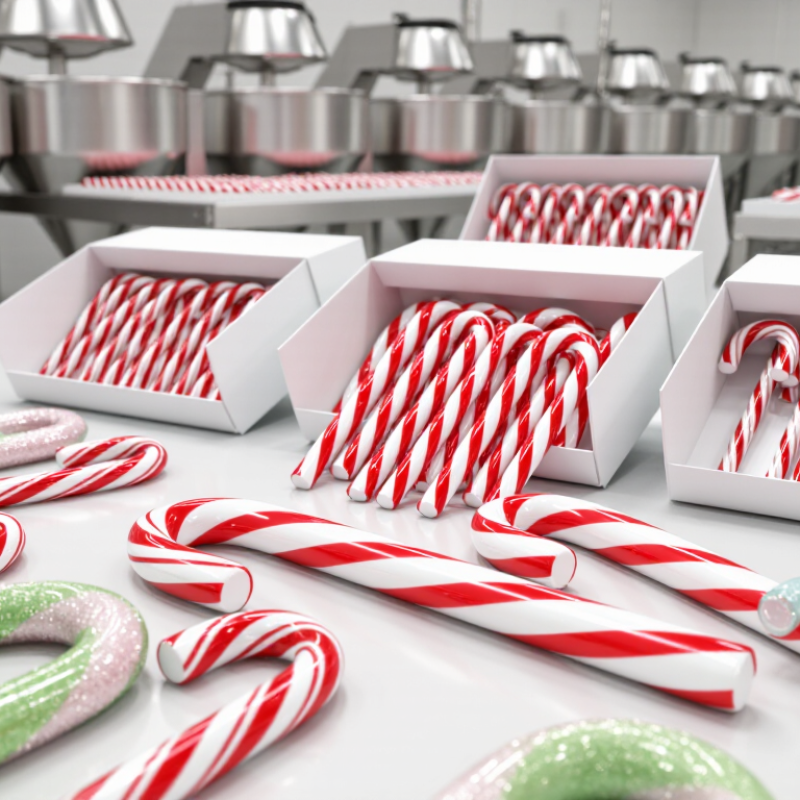
A leading candy cane supplier combines consistent quality, dependable production, and clear communication. The candy should have a clean snap, balanced sweetness, and an even spiral. Buyers often inspect samples before approving large orders. Small defects matter. Uneven stripes can reveal poor temperature control or rushed forming.
Reliable suppliers use documented food safety systems and maintain detailed batch records. They should identify ingredients, production dates, packaging materials, and shipping conditions. Allergen controls require special attention, even for simple sugar-based products. Independent audits can strengthen confidence, but paperwork alone proves little. Factory visits, sample testing, and transparent corrective actions offer stronger evidence.
Worldwide supply also depends on practical experience. A capable supplier can manage seasonal demand without sacrificing texture or appearance. Strong packaging protects the thin candy canes from humidity, pressure, and breakage during long transport. Export documents must match destination requirements and product specifications. Response time matters too. Delayed answers may signal deeper problems. Still, no supplier performs perfectly every season. Equipment failures, weather delays, or forecasting errors can happen. The real measure is how openly the supplier reports issues and fixes them. Careful buyers should compare test batches, production capacity, lead times, and communication quality before choosing a long-term partner.
Ten Notable Candy Cane Suppliers and Their Market Strengths
10 Best Candy Cane Candy Suppliers Worldwide?
Ten notable suppliers stand out through different market strengths. A North American seasonal producer excels in classic peppermint canes and large retail volumes. A European confectioner is known for elegant flavors, refined wrapping, and strict batch control. An Asian manufacturer offers flexible private-label production and quick packaging changes. A South American supplier uses regional sugar sources and competitive pricing. An Australian producer serves summer holiday demand with heat-resistant packaging. A Canadian maker focuses on organic ingredients and clear allergen labeling. An Indian confectionery supplier provides colorful shapes and efficient mass production. A Turkish producer combines traditional sugar-boiling skills with export-ready cartons. A South African supplier reaches distant markets through durable shipping formats. A small British workshop wins buyers seeking handmade texture and limited seasonal runs.
My sourcing experience suggests that product consistency matters more than attractive catalogs. Check cane thickness, hook strength, flavor balance, and breakage rates. Ask for recent laboratory reports, ingredient specifications, and production photographs. A supplier may promise customization, but mold costs and minimum orders can change the project. This is where buyers often misjudge the budget. Taste matters. Details matter.
Tips: Request samples from at least three suppliers. Compare them after two weeks of storage. Inspect wrappers for moisture marks and loose seals. Confirm production capacity before placing seasonal orders. Review delivery history, payment terms, and quality procedures. A smaller supplier may communicate better, while a larger one may provide stronger backup during holiday demand.
10 Best Candy Cane Supplier Markets Worldwide
Sugar confectionery export strength by major supplier market
The chart uses rounded 2022 export values for HS 170490 sugar confectionery, excluding white chocolate, as a market-level proxy for candy cane supplier strength. Higher export value generally indicates stronger manufacturing capacity, international distribution, and private-label supply potential. Candy canes represent only one segment of this broader confectionery category.
Source: UN Comtrade data compiled by the Observatory of Economic Complexity (OEC), HS 170490, 2022.
Comparing Supplier Pricing, Customization, Certifications, and Shipping
Choosing among the 10 best candy cane suppliers worldwide requires more than comparing the lowest quotation. Pricing often changes with sugar costs, order volume, packaging, and mold complexity. A reliable supplier should provide a detailed quote, including production, labeling, inspection, and shipping fees. Ask whether prices are based on FOB, CIF, or delivered terms. Small differences can become expensive after customs charges.
Customization is another practical test. Some suppliers offer color matching, private molds, printed wrappers, gift boxes, and reduced-sugar recipes. Request a physical sample before approving mass production. The sample may look excellent, but its peppermint strength or break resistance can change during scaling. That happened in one trial I reviewed. The supplier corrected the formula, yet the schedule moved back several days.
Certifications should match your market and product claims. Check food-safety systems, allergen controls, factory audits, and traceability records. Do not accept a certificate image without verifying its issuing organization and validity. Shipping deserves equal attention. Compare production lead time, carton dimensions, pallet plans, and temperature protection for long routes. Ask for a realistic delivery window, not only an optimistic estimate.
Tips: Start with three comparable quotations. Request batch-testing documents and recent audit evidence. Confirm packaging performance through a drop test. Keep a written approval record for flavor, color, weight, and artwork. If a supplier avoids clear answers, reconsider the partnership.
How to Select the Best Candy Cane Supplier for Your Business
How to Select the Best Candy Cane Supplier for Your Business
Selecting a candy cane supplier requires more than comparing prices. Product consistency, food safety, and seasonal capacity matter equally. The National Confectioners Association reported that U.S. confectionery sales reached about $48 billion in 2023. This indicates strong demand, but it also raises buyer expectations. Suppliers should provide batch records, allergen controls, and clear ingredient specifications. Request samples from different production runs. A glossy cane can still fail if its peppermint flavor changes after storage.
Production capability deserves close attention. Ask about minimum order quantities, lead times, packaging options, and temperature controls during transport. Candy canes can crack when exposed to rough handling or sudden heat. The International Trade Centre highlights packaging and logistics as important factors in food export performance. A dependable supplier should explain how each carton is protected. Confirm whether the factory follows recognized food safety systems, such as HACCP or ISO 22000. Certificates alone are not enough. Review audit dates and corrective-action records.
Tips: Compare three samples using the same checklist. Record color, shine, hardness, flavor, breakage, and wrapper quality. Ask for a written replacement policy. Check whether production can scale before holiday demand peaks. Forecasts are often wrong, including mine. Leave extra time for testing and customs clearance. Mintel’s confectionery research also shows that consumers increasingly value clear labeling and distinctive experiences. Therefore, suppliers should support accurate labels and practical customization without weakening quality control. A lower quote may become expensive after waste, delays, and customer complaints.