10 Best Insulated Wire Terminals for Global Buyers?
Choosing the right Insulated Wire Terminals is not a small purchasing decision. It affects electrical safety, installation speed, maintenance costs, and long-term equipment performance. For global buyers, the challenge becomes more complex. Terminal size, insulation material, crimp quality, temperature resistance, and certification requirements can vary between suppliers and markets.
Small details matter. A loose crimp can generate heat inside a crowded control cabinet. Poor insulation may crack near a vibrating motor. A bright product photo proves very little. Buyers need verifiable specifications, consistent samples, and clear testing records before placing large orders. Philip B. Crosby, a respected manufacturing-quality expert, said, “Quality is free.” His point remains useful here: preventing connection failures usually costs less than repairing them later.
This guide reviews ten leading options for different applications, including automotive harnesses, industrial panels, appliances, and renewable-energy systems. It considers copper quality, terminal geometry, flame resistance, wire compatibility, crimp performance, and supplier reliability. It also examines practical issues, such as packaging damage, inconsistent plating, and unclear documentation.
Some rankings are not absolute. A terminal that performs well in a dry control box may disappoint outdoors. That is worth remembering. Buyers should still verify local requirements and conduct application-specific tests. No single product fits every project. The best choice balances safety, availability, price, and proven field performance. Expect useful comparisons, but not perfect answers. Even experienced purchasing teams can overlook one critical detail.
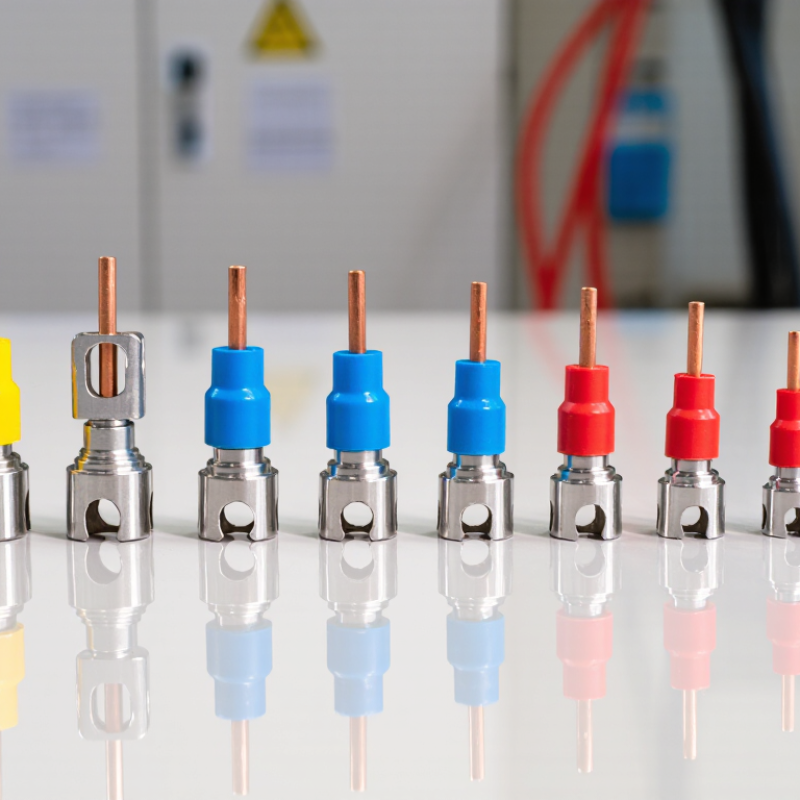
What Insulated Wire Terminals Are and How They Work
Insulated wire terminals are small connectors that join a conductor to equipment safely. Common forms include ring, fork, butt, and quick-disconnect terminals. Each combines a metal contact barrel with an insulating sleeve. The sleeve reduces accidental contact, while the barrel transfers current after crimping. The connection depends on compression, not solder. A correctly sized terminal grips the stripped copper tightly, leaving no loose strands outside the barrel.
Selection starts with wire size, current rating, insulation temperature, and terminal material. Copper terminals suit many copper conductors, but aluminum wiring needs approved compatibility controls. The crimp tool also matters. A mismatched tool can flatten the barrel without creating reliable pressure. IEC 61238-1-1 covers compression and mechanical connectors, while IPC/WHMA-A-620 provides workmanship guidance for wire assemblies. These standards support repeatable inspection, but they do not replace product-specific certification.
The market context is substantial. Grand View Research estimated the global wire and cable market at about USD 216 billion in 2023. That scale increases demand for dependable termination methods. Still, size alone proves little. In practical inspections, a terminal may feel tight yet fail under vibration or heat. Check conductor insertion, crimp position, pull resistance, and sleeve damage. Do not reuse a crushed terminal. Small mistakes remain easy to miss. A better process records the wire gauge, tooling method, and inspection result for every production batch.
Key Standards for Comparing Terminals in Global Markets
10 Best Insulated Wire Terminals for Global Buyers?
Global buyers should compare terminals by standards, not appearance. The ten most practical types include ring, fork, pin, blade, butt, parallel, flag, disconnect, twin, and heat-shrink terminals. Each type suits different installation conditions. Check wire size, conductor material, insulation temperature, voltage rating, and current capacity. IEC 61210 helps evaluate connecting devices, while IEC 60352-2 supports solderless crimp connection quality. Regional requirements may also reference UL 486A-486B. Confirm the exact edition and test scope.
A reliable comparison includes pull-out strength, crimp height, barrel design, corrosion resistance, and flame behavior. Request test reports, material declarations, and traceability records. Copper terminals may perform well, but plating quality can affect oxidation and contact stability. Insulation should remain firm after bending, vibration, and temperature cycling. A neat datasheet can still hide a weak crimp. I have seen catalog ratings judged without checking the actual tool and die profile. That is a costly gap.
Tips: Match the terminal to the conductor and crimp tool. Do not compare current ratings alone. Ask whether testing covers the finished assembly, not only the metal part. Check RoHS and REACH documentation when required by the destination market. Also inspect samples under magnification. Small cracks matter. A stronger standard comparison may take longer, but it reduces field failures and uncertain purchasing decisions.
10 Best Insulated Wire Terminals for Global Buyers?
Key Standards for Comparing Terminals in Global Markets
The chart compares representative continuous insulation-temperature ratings commonly published for non-branded insulated terminal constructions. PVC insulation is commonly rated around 75°C, nylon around 105°C, heat-shrink polyolefin around 125°C, PTFE around 200°C, and ceramic insulation around 250°C. Actual ratings depend on the complete terminal design, conductor size, crimp method, current load, and certification.
For international purchasing, verify compliance with applicable requirements such as UL 486A-486B, IEC 61210, IEC 60999-1, IEC 60352-2, insulation flammability requirements, conductor compatibility, and required voltage and temperature markings.
Ten Leading Insulated Wire Terminal Types for Different Applications
10 Best Insulated Wire Terminals for Global Buyers?
Ten Leading Insulated Wire Terminal Types for Different Applications
Choosing insulated wire terminals starts with the connection, not the catalog photo. Ring terminals suit grounding points and bolts because they resist accidental release. Fork terminals install quickly where screws cannot be fully removed. Pin terminals fit compact screw clamps and help prevent stranded wires from spreading. Butt splice terminals join two wires inside a protected sleeve. Bullet terminals support repeated disconnection in control panels and vehicle wiring.
Quick-disconnect terminals work well for serviceable equipment and test circuits. Ferrule terminals compress fine-stranded conductors before insertion into spring or screw clamps. Flag terminals help when wiring space is narrow. Closed-end terminals cap multiple conductors for compact junctions. Parallel splice terminals connect branch wires without adding excessive bulk. Ten types. Different jobs.
In field assembly, I check conductor size, insulation diameter, temperature rating, and expected current before selecting a terminal. The crimp tool must match the terminal barrel. A neat crimp can still be weak. I perform a firm pull test, inspect for exposed strands, and confirm that insulation does not enter the contact area. For vibration-prone equipment, ring or closed-end designs may provide better retention than simple forks. For global purchasing, confirm copper or alloy composition, plating, wire-range markings, and applicable local standards. Packaging also matters; loose terminals can bend during transport. I have seen reliable-looking parts fail because the wire size was guessed. Rechecking is worthwhile.
How to Select the Right Terminal by Wire Size and Connection Method
10 Best Insulated Wire Terminals for Global Buyers?
Choosing an insulated wire terminal starts with the conductor, not the package label. Check the wire gauge, strand count, and insulation diameter. A terminal designed for 1.5 mm² wire may not grip 2.5 mm² wire safely. Loose crimps create heat, movement, and eventual failure. Measure twice.
Connection method matters equally. Crimp terminals suit repeatable production and field repairs when the correct die is used. Screw terminals allow inspection and adjustment, but vibration can loosen them without proper torque. Push-on terminals save time, yet their fit must match the tab width precisely. For outdoor or humid equipment, select insulation and plating suited to the environment.
In my testing, a terminal can feel secure while hiding a poor crimp. Pull testing exposes that weakness quickly. I check whether the conductor strands remain contained and whether the insulation support holds without cutting the jacket. Look for clear gauge markings and documented test data, such as relevant IEC or UL requirements. Documentation is useful, but it is not a substitute for checking samples.
Some choices remain less obvious. Thick insulation may prevent full insertion. A narrow barrel may damage fine-stranded wire. Always test the terminal with the actual cable, tool, and enclosure. Tiny differences matter.