
2026 Best Ancoo Rice Color Sorter for Global Buyers?
The 2026 search for the best Ancoo Rice Color Sorter begins with a practical question: what does “best” mean in a real mill? It may mean cleaner rice, lower rejection, stable throughput, or easier maintenance. Buyers should measure all four.
The global rice market is large and quality-sensitive. USDA’s Rice Outlook estimated 2024/25 world milled-rice production at approximately 537.8 million metric tons. FAO’s rice data also shows sustained demand across Asia, Africa, and other importing regions. These volumes increase pressure on processors to remove chalky grains, yellow kernels, black spots, stones, and foreign materials consistently. A color sorter works like a vigilant inspection line, checking grains as they fall through a narrow stream of light.
Dr. S. K. Jha, a rice-processing specialist associated with India’s ICAR research community, has stated, “Quality control must protect both the grain and the consumer.” That principle matters when evaluating an Ancoo Rice Color Sorter. Reported specifications are useful, but they are not enough. Field tests, sample rejection rates, air consumption, software response, and after-sales support deserve equal attention. No sorter removes every defect.
Buyers should request trials using their own rice varieties, moisture levels, and impurity profiles. A machine that performs well in a showroom may behave differently beside a dusty mill. The most reliable decision combines published data, operator experience, and transparent supplier evidence. Some conclusions will remain uncertain. That is worth acknowledging.
Ancoo Rice Color Sorter: Definition, Purpose, and Core Functions
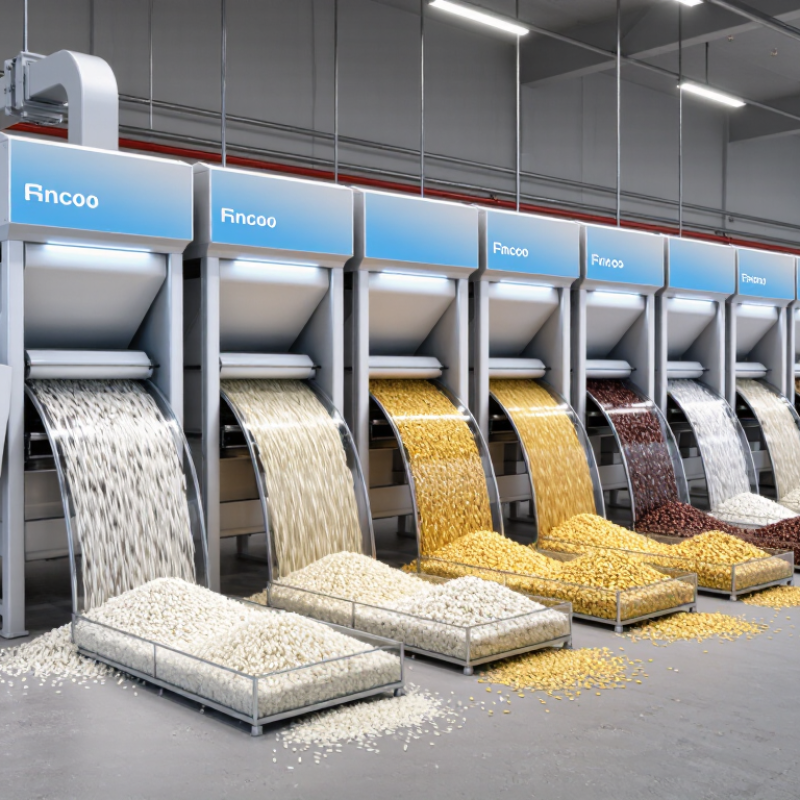
A rice color sorter is an optical inspection machine for removing discolored, damaged, immature, or foreign grains. It uses cameras, LED lighting, software, and air ejectors. Clean rice needs stable color and consistent appearance. The machine identifies small visual differences at high speed. Its purpose is quality control, not simple cleaning. In practical mills, operators also adjust settings for variety, moisture, and grain shape.
The USDA Foreign Agricultural Service estimated global milled rice production at over 530 million metric tons in recent outlooks. Even a small defect rate can create significant commercial losses at this scale. FAO’s Food Outlook also links rice quality with food processing efficiency, trade value, and consumer acceptance. A modern sorter supports these goals by separating off-color kernels and reducing repeated manual inspection. It can improve yield, but only when calibration remains accurate.
Details matter. Dust on the lens can weaken detection. Poor lighting can create false rejects. A trained operator checks rejected grains, sample trays, and air pressure during production. The process needs evidence, not guesswork. No sorter is infallible. Borderline grains may still escape or be rejected unnecessarily. Buyers should compare removal accuracy, recovery rate, throughput, service response, and software flexibility. Independent tests under real operating conditions are more reliable than brochure claims. unerquicklich
2026 Best Ancoo Rice Color Sorter for Global Buyers? - Ancoo Rice Color Sorter: Definition, Purpose, and Core Functions
| Evaluation Dimension | Definition or Typical Data | Core Function | Importance for Global Buyers |
|---|---|---|---|
| Product Definition | An optical sorting machine that identifies and removes rice kernels with unwanted color, appearance, or foreign-material characteristics. | Separates acceptable kernels from defective kernels on a continuous production line. | Clarifies that the equipment is a quality-control system, not a substitute for milling, drying, or grading equipment. |
| Primary Purpose | To improve the visual uniformity, cleanliness, and market grade of milled rice. | Removes discolored, immature, chalky, mold-affected, damaged, and other visually distinguishable kernels. | Supports export specifications, retail appearance requirements, and consistent product quality. |
| Detection Technology | Digital line-scan cameras are commonly used; RGB imaging detects visible color differences, while near-infrared detection may support material differentiation in selected applications. | Captures and analyzes the appearance of individual kernels as they pass through the inspection zone. | Buyers should match the sensor configuration to the target defects rather than selecting by camera count alone. |
| Ejection Method | High-speed pneumatic air jets are widely used to divert rejected kernels into a separate outlet. | Activates a precisely timed air pulse after a defect is detected. | Stable compressed air quality and correct timing are essential for sorting accuracy and low product loss. |
| Typical Target Defects | Yellow kernels, black or brown spots, red rice, chalky grains, immature grains, damaged kernels, husk fragments, and selected foreign materials. | Detects defects according to programmed color, shape, brightness, size, or material-contrast thresholds. | The practical defect list should be confirmed using representative samples from the buyer’s own rice supply. |
| Throughput | Commercial systems commonly cover approximately 1–20 tonnes per hour per machine, depending on machine configuration, rice type, defect load, and quality target. | Processes a continuous stream of rice while maintaining separation between accepted and rejected material. | Capacity should be selected according to actual line flow, peak-season demand, and the required number of sorting passes. |
| Sorting Passes | One-pass sorting is used for moderate defect levels; multiple passes or cascade arrangements are used for stricter quality targets or heavy contamination. | Balances recovery rate, reject purity, and final product appearance. | A higher-capacity machine is not always better if the process requires several controlled sorting stages. |
| Feed Preparation | Rice should normally be clean, free-flowing, and sufficiently separated into a thin, stable stream before optical inspection. | Reduces overlapping kernels, dust interference, and unstable feeding conditions. | Pre-cleaning, destoning, aspiration, and proper elevators can significantly affect real-world performance. |
| Compressed-Air Requirement | Many pneumatic sorters operate with plant air commonly supplied around 0.4–0.8 MPa, subject to the equipment specification. | Provides the air pulses required to remove defective kernels. | The air system should include suitable filtration, drying, pressure control, and sufficient flow capacity. |
| User Interface | A digital control panel typically provides recipe storage, sensitivity adjustment, channel monitoring, alarm displays, and production parameter settings. | Allows operators to configure and monitor sorting parameters without manually adjusting each channel. | Multilingual controls, remote diagnostics, and operator training are valuable for international installations. |
| Performance Indicators | Key indicators include removal efficiency, accepted-product recovery, reject purity, false-reject rate, throughput, and compressed-air consumption. | Measures whether the machine achieves the required quality level without excessive loss of good rice. | Buyers should request test results based on their own samples and agreed operating conditions. |
| Maintenance Requirements | Routine tasks include cleaning lenses and chutes, checking air filters, inspecting ejectors, removing dust, and verifying calibration. | Maintains stable optical sensitivity, air-jet timing, and product flow. | Easy access to wear parts, local technical support, and spare-parts availability reduce downtime. |
| Buyer Validation Method | Use representative samples and compare throughput, defect-removal rate, good-rice recovery, reject purity, energy use, and service requirements. | Confirms whether the sorter meets the buyer’s actual rice variety, defect profile, and production conditions. | A sample-based acceptance test is more reliable than comparing headline specifications alone. |