Cuddon Freeze Dry Logo

2026 Top Chemical Fertilizer Types for Global Buyers?

Choosing the right Chemical Fertilizer in 2026 means matching nutrients to crops, soils, and local growing conditions. Global buyers will encounter nitrogen products such as urea, phosphate fertilizers, potash, balanced NPK blends, and specialty options. Each serves a different purpose. A bag marked 15-15-15, for example, offers equal proportions of nitrogen, phosphate, and potash by label—not a universal recipe for every field.

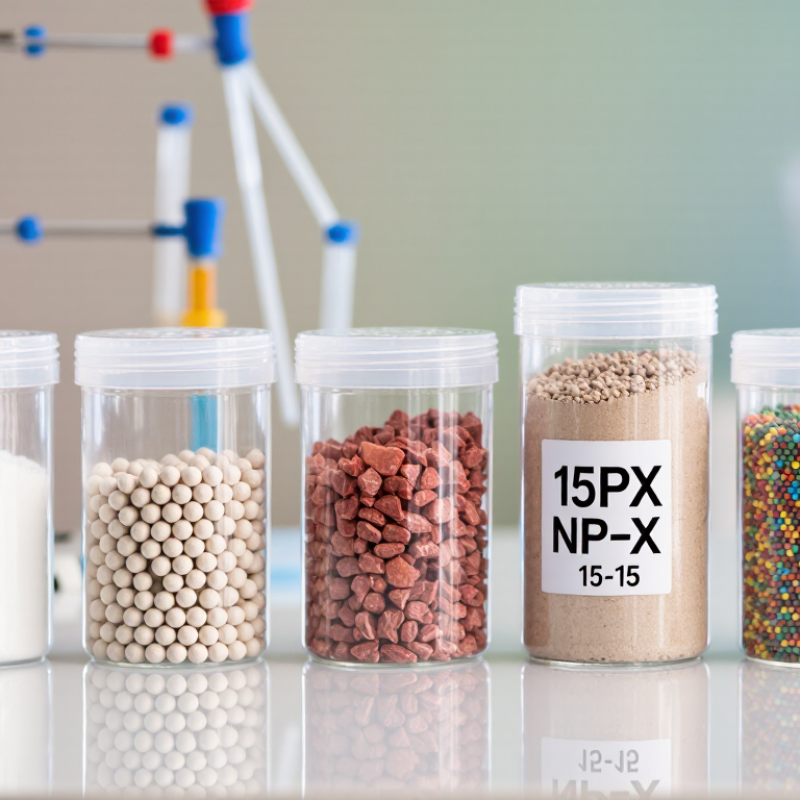
Nobel Prize-winning agronomist Norman Borlaug said, “You can’t build a peaceful world on empty stomachs and human misery.” His words frame the stakes, but fertilizer alone cannot secure food production. Buyers also need to examine nutrient grades, physical form, solubility, packaging, and independent quality documentation. A white prill in a sample jar may look consistent; the certificate of analysis helps confirm what it contains. Supplier reliability and delivery timing matter, too.

This guide compares leading fertilizer types and explains where each may fit. It also considers practical trade-offs, from bulk commodity pricing to specialty products designed for specific application methods. No ranking works everywhere. Soil tests, crop needs, climate, and handling capacity can change the best choice. That is easy to overlook. A neat global shortlist may simplify purchasing, but local evidence should have the final say.

2026 Top Chemical Fertilizer Types for Global Buyers?

What Chemical Fertilizers Are and How They Supply Plant Nutrients

Chemical fertilizers are manufactured or refined materials that deliver plant nutrients in measured forms. Their main nutrients are nitrogen, phosphorus, and potassium, often listed as N-P-K on a product label. Nitrogen supports leafy growth, phosphorus helps roots and energy transfer, while potassium supports water regulation and stress tolerance. Some products also supply sulfur, calcium, magnesium, or micronutrients. The nutrient form matters: roots may take up nitrogen as nitrate or ammonium, while phosphorus often moves slowly through soil.

These products supply nutrients, but they do not create fertile soil by themselves. Water dissolves many fertilizer granules, carrying nutrients toward roots; soil microbes and chemistry can alter what remains available. A field with pale leaves may suggest nitrogen shortage, yet drought or damaged roots can cause similar symptoms. That distinction matters. A label is not a soil test.

The International Fertilizer Association’s 2024 outlook estimated global fertilizer consumption at about 200.5 million tonnes of nutrients in 2023/24, roughly 4% above the previous year. This figure describes total nutrient use, not a recommended rate for an individual farm. A practical decision starts with soil analysis, crop needs, and local conditions. Even then, timing is imperfect: heavy rain after application can move soluble nutrients away from roots, while late application may miss the crop’s demand. The useful question is not simply which fertilizer is strongest, but which nutrient is missing, in what amount, and when the crop can use it.

2026 Top Chemical Fertilizer Types for Global Buyers: What They Are and How They Supply Plant Nutrients

Fertilizer Type Typical Nutrient Grade Main Nutrients Supplied How It Supplies Plants Common Uses Buyer Considerations
Urea 46-0-0 Nitrogen (N) Provides concentrated nitrogen. Soil microbes convert urea into ammonium, which can subsequently become nitrate. Pre-plant or side-dress nitrogen applications for cereals, oilseeds, and many other crops. Surface-applied urea can lose nitrogen as ammonia, especially in warm, windy conditions or on high-pH soils. Incorporation, rainfall, or an appropriate urease inhibitor can reduce losses.
Ammonium Nitrate Typically 34-0-0 Nitrogen (N), as ammonium and nitrate Supplies nitrogen in both ammonium and nitrate forms; nitrate is readily available for root uptake. Rapid nitrogen supply for field crops, pastures, and other crops where permitted. Grades and availability vary by market. It is regulated in many jurisdictions because of safety and security risks; follow local storage, transport, and handling rules.
Ammonium Sulfate Typically 21-0-0 + 24% S Nitrogen (N) and sulfur (S) Supplies ammonium nitrogen and plant-available sulfate sulfur. Crops with sulfur requirements, including canola, cereals, and some vegetables; also used where an acidifying nitrogen source is suitable. Its acidifying effect can matter with repeated use. Check soil pH and sulfur needs before application.
Diammonium Phosphate (DAP) 18-46-0 Nitrogen (N) and phosphate (P2O5) Provides ammonium nitrogen and water-soluble phosphate for early root development and plant growth. Pre-plant or planting-time phosphorus applications, often where both nitrogen and phosphorus are needed. High concentrations near seeds can injure seedlings under some conditions. Placement should reflect crop, soil, and local recommendations.
Monoammonium Phosphate (MAP) Commonly 11-52-0 Nitrogen (N) and phosphate (P2O5) Supplies ammonium nitrogen and phosphate; commonly used as a concentrated phosphorus source. Starter and pre-plant programs for crops requiring phosphorus, subject to soil-test results. Commercial grades can differ. Compare guaranteed analyses and consider seed-placement safety and soil conditions.
Triple Superphosphate (TSP) Typically 0-46-0 Phosphate (P2O5) Provides concentrated, water-soluble phosphate without adding nitrogen. Phosphorus applications when nitrogen is not required from the fertilizer source. Phosphorus is relatively immobile in soil, so placement and timing should follow local agronomic guidance.
Muriate of Potash (MOP), or Potassium Chloride Typically 0-0-60 Potassium (K), reported as K2O; also contains chloride Supplies soluble potassium, an essential nutrient involved in water regulation, enzyme activity, and crop quality. Potassium programs for many field crops where soil tests indicate a need. Its chloride content may be unsuitable for chloride-sensitive crops or some saline conditions. Check crop tolerance and soil test results.
Sulfate of Potash (SOP), or Potassium Sulfate Typically 0-0-50 + about 17% S Potassium (K), reported as K2O, and sulfur (S) Supplies potassium and sulfate sulfur, with no chloride in the standard potassium sulfate product. Potassium nutrition for chloride-sensitive crops and situations where sulfur is also required. Usually has a lower potassium analysis than MOP and may have a higher cost per unit of potassium; compare delivered nutrient cost.
Calcium Nitrate Commonly about 15.5% N + 19% Ca Nitrate nitrogen (N) and calcium (Ca) Provides readily available nitrate nitrogen and soluble calcium for plant uptake. Fertigation and protected-crop production; calcium supplementation where agronomically justified. Product composition varies. Confirm the guaranteed analysis, compatibility with other stock solutions, and the crop’s actual calcium requirement.

Reading nutrient grades: The three-number grade conventionally lists nitrogen (N), available phosphate (P2O5), and soluble potash (K2O) by weight. Values shown are typical commercial analyses, not guarantees for every product. Select fertilizer rates using soil or plant tests, crop needs, product labels, and local regulations.

How Nitrogen, Phosphate, and Potash Fertilizers Differ

Nitrogen, phosphate, and potash support different parts of crop growth, so they are not interchangeable. Nitrogen drives leaf and stem development. A pale, slow-growing crop may need attention, but yellow leaves alone do not prove nitrogen shortage. Water stress and disease can look similar. Check the field before adjusting a nutrient plan.

Phosphate supplies phosphorus, which supports root growth and energy transfer. Because phosphorus moves slowly through many soils, placement near young roots can matter. Potash provides potassium, helping plants regulate water and tolerate stress. It does not directly build stems or fruit, though it can support those processes. The right choice depends on soil tests, crop needs, weather, and application timing. A sandy field may lose some nutrients more readily than a heavier soil. Granule size and solubility also affect how nutrients become available. Small details matter. In practice, recommendations can still miss local variation; one test may not represent every patch of a field. Compare results with crop observations, and avoid adding nutrients simply because growth looks uneven.

2026 Top Chemical Fertilizer Types for Global Buyers

How nitrogen, phosphate, and potash fertilizers differ by labeled nutrient content.

The chart shows standard fertilizer grades by their labeled N–P₂O₅–K₂O percentages by weight. Urea is a concentrated nitrogen source; DAP and MAP supply phosphate along with nitrogen; MOP and SOP supply potash. Actual product specifications can vary, so buyers should check the product label.

Which Chemical Fertilizer Types Serve Common Crop Needs

Crop fertilizer choices should match the nutrient a plant needs, not just the crop name. Nitrogen fertilizers, including urea and ammonium sulfate, support leafy growth in crops such as maize and leafy vegetables. Too much nitrogen, however, can produce lush leaves while delaying maturity or weakening stems. Watch the crop, not only the calendar.

Phosphorus fertilizers, such as monoammonium phosphate or triple superphosphate, can help root development and early establishment, especially where soil tests show low phosphorus. Potassium chloride supplies potassium for crops including cereals and many fruiting plants; potassium sulfate may suit crops sensitive to chloride.

Rice, wheat, vegetables, and fruit crops do not share one fixed formula. Their needs shift with soil texture, rainfall, growth stage, and expected yield. A soil test is a practical starting point, and local agronomy guidance can refine the rate and timing.

Small details matter. Granules left on wet leaves may cause damage, while fertilizer placed too close to young roots can injure seedlings.

General crop guides are useful, but they can miss a field’s history or uneven soil. That part is easy to overlook.

How Buyers Compare Grades, Forms, and Application Methods

Global buyers often begin by comparing fertilizer grades, but an N-P-K number is only part of the decision. A 15-15-15 grade supplies equal proportions of nitrogen, phosphate, and potash by weight; it does not prove the blend suits every crop or soil. Check the guaranteed analysis, nutrient source, and whether secondary nutrients or micronutrients are included. Ask for a recent certificate of analysis when consistency matters. Small differences add up.

Form affects handling and delivery. Granules are practical for many field spreaders, while powders may dissolve quickly but can absorb moisture during storage. Liquids suit calibrated spraying or fertigation systems, provided they remain compatible with the water and equipment. Buyers should compare particle size, solubility, packaging, and storage conditions—not just price per tonne. A damp bag or uneven granules can complicate application. That matters.

Application method should match crop needs, soil conditions, and available equipment. Broadcast spreading covers large areas, but calibration helps limit uneven placement. Banding can place nutrients near crop rows; fertigation requires suitable soluble products and careful control. Foliar feeding may address specific needs, but it is not a substitute for a complete soil nutrition plan. Follow the product label and local agronomic advice. A neat spreadsheet cannot capture every field, and buyers sometimes overvalue a familiar grade when a better-matched form would reduce handling problems.

What Global Buyers Should Check When Sourcing Fertilizers

When sourcing fertilizer, compare the nutrient guarantee, not just the product name.

A granular NPK grade should state nitrogen, phosphate, and potash percentages clearly. For urea, check nitrogen content, moisture, particle size, and the inspection date. Ask for a recent certificate of analysis from an independent laboratory, plus details of the sampling method. Small details matter. A sealed sample should match the cargo, not merely a previous shipment.

Also verify origin, production date, packaging, and shipping conditions before confirming an order. Damp bags can cake; mixed particle sizes may spread unevenly through farm equipment.

FAO’s World Fertilizer Trends and Outlook to 2026 projected global fertilizer nutrient use at about 201.5 million tonnes in 2026, highlighting the scale of demand and the value of consistent quality.

Compare the supplier’s stated specification with the relevant national standard and your soil-test needs. Confirm the batch number appears on both documents and bags. Ask twice. Price alone is a poor quality check, and paperwork cannot guarantee field performance. Even a clean laboratory report leaves room for questions about storage, transport, and local application.