Who Is the Best China Stainless Steel Forgings Supplier?
Choosing the best China stainless steel forgings supplier requires more than comparing prices or browsing polished websites. A reliable supplier must prove performance through documented experience, stable production, and consistent quality control. The right choice depends on your alloy, component geometry, service conditions, order volume, and delivery expectations.
Experienced manufacturers usually explain their forging processes clearly. They can discuss open-die or closed-die production, heat treatment, machining, and surface finishing without hiding behind vague claims. Ask for material certificates, dimensional inspection reports, mechanical test results, and traceability records. These details matter when a forging will face pressure, heat, vibration, or corrosion.
Look closely at the factory’s daily practices. Can its engineers review your drawings? Are furnace temperatures recorded? Are samples tested before shipment? A capable supplier should answer these questions with evidence, not promises. Factory audits, production samples, and references from comparable industries can reveal more than a sales presentation.
There is no universal winner.
Some suppliers excel at large industrial forgings. Others perform better with precision parts, small batches, or demanding alloys. Even respected companies may have communication gaps or occasional delays. That reality deserves honest attention. A fair evaluation should balance technical ability, quality systems, production capacity, responsiveness, and total cost.
This guide examines how to identify a dependable China stainless steel forgings supplier. It focuses on practical verification rather than marketing language. By comparing certifications, equipment, testing methods, customization support, and after-sales reliability, buyers can make a more informed decision. The best supplier is not simply the cheapest option. It is the partner that repeatedly delivers safe, traceable, and fit-for-purpose forgings.
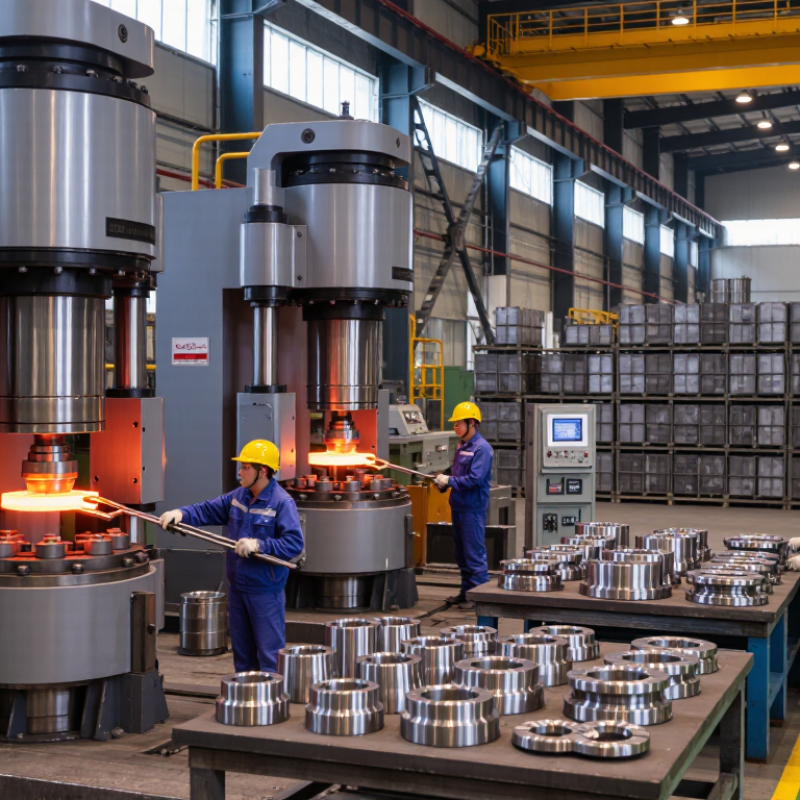
Understanding China’s Stainless Steel Forgings Supplier Industry
China’s stainless steel forgings supplier industry is broad, technical, and uneven. The International Stainless Steel Forum reported about 58.4 million tonnes of global stainless crude steel production in 2023. China contributed roughly three-fifths, making its forging base difficult to evaluate by price alone.
Production capacity varies from small machine shops to integrated plants with melting, forging, heat treatment, and testing. That difference affects consistency. A supplier’s real value appears in repeatability, not catalog size.
Experienced buyers should examine grade control, forging reduction, solution annealing, and dimensional inspection. Ask for heat numbers linked to mill certificates, furnace charts, and ultrasonic reports. Standards such as ASTM A182, EN 10222-5, and applicable GB requirements may govern the component.
The 2024 World Steel Association report confirmed China remained the largest steel producer. Broad steel leadership does not prove forging expertise. This is where many purchasing decisions become too simple. A polished factory tour can still miss process weaknesses.
Tips: Request a sample inspection plan before ordering. Compare yield strength, corrosion requirements, tolerances, and testing scope. Check whether inspectors use calibrated equipment. Confirm corrective-action records for nonconforming parts. Ask for production photos with identifiable heat numbers, not generic images. Price matters, but an unusually low offer may hide limited testing or unstable subcontracting. No supplier is perfect. Leave room for independent verification.
Key Criteria for Evaluating a Chinese Forgings Supplier
Choosing the best China stainless steel forgings supplier starts with evidence, not a polished website. Ask for production records, material certificates, and traceability from billet to shipment. An experienced supplier should explain steel grades, forging temperatures, reduction ratios, and heat-treatment controls in practical language. If answers remain vague, pause. Small gaps often become expensive defects.
Inspect quality systems through recent audit reports, calibrated inspection equipment, and clear acceptance procedures. Confirm tensile, hardness, dimensional, and non-destructive testing requirements before ordering. Request sample reports linked to actual heat numbers. That detail matters. A capable engineering team can review drawings, tolerances, machining allowances, and service conditions. I have seen low quotations hide extra machining, packaging, or inspection costs. Price alone is a weak filter.
Production capacity must match your schedule without sacrificing control. Check furnace size, press capability, tooling availability, operator experience, and subcontracting practices. Ask how deviations are recorded and corrected. No supplier is perfect. What matters is honest reporting and measurable corrective action. Communication also deserves testing: send a technical question and assess response time, clarity, and willingness to challenge an unrealistic specification. Visit the facility when possible, but do not treat one clean visit as final proof. Consistent records over several orders are more reliable.
Who Is the Best China Stainless Steel Forgings Supplier?
Key criteria for evaluating a Chinese stainless steel forgings supplier are shown as a practical 100-point procurement framework. Quality assurance, material traceability, and technical compliance receive the highest weighting because they directly affect forging reliability and specification conformity.
The weighting can be used during supplier qualification by reviewing ISO 9001 documentation, heat and lot traceability, ASTM or EN compliance, dimensional inspection, non-destructive testing, delivery performance, and export documentation.
Leading Stainless Steel Forging Regions and Manufacturing Capabilities
China's stainless steel forging industry is concentrated in several practical manufacturing regions. Jiangsu and Zhejiang support dense machining networks, skilled toolmakers, and flexible production for valves, shafts, and structural parts. Shandong is known for heavy forging resources, larger presses, and demanding industrial components. Guangdong often provides export experience and responsive fabrication for customized, medium-sized orders. Regional strength matters, but location alone never proves quality.
A capable supplier should match the forging method to the part's geometry and service conditions. Closed-die forging suits repeatable shapes and controlled dimensions. Open-die forging handles large sections and lower-volume requirements. Ring rolling can produce seamless rings with directional grain flow and reduced machining waste. Reliable facilities control heating, deformation, heat treatment, and surface finishing. Look for calibrated furnaces, traceable material certificates, and documented inspections. Ultrasonic testing, hardness checks, tensile testing, and dimensional reports provide useful evidence. These details reveal manufacturing experience better than attractive photographs.
Practical evaluation should include sample approval, audit access, and clear correction procedures. Ask how operators manage forging laps, scale, distortion, and inconsistent hardness. The answer should be specific, not promotional. Still, no supplier is flawless. Even a strong factory may miss a delivery detail or underestimate tooling time. Pilot orders, shared drawings, and written acceptance criteria remain important. A trustworthy partner explains limitations early and improves them through measurable actions.
Quality Standards, Certifications, and Production Process
The best China stainless steel forgings supplier should prove quality through records, not confident promises. Ask for ISO 9001 certification, material certificates, and test reports from accredited laboratories. Product requirements should match recognized standards, such as ASTM, ASME, or EN specifications. Confirm the exact grade, heat number, mechanical properties, and dimensional tolerances before ordering.
A reliable production process begins with controlled raw materials and verified chemical composition. Steel billets should be heated evenly, forged with monitored pressure, and inspected for cracks or laps. Heat treatment records should show temperature, holding time, and cooling method. PMI testing, tensile tests, hardness checks, and ultrasonic inspection can reveal problems that visual checks miss. Traceability matters. Each forging should connect to its original heat and inspection file.
Tips: Request a sample quality plan before production. Visit the workshop when possible, or ask for dated process photos and calibration records. Check whether measuring tools have current calibration certificates. No supplier is flawless. Even a strong audit may miss a small process weakness, so define acceptance criteria clearly and keep communication documented. Clear evidence is more valuable than impressive wording.
How to Select the Best Supplier for Your Application
Who Is the Best China Stainless Steel Forgings Supplier?
Selecting the right supplier starts with your application, not a supplier directory. Define the stainless steel grade, forging size, service temperature, pressure, and required standard. Include machining tolerances and surface expectations. Small details matter.
Ask for evidence of similar production experience. A capable supplier should explain its forging process clearly.
Review heat treatment records, material certificates, dimensional reports, and non-destructive testing results.
Confirm that each document matches the actual heat number. Do not guess.
A factory audit can reveal more than a sales presentation. Check forging presses, furnaces, calibration records, inspection equipment, and production cleanliness. Speak with the quality engineer, not only the sales contact.
Request a sample inspection report before placing a large order. If possible, evaluate a trial batch under your real acceptance criteria.
Reliable communication also matters. Ask how the supplier handles nonconforming parts, delivery changes, and corrective actions. Their response often shows practical maturity.
An unusually low quotation deserves careful review. It may exclude testing, machining, packaging, or proper traceability.
A perfect supplier rarely exists. You may need to balance price, capacity, technical support, and delivery risk. Keep that balance visible in your supplier scorecard.