
What Are the Best Digital Print Socks in 2026?
Choosing the best Digital Print Socks in 2026 requires more than comparing colorful designs. Buyers must examine fiber quality, print durability, stretch recovery, comfort, and supplier consistency.
Grand View Research reports that the global digital textile printing market continues to expand rapidly. Its analysis highlights growing demand for customization, short production runs, and faster product development. Smithers’ report, The Future of Digital Textile Printing to 2027, also identifies pigment inks, automation, and sustainable production as important industry trends. These findings explain why digitally printed socks are moving beyond novelty gifts.
Performance still matters most.
Textile printing specialist Debbie McKeegan has described digital printing as “a disruptive technology that enables more sustainable and flexible textile production.” Her observation applies directly to socks, where smaller batches can reduce excess inventory. However, sustainability claims require evidence. Ink chemistry, energy use, packaging, and fabric sourcing all influence the final result.
This guide evaluates Digital Print Socks through practical details. We consider color sharpness after washing, print coverage around the ankle, breathability, and seam comfort. We also examine whether manufacturers provide credible testing information, material certifications, and transparent production standards. A bright pattern means little if it cracks after three washes.
The answer is not perfectly settled.
Different buyers need different strengths. Athletes may prioritize moisture control and compression. Fashion customers may value intricate artwork and soft hand-feel. Retailers need reliable sizing, repeatable colors, and manageable minimum orders. Some industry comparisons remain incomplete, especially for long-term wash performance. That limitation deserves attention, not marketing language.
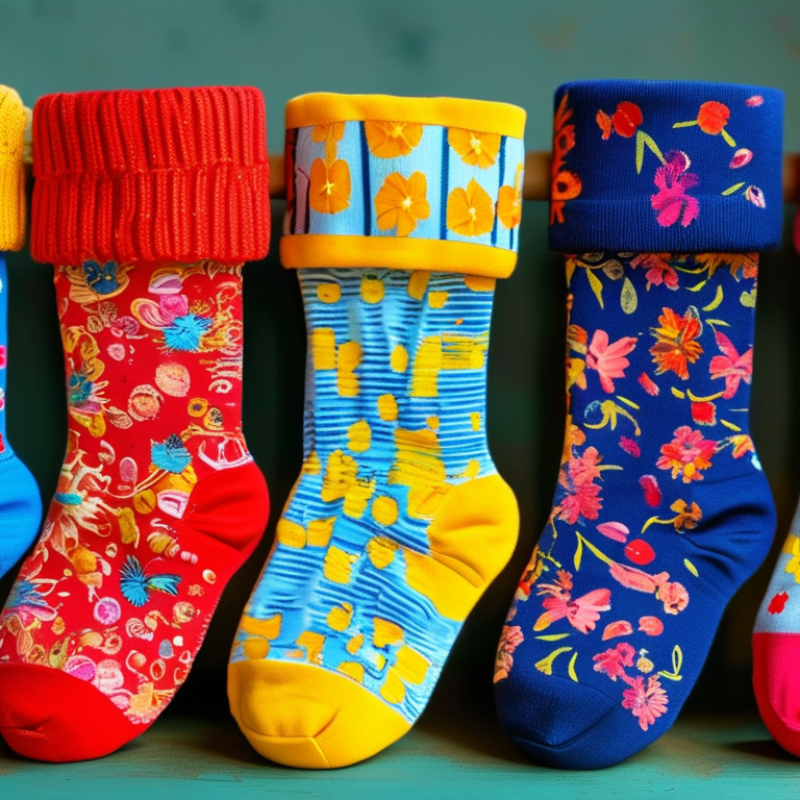
What Defines Digital Print Socks in 2026
What Are the Best Digital Print Socks in 2026?
What defines digital print socks in 2026 is not simply a colorful pattern. The strongest products combine accurate artwork, soft hand feel, durable fibers, and reliable fit. Digital printing places graphics directly onto knitted fabric or finished sock panels. This allows gradients, photographic details, and smaller production runs without traditional screen setup. Grand View Research estimated the digital textile printing market at about USD 3.9 billion in 2023, with continued double-digit growth expected through 2030. That growth reflects demand for customization, but it also raises quality expectations.
A practical evaluation should begin with stretch testing. The image must remain aligned when the sock expands around the ankle. Check wash resistance, rubbing resistance, color transfer, and toe-seam comfort. ISO 105-C06 and AATCC 8 are useful references for washing and crocking performance. Smithers has also reported strong growth in digital textile printing, partly because the process can reduce setup waste and support shorter production cycles. Results still depend on ink chemistry, fabric preparation, curing, and water management. This is where many claims become too simple. Digital printing is not automatically sustainable. A product using recycled fibers may still perform poorly if the print cracks after several washes. The best choice is therefore measurable, not merely attractive: clear color registration, consistent sizing, tested durability, and transparent production data. Small flaws matter. A slightly uneven cuff can reveal more than a polished product photograph.
What Are the Best Digital Print Socks in 2026? - What Defines Digital Print Socks in 2026
| Evaluation Dimension | Recommended 2026 Standard | Why It Matters | Best-Suited Sock Applications | Practical Quality Indicator | Overall Importance |
|---|---|---|---|---|---|
| Printing Technology | True digital sublimation or direct-to-garment textile printing with profile-controlled color output | Digital workflows support detailed artwork, variable designs, and small production runs without traditional screens or engraved cylinders. | Custom artwork, small batches, promotional collections, and on-demand production | Fine lines remain recognizable and repeated units show consistent color placement | |
| Fiber Compatibility | Polyester-rich surfaces for sublimation; cotton, nylon, and blended constructions require a compatible ink and pretreatment system | Ink chemistry and fiber type determine color strength, wash performance, hand feel, and achievable detail. | Performance socks, lifestyle socks, athletic styles, and fashion designs | Printed areas do not appear noticeably dull, sticky, cracked, or excessively stiff | |
| Color Reproduction | ICC-managed workflow with a calibrated display, stable inks, and controlled fabric profiles | Fabric absorbs or reflects ink differently from paper, so color management is essential for predictable results. | Brand-free artwork, photographic patterns, gradients, and multi-color illustrations | Skin tones, neutral grays, deep colors, and gradients remain visually balanced | |
| Image Resolution | Artwork supplied at approximately 150–300 pixels per inch at final print size | Higher-resolution artwork helps preserve small text, facial features, thin outlines, and complex textures. | Detailed graphics, portraits, geometric patterns, and micro-patterns | Edges look clean at normal viewing distance without obvious pixelation | |
| Print Coverage | Consistent coverage across the printable knit area, including stretch zones where the design is intended to appear | Uneven coverage can create pale bands, gaps, distorted motifs, or visible differences between relaxed and stretched fabric. | All-over designs, tube socks, crew socks, and seamless visual patterns | Color remains reasonably uniform after the sock is worn and stretched | |
| Stretch Performance | Artwork designed with the sock’s stretch ratio and knit structure in mind | Knitted socks expand during wear; unsuitable artwork may become distorted or show light gaps between stitches. | Compression styles, athletic socks, and close-fitting everyday socks | Motifs remain legible during normal stretching and do not split across knit openings | |
| Wash Durability | Color should remain visually stable after repeated care cycles when washed according to the garment instructions | Wash resistance affects product life, customer satisfaction, and the appearance of frequently worn socks. | Everyday wear, sports use, uniforms, and gift products | No severe fading, peeling, cracking, bleeding, or transfer under recommended care | |
| Hand Feel | Soft, flexible knit surface without a heavy plastic-like coating or brittle printed film | Socks remain in direct contact with the skin, making comfort a primary quality factor. | Premium lifestyle socks, children’s socks, and long-duration wear | Printed and unprinted areas feel similar when rubbed or stretched by hand | |
| Breathability | Printing should not significantly block the sock’s planned ventilation zones | Breathability helps manage heat and moisture, especially in active and warm-weather use. | Running socks, training socks, hiking socks, and summer styles | Mesh zones remain functional and the print does not form a thick impermeable layer | |
| Pattern Registration | Repeat placement and artwork alignment should remain consistent around the sock tube and between pairs | Misalignment is highly visible on stripes, text, symmetrical graphics, and engineered patterns. | Text-based designs, portrait layouts, stripes, and geometric artwork | Left and right socks show intentional matching rather than accidental offset | |
| Design Flexibility | Support for gradients, photographic imagery, smooth tonal transitions, and variable designs | Digital printing is valuable because each pair can carry a different design without changing physical screens. | Limited editions, personalized orders, creative collections, and test launches | Artwork changes can be made without a new screen, plate, or engraved cylinder | |
| Minimum Order Suitability | Efficient for one-off samples, small batches, and multiple designs produced in the same run | Digital production reduces setup requirements and makes shorter runs more practical than many conventional methods. | Sampling, crowdfunding, seasonal capsules, and personalized products | Small quantities remain economical without sacrificing artwork variety | |
| Production Efficiency | Best performance comes from automated artwork preparation, predictable file templates, and repeatable curing or fixation | Digital printing can shorten setup time, but throughput still depends on machine speed, sock loading, drying, and finishing. | On-demand manufacturing and moderate-volume custom programs | Lead times are consistent and reprints can reproduce the approved sample | |
| Size and Fit Range | Artwork should be tested across every intended sock size and leg height | The same file can look different when applied to children’s, adult, wide-calf, or extended-length constructions. | Multi-size collections and inclusive sizing programs | Important design elements remain visible and proportionate across sizes | |
| File Preparation | Use final-size artwork with transparent or correctly colored backgrounds, safe margins, and distortion-aware placement | Correct preparation prevents cropped motifs, unexpected background colors, and artwork distortion around the foot and ankle. | All digitally printed sock formats | Pre-production mockups accurately represent the finished knitted product | |
| Environmental Considerations | Prefer water-based or lower-impact ink systems where technically suitable, efficient sampling, and reduced overproduction | Digital production can reduce setup waste and support on-demand manufacturing, but energy, water, packaging, and fiber choices still matter. | Responsible fashion collections and small-batch production | Material and process information is documented rather than inferred from the print appearance | |
| Quality-Control Testing | Inspect color, registration, stretch appearance, wash behavior, seams, toe closure, and pair matching before approval | A visually attractive print is not enough if the sock construction fails during wear or laundering. | Commercial orders, uniforms, retail programs, and repeat production | Approved samples are tested under the intended care and use conditions | |
| Best Overall Definition in 2026 | Comfortable, durable, stretch-aware, color-consistent, and digitally customizable | The strongest digital print socks balance print quality with textile performance rather than treating the graphic as the only success measure. | Personalized products, creative fashion, activewear, gifting, and limited releases | High visual detail is maintained without compromising softness, fit, breathability, or wash resistance |
Evaluation note: The specifications above are practical industry benchmarks and quality criteria. Actual results vary according to fiber composition, knit construction, ink system, machine settings, pretreatment, fixation, artwork, and care instructions.