
Cuddon Freeze Dry Logo

What Is the Best Explosion Proof Emergency Light in 2026?

Choosing the best Explosion Proof Emergency Light in 2026 is not just a brightness comparison. A unit must suit the hazardous area, maintain visibility during a power failure, and withstand the site’s actual conditions. Think of a refinery walkway: dust on the lens, vibration from nearby machinery, and a narrow exit route. Small details matter.

NFPA Research’s Fires in Industrial and Manufacturing Properties report examines fire patterns in industrial settings, underscoring why dependable emergency planning deserves attention. NFPA 101 provides life-safety guidance, while the IEC 60079 series addresses equipment used in explosive atmospheres. These references help frame the decision; they do not replace checking the area classification, product certification, runtime, ingress protection, and installation requirements for a specific site. Visibility matters. So does fit.

This guide compares practical selection factors, including light output, battery performance, enclosure materials, and maintenance access. It also considers documentation from manufacturers and independent testing bodies, rather than relying on marketing claims alone. There is no single winner for every facility. A compact light may suit a confined passage, while a larger unit may serve an open process area. I would be cautious about any ranking that ignores those differences. The strongest choice is the one that meets the site’s documented risks and remains usable when normal power disappears.
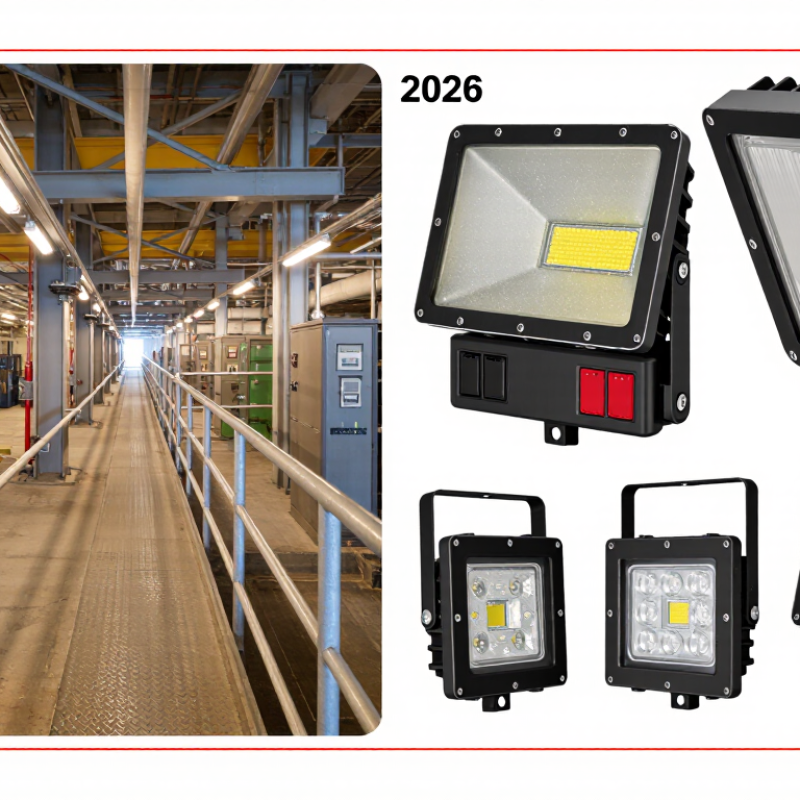
What Is the Best Explosion Proof Emergency Light in 2026?

What an Explosion-Proof Emergency Light Is and How It Works

An explosion-proof emergency light is a backup luminaire built for locations where flammable gas, vapor, or dust may be present. Its enclosure is designed to contain an internal ignition and keep flames from reaching the surrounding atmosphere. Precision-machined joints, often called flame paths, help cool escaping gases. It is not an ordinary lamp with a stronger cover. That distinction matters.

During normal operation, the light runs from the site’s power supply while its battery remains charged. If power fails, a sensing circuit switches the LED driver to battery power, often within seconds. The battery may sit inside the rated enclosure or connect through an approved system. A test button can check operation, but it cannot confirm battery capacity under load. That needs measurement.

NFPA 101, Life Safety Code, specifies egress-path emergency illumination of at least 1 foot-candle average and 0.1 foot-candle minimum initially; after 90 minutes, the figures are 0.6 and 0.06 foot-candle. These benchmarks help assess light output, but hazardous-location suitability depends on the area classification and the fixture’s certification. Check both. Dust buildup, aging batteries, and blocked light can quietly reduce performance. A practical review should include runtime and illumination measurements, not just a quick visual check.

How Hazardous-Area Ratings and Certifications Differ

The best explosion-proof emergency light depends on the area classification, not simply its lumen output. In North America, Class/Division markings describe the type of hazard and how often it may be present. IEC Zone markings classify the likelihood and duration of an explosive atmosphere. These systems are not automatic equivalents. Check the exact gas or dust group, temperature class, and ambient-temperature range on the luminaire’s certification label. A fixture rated for one dust group may be unsuitable for a gas hazard.

Certification scope matters. ATEX addresses equipment for use in explosive atmospheres within its regulatory framework; IECEx is an international certification scheme, not universal local approval. In North America, confirm the applicable hazardous-location listing and installation requirements. Also check emergency-lighting performance separately: IEC 60598-2-22 covers emergency luminaires, while IEC 60079 standards address explosive atmospheres. A hazardous-area approval alone does not prove suitable emergency duration or light output. Small distinction. The U.S. Bureau of Labor Statistics reported 5,283 fatal occupational injuries in 2023 in its Census of Fatal Occupational Injuries; that figure covers all work-related causes, not explosion-proof lighting failures. Treat it as broad safety context, not proof that one certification prevents incidents. Before purchase, match the marking to the site assessment and verify battery duration, testing method, and maintenance access. One detail is easy to overlook: a correct rating cannot compensate for poor placement or blocked illumination.

Which Design Features Affect Safety and Performance

What Is the Best Explosion Proof Emergency Light in 2026?

Which Design Features Affect Safety and Performance

The best design is one that stays dependable in the actual hazardous area, not simply one with the highest lumen rating. Check that its hazardous-location certification matches the site’s gas or dust classification and temperature conditions. UL 844 and IEC 60079-based approvals are useful reference points, but they are not interchangeable. Confirm the exact rating on the product documentation. Small details matter.

Optics, seals, and battery performance also shape safety. A focused beam can make exit routes easier to follow, while harsh glare may hide floor-level obstacles. Look for a sealed, corrosion-resistant enclosure suited to washdown, dust, and temperature extremes. Battery capacity should support the required runtime at the stated output. NFPA 101’s emergency-lighting criteria specify at least 90 minutes of operation, with initial illumination averaging 1 foot-candle and no point below 0.1 foot-candle along the egress path. Verify performance through test records, not a lumen claim alone.

Tips: Check beam coverage at floor level, inspect seals for cracks, and review battery test results. Test it monthly. A real installation can reveal blind spots that drawings miss, so recheck coverage after equipment or shelving changes. Don’t assume a self-test feature replaces scheduled inspection.

How to Match a Light to Your Site and Emergency Needs

Choosing the best explosion-proof emergency light in 2026 starts with the site, not the catalog. Identify whether the hazard involves flammable gas, vapor, or combustible dust. Confirm the area classification with a qualified safety professional. Then check that the light’s certification matches that location and its specific risks. A unit suitable for one area may not suit another. Small details matter.

Next, consider what people must see during an outage. A narrow corridor needs different beam coverage from a wide process room or outdoor loading bay. Note ceiling height, mounting position, dust, moisture, salt air, and temperature changes. These conditions affect placement and durability. Check the stated emergency runtime against the time needed to clear or secure the area, and review how the battery is tested and replaced. A bright lamp is not automatically a useful one if shelves block its beam. I would also verify operating instructions and maintenance records before installation; these are easy to overlook during purchasing. When uncertain, have a qualified professional assess the layout and confirm the selected unit’s suitability.

What Is the Best Explosion Proof Emergency Light in 2026? - How to Match a Light to Your Site and Emergency Needs

Site Condition What to Verify About the Hazard Suitable Light Configuration Emergency Power and Runtime Key Selection Checks
Indoor process area with flammable gas or vapor Confirm the hazardous-area classification, gas group, temperature class, and applicable local electrical code. In systems using zones, establish the zone from the site’s hazardous-area assessment. Choose a luminaire specifically certified for the site’s classified area and installed position. A sealed or weather-resistant enclosure alone does not establish explosion protection. Use a certified emergency model or approved emergency-lighting arrangement. Select the required duration from the applicable code and evacuation plan; 90 minutes is a common requirement in some jurisdictions, but is not universal. Check certification markings, permitted ambient temperature, mounting method, cable entries, and whether the emergency function is included in the certification.
Dusty industrial space, such as grain, food, or powder handling Determine whether combustible dust is present and identify the applicable dust zone or Class/Division, as well as the dust group and maximum surface-temperature limits. Select equipment approved for the relevant combustible-dust classification. Consider an enclosure and optics that can be cleaned without compromising seals or certification. Match battery duration to the required evacuation period and expected response time. Confirm that dust ingress protection and battery performance are suitable for the operating environment. Verify dust-specific approval, permitted surface temperature, enclosure condition, cleaning procedure, and access for inspection and testing.
Outdoor tank farm, loading bay, or exposed processing area Use the site’s area-classification drawings to identify hazardous boundaries and any gas or dust risks at the mounting location. Account for wind, rain, salt, and temperature extremes. Choose a certified hazardous-area light with environmental protection suitable for the exposure. Specify corrosion-resistant materials where the site atmosphere requires them. Consider self-contained battery backup or a suitably engineered central emergency supply. Check low- and high-temperature effects on battery capacity and charging. Review ingress protection, corrosion resistance, impact exposure, mounting height, beam coverage, and safe access for maintenance.
Escape route, stairway, or exit near a classified area Confirm whether the exact mounting point is inside the hazardous boundary. Do not assume that a nearby non-hazardous corridor has the same classification as the process area. Use certified equipment wherever the installed location is classified. Position the light to illuminate the route, changes in level, exit signs, and critical safety equipment as required by the lighting plan. Provide the legally required emergency duration and maintain the system in accordance with local testing rules. A longer duration may be appropriate where evacuation or emergency response is expected to take more time. Check maintained or non-maintained operation, automatic changeover, test access, illumination coverage, and compatibility with the site’s emergency-lighting system.
Remote or difficult-to-access hazardous location Confirm classification and environmental conditions, then assess how often the light and its battery can be safely inspected or replaced. Prefer a certified, serviceable design with clearly documented battery replacement and inspection procedures. Avoid choosing solely on initial purchase cost. Compare battery type, rated duration, recharge time, expected service life, and performance at the site’s ambient temperature. Consider a monitored system if faults could otherwise go unnoticed. Check spare-part availability, maintenance intervals, self-test or remote-monitoring features, and whether servicing can be performed without violating certification.
Mixed gas-and-dust risk or uncertain classification Obtain a competent hazardous-area assessment before specifying equipment. Gas and dust classifications, groups, and temperature limits are not interchangeable. Use only a product whose certification and installation conditions cover every relevant hazard at the location. Resolve any uncertainty with the responsible electrical or process-safety specialist. Set emergency runtime from the applicable code, evacuation strategy, and risk assessment rather than assuming one duration fits every site. Check the complete marking and certificate, including gas and dust suitability where relevant, ambient limits, installation restrictions, and emergency-mode approval.

Selection note: “Explosion-proof” and hazardous-area approvals are jurisdiction- and application-specific. Confirm the site classification and local requirements before purchase. ATEX, IECEx, and North American Class/Division or Zone markings are not automatically interchangeable, and an IP rating by itself does not certify a light for explosive atmospheres.

How to Compare the Best Explosion-Proof Emergency Lights in 2026

To compare the best explosion-proof emergency lights in 2026, start with the actual hazard, not the lumen figure. Check that the equipment certification matches the site’s gas or dust classification, temperature requirements, and installation conditions. IEC 60079-0 sets general requirements for equipment used in explosive atmospheres; the marking must fit the specific location. A mismatch can make an otherwise bright light unsuitable.

Small details matter.

Next, compare emergency performance under recognized requirements. NFPA 101 (2024 edition) specifies at least 90 minutes of emergency operation, with defined minimum illumination levels along the egress path. UL 924 covers emergency lighting equipment and its performance testing. Ask for photometric data, runtime test results, battery type, and the stated operating temperature range. Then consider glare, beam spread, corrosion resistance, and how easily the unit can be inspected. A narrow beam may leave dark gaps between fixtures.

Not just brightness.

In a real installation, mounting height and dust buildup can change what people see; I would treat catalog figures as a starting point, not proof of performance. Compare maintenance access and replacement-battery availability, too, and verify that the complete installed system meets the applicable site requirements.