China Best Fresh Peeled Garlic Suppliers for Global Buyers
Choosing the right China supplier for Fresh Peeled Garlic requires more than comparing prices. Global buyers need consistent quality, dependable communication, and clear evidence behind every claim.
Experienced suppliers understand that peeled garlic is highly perishable. Its bright color, firm texture, clean aroma, and controlled moisture must survive processing and international transport. Reliable factories usually maintain documented sourcing records, hygienic peeling lines, batch inspections, and suitable cold-chain procedures. Buyers should request product specifications, packing photographs, sample approvals, and recent testing records before making a large commitment.
Details matter.
A professional supplier should explain garlic origin, peeling methods, size grades, packaging options, shelf-life expectations, and loading conditions. Clear answers often reveal more than attractive catalog images. Factory visits, third-party inspections, and traceable batch codes can strengthen purchasing decisions. These steps do not remove every risk, but they make problems easier to identify and manage.
The best supplier is not always the cheapest one. A lower quotation may reflect different grades, weaker packaging, shorter freshness, or limited service support. However, supplier claims still require careful verification. No factory is perfect, and unexpected delays, seasonal changes, or quality variations can occur. That deserves honest attention. Strong cooperation depends on practical communication, documented standards, and a willingness to correct mistakes quickly. For global buyers, this guide examines key supplier capabilities, quality indicators, packaging choices, and sourcing questions when evaluating Fresh Peeled Garlic from China.
Fresh Peeled Garlic: Product Definition and Global Market Role
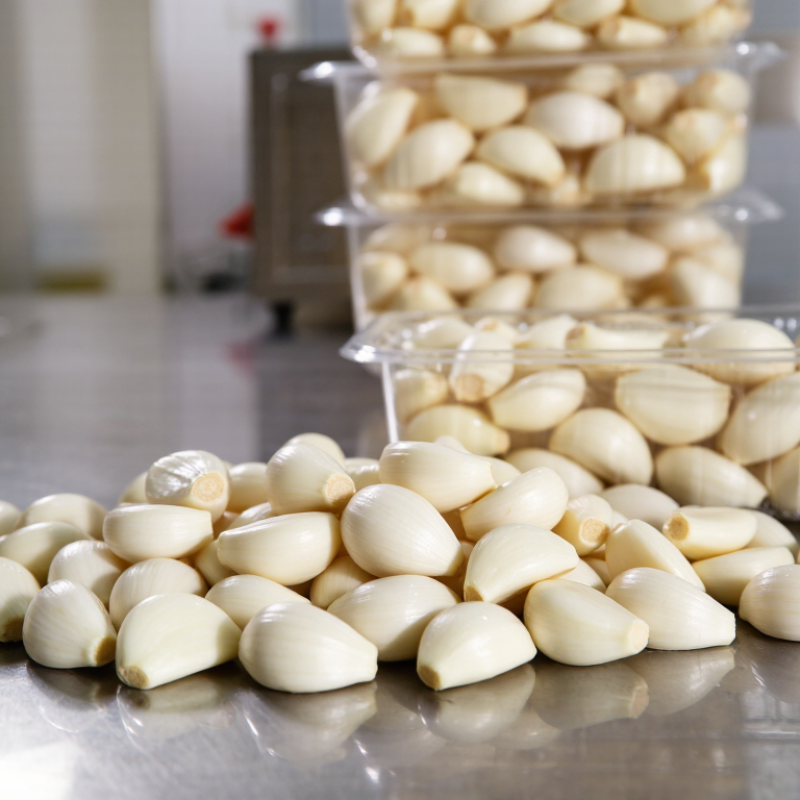
Fresh peeled garlic is whole garlic clove with its dry skin removed by controlled processing. It is not minced, dried, or preserved garlic. The cloves should remain firm, clean, and naturally aromatic. In practical sourcing, buyers often inspect color, size, moisture, and surface damage before approving a shipment.
Processing usually includes sorting, peeling, washing, grading, and temperature-controlled packing. Clean water and hygienic handling matter at every step. A fresh clove may look bright ivory, while bruising, discoloration, or excessive moisture can signal poor handling. Cold storage helps protect texture during transport, but temperature alone cannot repair damaged cloves.
For food manufacturers, restaurants, and institutional kitchens, peeled garlic reduces preparation labor and kitchen waste. It supports steady production of sauces, marinades, ready meals, and seasoning bases. Global buyers also value consistent clove sizes because machines and workers handle uniform pieces more efficiently. Export discussions should clarify pack weight, harvest period, shelf-life expectations, inspection procedures, and cold-chain responsibility.
Small details affect real costs. A low price may hide higher trimming loss or weak packaging. This needs careful checking. Reliable suppliers should provide traceable batch information, product photographs, test records, and clear loading conditions. However, specifications are not always perfect; natural garlic varies by crop and season. Buyers should allow reasonable tolerance while rejecting unsafe or visibly deteriorated product. Suppliers with practical quality controls, documented experience, and responsive communication are better positioned to serve changing global demand.
China Best Fresh Peeled Garlic Suppliers for Global Buyers
Fresh Peeled Garlic: Product Definition and Global Market Role
Fresh peeled garlic is garlic that has been cleaned and mechanically or manually peeled, then supplied fresh or chilled for food processing, catering, retail preparation, and foodservice applications. China is the world’s leading garlic-producing country and provides a large raw-material base for peeled garlic processing and international supply. The figures below show total garlic production by selected major producing countries, not company or brand sales.
Source: FAOSTAT agricultural production data, 2022; values are rounded estimates in million metric tonnes.
China’s Main Fresh Peeled Garlic Production Regions
China Best Fresh Peeled Garlic Suppliers for Global Buyers
China’s Main Fresh Peeled Garlic Production Regions
China remains the world’s largest garlic producer. FAOSTAT crop data for 2022 records China’s output at more than 20 million tonnes. This scale supports large processing clusters, especially in Shandong, Henan, Jiangsu, and Hebei. These regions do not offer identical garlic.
Jinxiang in Shandong is widely recognized for dense garlic cultivation and export-oriented processing. Qi County in Henan has extensive planting areas and convenient connections to central markets. Pizhou in Jiangsu is known for white garlic varieties and established sorting facilities. Yongnian in Hebei also supports garlic production, cleaning, grading, and peeled-garlic processing.
The details matter.
According to USDA Foreign Agricultural Service market reports, Chinese garlic supply is strongly affected by planting area, weather, storage conditions, and domestic prices. Fresh peeled garlic is usually processed close to major production zones. This reduces handling time after peeling. Buyers should check harvest dates, peeling-room hygiene, water quality, temperature control, and microbial testing records.
A supplier’s location is only a starting point. Regional claims can sound stronger than the evidence. I would request batch records, product specifications, and recent inspection results before purchasing. Some facilities handle both fresh and stored garlic, which may influence texture and shelf life. A clear supply chain is not always the fastest one.
China Best Fresh Peeled Garlic Suppliers for Global Buyers - China’s Main Fresh Peeled Garlic Production Regions
| Production Region | Representative Growing Areas | Typical Harvest Window | Garlic Characteristics | Fresh Peeled Garlic Processing Advantages | Common Export and Distribution Uses |
| Shandong | Jinxiang County, Lanling County, and surrounding garlic-growing areas | Generally May to June for the new crop; stored garlic can support supply beyond the harvest season | Large planting base, firm cloves, balanced pungency, and strong suitability for long-distance distribution | High processing capacity
Established grading, cold-storage, peeling, washing, and packing infrastructure in major garlic clusters | Fresh peeled garlic for foodservice, industrial seasoning, sauces, pickles, frozen products, and wholesale markets |
| Henan | Qixian County, Zhongmu County, and nearby central Henan production zones | Generally May to June, depending on planting date and local weather conditions | Commercially important white garlic production with good availability for bulk procurement | Suitable for volume orders
Flat terrain and proximity to major agricultural markets support centralized collection and processing | Domestic and international bulk supply, peeled garlic packs, catering ingredients, and processed garlic products |
| Jiangsu | Pizhou and surrounding Xuzhou-area garlic-growing districts | Generally May to June; the exact period varies with the crop cycle | Recognized garlic-growing area with cloves commonly used for fresh-market and processing applications | Strong regional collection
Access to agricultural trading channels and transport links in eastern China supports sorting and packing | Fresh peeled garlic, retail-ready food ingredients, restaurant supply, and eastern China distribution |
| Yunnan | Dali Prefecture and other suitable garlic-growing areas in western and central Yunnan | Often earlier than northern production regions, commonly from February to April, depending on altitude and locality | Early-season supply potential and distinctive regional growing conditions; product specifications vary by county | Early-season option
Can help extend the national supply calendar before the main northern harvest begins | Early fresh-market supply, foodservice purchasing, regional distribution, and seasonal export programs |
| Sichuan | Selected garlic-growing areas in the Chengdu Plain and other suitable western Sichuan districts | Usually earlier than the main northern crop, commonly from spring to early summer | Fresh garlic from a diversified agricultural region, with specifications depending on the local cultivar and climate | Regional fresh supply
Useful for nearby processing centers and buyers seeking seasonal diversification | Fresh peeled garlic for regional foodservice, processors, wholesale markets, and selected export orders |
| Other Northern Production Areas | Selected districts in Hebei, Shanxi, and neighboring garlic-growing zones | Generally May to June, with local differences caused by latitude, temperature, and planting schedule | Supplementary production with varying bulb size, clove count, skin color, and pungency | Flexible sourcing
May provide additional raw material when buyers require specific size grades or staggered procurement | Regional wholesale, processing plants, seasonal fresh peeled garlic, and supplementary procurement |
Note: Harvest periods are typical seasonal windows rather than fixed dates. Actual availability, bulb size, peeling yield, shelf life, and export specifications vary by cultivar, weather, storage conditions, processing standards, and buyer requirements.
How Global Buyers Can Evaluate Chinese Garlic Suppliers
Global buyers should evaluate Chinese fresh peeled garlic suppliers through verified evidence, not attractive product photos. FAOSTAT’s latest crop data records China producing more than 20 million metric tons of garlic in recent years. This scale supports strong sourcing capacity, but it does not prove every supplier is reliable. Ask for the legal company name, processing address, export history, and current food-safety certificates. Confirm that certificates match the actual facility. Paperwork matters.
Product checks should be specific. Request samples from different production batches, then inspect clove firmness, peeling damage, odor, discoloration, and excess moisture. A qualified laboratory should test microbiological safety, pesticide residues, and heavy metals against the destination market’s rules. Check whether peeled garlic is packed under controlled temperature and whether cartons show batch codes, production dates, and storage conditions. UN Comtrade trade records identify China as a dominant garlic exporter, yet shipment volume alone cannot confirm cold-chain discipline. I would not trust a polished factory video alone. Visit the facility or appoint an independent inspector to verify sanitation, worker practices, water quality, and traceability. No checklist is perfect. Even experienced buyers can overlook temperature abuse during inland transport. A trial order with agreed specifications, inspection points, rejection rules, and documented corrective actions exposes weaknesses before larger contracts.
Ordering, Pricing, Export Documentation, and Supplier Verification
Global buyers need more than a low quote when sourcing fresh peeled garlic from China. FAOSTAT production data places China above 20 million metric tons of garlic annually, but production volume does not guarantee export-ready quality. UN Comtrade trade records also show China as a major garlic exporter.
Before ordering, confirm: the crop year, peeling date, clove size, moisture condition, and storage temperature.
Sample & Pricing
Request a pre-shipment sample in the exact retail or foodservice pack. Pricing should identify the basis clearly: FOB, CIF, or another agreed term.
Compare the Full Cost
Compare cartons, net weight, peeling loss, cold-chain charges, inspection fees, and payment conditions. A cheaper quote may hide smaller cloves or unstable packaging. I have seen specifications remain vague.
Export Documentation
Export documentation usually includes a commercial invoice, packing list, bill of lading, certificate of origin, and phytosanitary certificate when required. Import rules differ by destination, so the buyer should confirm requirements with customs authorities.
The product label should match the invoice, lot number, origin, weight, and production date.
Supplier Verification Checklist
- Business registration check
- Factory address
- Processing photos
- Recent inspection reports
- References from comparable shipments
- A live video tour, not only edited images
Confirm whether the supplier controls peeling, sorting, cold storage, and final loading. A third-party inspection before shipment can verify weight, appearance, temperature, and carton count.
FAO and USDA market reports are useful benchmarks, but neither replaces shipment-specific evidence. My own caution: documents can look complete while practical quality control remains weak.