
Choosing a China-based supplier for an Ice Cream Sundae is not just a price comparison. Buyers need to know how each component performs after production, packing, and shipment. A glossy product photo cannot show whether a wafer stays crisp beside sauce, or whether fruit topping keeps its color. Those details matter.
This guide compares ten suppliers through practical questions: product range, customization, production capacity, export experience, packaging options, and communication. It also considers whether a supplier can provide clear specifications and relevant quality documentation. These checks do not replace an audit or sample order. They help buyers ask better questions before committing.
Ice-cream scientist John E. Goff is associated with research on formulation and processing. As an editorial paraphrase of that technical perspective—not a verbatim quotation—this guide uses the following principle: “A consistent frozen dessert depends on sound formulation, careful processing, and stable storage.” The supplier matters at every step. Still, a ranking cannot settle every buyer’s needs. Some details become clear only after tasting samples or testing a shipment. That is worth admitting. A low unit cost may look attractive, yet freight, minimum order quantities, and shelf-life requirements can change the calculation. The comparison ahead offers a starting point, not a substitute for due diligence. Buyers should confirm current capabilities directly with each supplier.
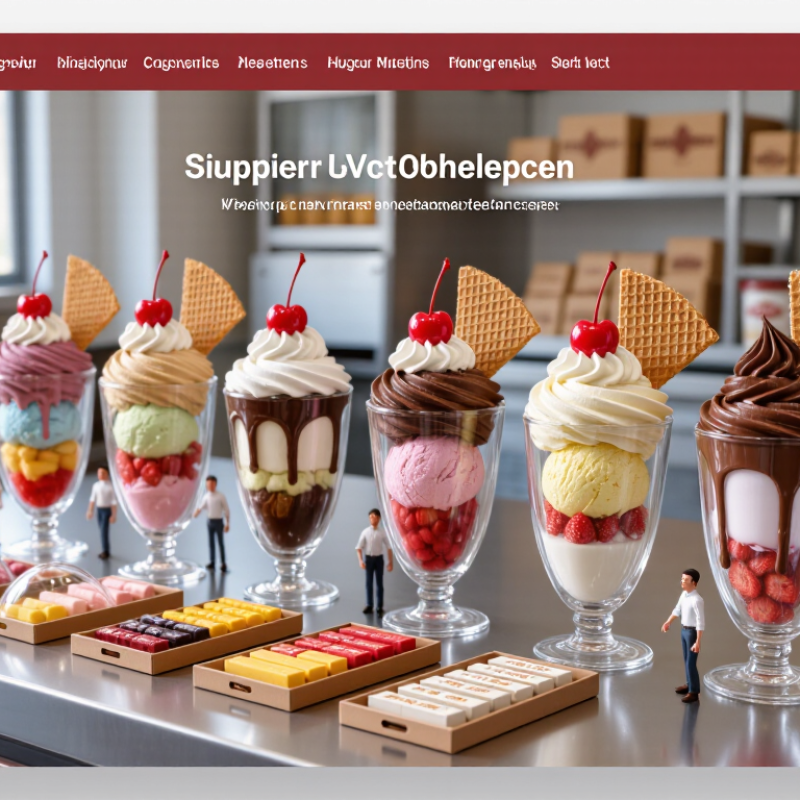
China’s ice cream sundae suppliers range from large dairy processors to specialist dessert manufacturers. Their capabilities vary: some make the base, cones, sauces, and toppings in-house, while others rely on partner factories. That difference matters. It can affect portion consistency, lead times, and how well components arrive together.
Grand View Research estimated China’s ice cream market at about US$20.5 billion in 2023. The scale is significant, but it does not prove a factory can produce a layered sundae reliably. Buyers should ask for product specifications, trial samples, and batch records. Check serving weight, topping distribution, texture after storage, and performance after a realistic thaw-and-refreeze handling scenario. A catalogue can make every line look capable. It cannot prove that.
Cold-chain performance is another practical filter. The China Federation of Logistics and Purchasing reported that China’s cold-chain logistics market reached RMB 517.1 billion in 2023. For frozen desserts, confirm temperature monitoring, loading procedures, and delivery coverage—not just stated freezer capacity. Ask how separate sauces or crunchy toppings are packed to prevent sogginess and breakage. Small details show real readiness. Supplier questionnaires can miss things, too; an on-site or live video audit may reveal gaps between written procedures and actual production.
Global buyers should assess sundae suppliers by the components they can make consistently, not by product photos alone.
Typical offerings include scoopable dairy and non-dairy bases, fruit or chocolate sauces, inclusions, and ready-to-serve layered cups. Grand View Research estimated the global ice cream market at about US$79 billion in 2023, reflecting demand across many formats and price points. For buyers, that scale makes clear specifications essential: fat content, overrun, serving size, and storage temperature should be agreed before sampling.
Manufacturing capability matters at each step.
Ask whether a plant can pasteurize and homogenize mixes, control freezing and hardening, and fill cups without smearing distinct sauce layers. IDFA industry facts report that U.S. producers make more than 1.3 billion gallons of ice cream annually; this illustrates the process scale behind a seemingly simple dessert. Still, volume alone proves little. Request batch records, allergen-control procedures, shelf-life evidence, and temperature logs for the actual product. A small test order helps reveal texture changes after transport. Some details get missed. A glossy topping may crack after freezing, while fruit pieces can soften during storage. Suppliers should explain those trade-offs and provide samples from production runs, not only showroom batches.
For a China-focused shortlist, compare suppliers against the same written specification, not polished catalogues. The Grand View Research 2023 report estimated the global ice cream market at USD 76.11 billion, with a projected 4.2% annual growth rate through 2030. That growth makes capacity worth checking, but it does not prove consistent quality. Request current audit records, ingredient and allergen declarations, batch traceability, and export experience for your destination. Ask how each supplier controls temperature during storage and shipment, and request sample temperature logs. Small details matter.
Compare like with like. Record unit price, minimum order quantity, production lead time, packaging dimensions, and delivery terms in one table. Include freight, insulation, and cold-storage costs when calculating landed cost; the cheapest quotation may not stay cheapest. Test samples after realistic transport and thawing conditions. Check scoopability, texture, flavor consistency, and whether toppings remain distinct. Ask suppliers to explain any variation between batches. Ask for evidence. A spreadsheet can still miss the practical difference between a smooth sample and a product that arrives with ice crystals. I would also leave room for a second sample round; it slows the decision, but can expose assumptions made too early.
Profiles of Chinese ice cream sundae suppliers vary more by production strength than by catalog photos. Grand View Research estimated the global ice cream market at USD 79.08 billion in 2023, making reliable capacity and consistent quality important sourcing questions. One coastal contract manufacturer may offer export-oriented production; a dairy-integrated plant can control its milk base. A fruit-inclusion specialist may handle puree and ripple swirls, while a bakery-linked producer can supply brownie or wafer components. A private-label factory may provide custom cup sizes. An export-focused supplier may have stronger documentation routines. Details matter.
Other profiles include a regional dairy producer with shorter ingredient routes, a small-batch maker suited to limited runs, a factory offering varied packaging, and a manufacturer focused on stable frozen distribution. These are sourcing profiles, not endorsements. Ask each supplier for ingredient specifications, allergen controls, minimum order quantities, sample lead times, and temperature records. Check whether the sample matches the quoted recipe. A glossy product sheet proves little. One limitation: public market reports rarely isolate sundaes, so general ice cream growth should not be mistaken for guaranteed demand. A careful audit still takes time.
The entries below are anonymous supplier profiles for sourcing comparison, not verified company listings or a ranked directory. Product formats and storage guidance reflect common frozen-dessert practices; specifications, shelf life, minimum order quantities, certifications, and export capability must be confirmed directly with each supplier.
| Profile | Indicative Specialization | Common Sundae Formats | Customization Options | Typical Packaging to Discuss | Cold-Chain Consideration | Buyer Due-Diligence Checks |
|---|---|---|---|---|---|---|
| Supplier Profile 1 | Retail-ready, single-serve frozen desserts | Cup sundaes with layered ice cream, sauce, and inclusions | Flavor, sauce layer, topping, cup size, and label artwork | Single-serve cups; multipacks may be available by order | Confirm the product’s specified storage temperature and uninterrupted frozen transport conditions | Request product specifications, ingredient and allergen declarations, packaging details, and production samples |
| Supplier Profile 2 | Food-service and catering dessert portions | Pre-portioned cups or tubs intended for restaurant service | Serving size, flavor assortment, sauce, and food-service pack format | Individual portions or larger food-service containers | Confirm storage, handling, and thawing instructions for the intended service setting | Check case count, portion weight, preparation instructions, and shipment temperature records |
| Supplier Profile 3 | Layered and inclusion-rich sundae products | Ice cream layered with fruit preparation, chocolate sauce, or crunchy pieces | Layer sequence, inclusion type, sauce quantity, and flavor combination | Cups or sealed tubs, subject to product and order requirements | Ask how texture-sensitive inclusions are protected during storage and distribution | Review ingredient composition, allergen controls, texture after freezing, and sample consistency |
| Supplier Profile 4 | Fruit-focused frozen desserts | Sundaes featuring fruit-flavored ice cream, fruit sauce, or fruit pieces | Fruit flavor, sauce profile, inclusion format, and sweetness level | Single-serve cups or retail multipacks, depending on the product | Confirm storage requirements and whether fruit components affect the stated shelf life | Request ingredient statements and details on fruit preparation, added sugars, and allergen handling |
| Supplier Profile 5 | Chocolate and confectionery-style sundaes | Chocolate-flavored bases with sauce, coating, or confectionery inclusions | Cocoa profile, sauce type, inclusion size, and topping combination | Sealed cups or tubs; final format is product-specific | Confirm frozen storage instructions and protection from temperature fluctuation | Check ingredient and allergen declarations, especially for milk, soy, peanuts, and tree nuts |
| Supplier Profile 6 | Private-label and export-oriented product development | Retail cups or tubs developed to a buyer’s product brief | Recipe, portion size, packaging artwork, and market-specific labeling | Format and case configuration to be agreed during quotation | Establish the required frozen shipping route, storage temperature, and delivery handover points | Verify export documentation, label compliance for the destination market, and production lead time |
| Supplier Profile 7 | Value-oriented multipack desserts | Small portions grouped for retail or family consumption | Pack count, portion size, flavor mix, and outer-pack design | Multipacks with individual sealed portions; confirm materials and configuration | Check that secondary packaging remains suitable for frozen distribution | Compare net weight, case dimensions, pallet configuration, and quoted minimum order quantity |
| Supplier Profile 8 | Premium-style, indulgent sundae concepts | Layered desserts with sauces and multiple inclusions | Flavor architecture, topping combination, and visual presentation | Retail cup or tub formats, subject to product testing | Assess appearance and texture after storage under the proposed transport conditions | Request samples and confirm the declared shelf life, ingredient specifications, and packaging performance |
| Supplier Profile 9 | Plant-based or dairy-free frozen dessert development | Sundaes made with a non-dairy frozen base, where available | Base ingredient, flavor, sauce, and plant-based inclusion options | Single-serve cups or tubs; confirm product-specific availability | Follow the storage temperature stated on the product specification and label | Verify the exact formulation, allergen cross-contact controls, and suitability of any “dairy-free” claim |
| Supplier Profile 10 | Contract manufacturing and customized frozen desserts | Buyer-defined sundae concepts in agreed production formats | Recipe brief, portion weight, packaging, and production schedule | To be confirmed after specification, line capability, and order-volume review | Agree frozen storage and transport responsibilities throughout the supply chain | Audit relevant food-safety documentation, trial production results, capacity, lead time, and order terms |
For global buyers, selecting an ice cream sundae supplier means checking more than flavors and price. The OECD-FAO Agricultural Outlook 2024 projects global milk production to grow by 1.6% annually over the coming decade. That points to expanding dairy supply, but not automatically to consistent quality. Ask suppliers for ingredient specifications, allergen controls, batch traceability, and recent temperature logs. Review export documents against the destination market’s rules, including labeling, additives, and language requirements. Requirements vary. A label accepted in one country may need changes elsewhere.
Tips: Request a sample shipment with data loggers in the cartons. Check whether the product arrives firm, without melted edges or visible ice crystals. Confirm the agreed storage temperature, packaging dimensions, minimum order, and shelf-life window in writing. Codex food standards can help buyers frame questions, but they do not replace local import checks. I would not treat a certificate as proof of a reliable cold chain; it says little about daily handling. That is easy to overlook.
Compare quotations on landed cost, not unit price alone. Include freight, cold storage, customs clearance, and possible port delays. Ask how the supplier handles production changes or a delayed shipment, and request clear records for each lot. A small trial order may reveal packing weaknesses that a polished sales sheet misses. It is not a perfect test. Keep the evaluation notes.