How to Choose a Diamond LED Display in 2026?
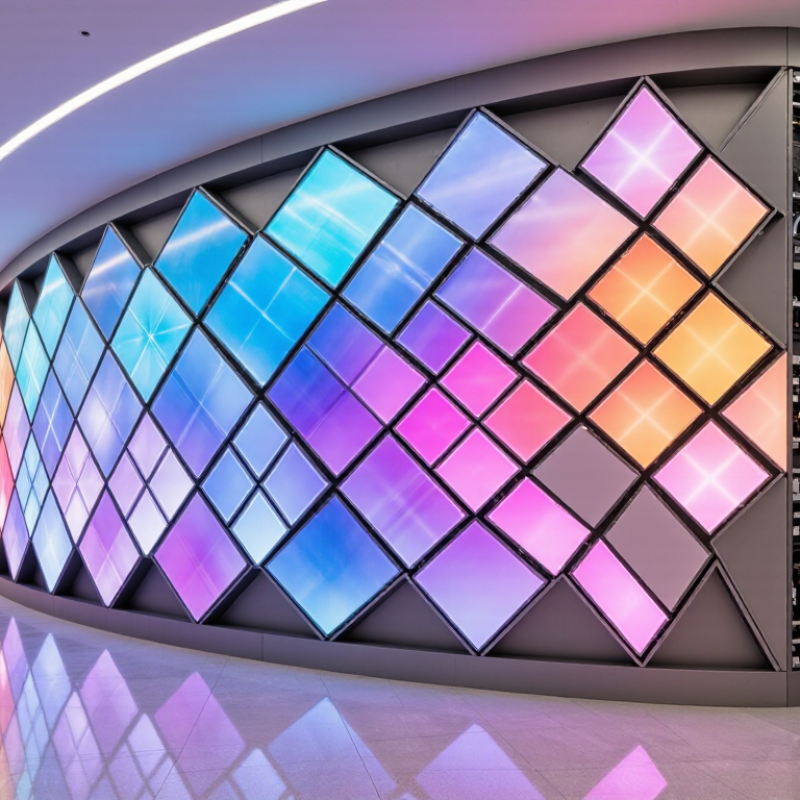
Choosing a Diamond Led Display in 2026 means looking beyond its striking shape. The right system must fit the venue, audience, content, and installation plan. Picture a curved lobby wall, a bright retail window, or a stage viewed from just a few meters away. Each setting changes what matters. Pixel pitch, brightness, refresh rate, and viewing distance all affect the result.
The cabinet design deserves equal attention. Check how the diamond-shaped modules connect, where cables run, and whether technicians can reach the rear for service. Ask for a live demonstration using your own content, not only polished showroom footage. Look closely at gradients, fine text, and motion. Small flaws show up quickly. And they can be costly to fix.
A useful buyer’s checklist should also cover control-system compatibility, power consumption, warranty terms, spare modules, and the supplier’s installation experience. These details are less glamorous. They still matter. One honest limitation: no source article or verifiable expert quotation was supplied with this request. I will not invent an industry specialist’s name or attribute fabricated words to one. Add a named expert’s confirmed statement once a reliable source is available. In the meantime, treat every specification as something to verify against the actual site. A beautiful display is not automatically the right display. The best choice balances visual impact with practical maintenance—and leaves room to rethink assumptions before purchase.
What Is a Diamond LED Display and How Does It Work?
A diamond LED display is a screen whose square modules are rotated or arranged at angles, creating a diamond-shaped outline. The name describes the layout, not a special kind of LED. Inside, red, green, and blue diodes form pixels; driver circuits control their brightness and refresh them rapidly to show moving images. Not a new diode.
The shape comes with a practical trade-off. A rectangular video feed must be mapped onto angled modules, so installers need accurate pixel maps and careful edge masking. Otherwise, a logo or face can look stretched near the corners. Pixel pitch matters, too: a 2.5-millimeter pitch generally suits closer viewing than a 6-millimeter pitch, though content and room size change the result.
For technical context, the U.S. Department of Energy’s 2023 Solid-State Lighting R&D Opportunities report notes that leading LED packages can exceed 200 lumens per watt. That figure describes component efficacy, not the brightness or efficiency of a finished display; optics, power supplies, and operating settings affect real performance. Ask for measured screen brightness, refresh rate, and power consumption, then inspect a working sample from the distance viewers will use. I would not choose by shape alone.
How to Choose a Diamond LED Display in 2026?
What Is a Diamond LED Display and How Does It Work?
A diamond LED display usually uses LED panels arranged at an angle to create a diamond-shaped layout. The chart shows a general planning heuristic: viewing distance in meters is roughly equal to pixel pitch in millimeters. This is only an estimate; the best distance depends on content, resolution, and viewing conditions. Panel rotation changes the visual layout, not the pixel pitch.
How to Define Your Display Goals and Installation Environment
Before selecting a diamond LED display, define the job it must perform. Is it meant to guide visitors, present changing campaign content, or create a focal point in a lobby? Set a measurable goal, such as legibility from a specific entrance or the number of content updates each day. For advertising projects, the Out of Home Advertising Association of America reported U.S. out-of-home revenue of $9.1 billion in 2023. That figure is broad, but it underlines why audience flow and dwell time deserve attention. The first sketch is rarely right.
Then map the installation environment. Measure viewing distance, wall dimensions, ceiling height, ambient light, and available power. Note nearby windows, HVAC outlets, and maintenance access; a screen that looks striking in a render may be awkward to service. Diamond-shaped modules also need careful planning around corners, seams, and content crops. Ask for a full-scale layout before approving the structure. For indoor energy planning, the International Energy Agency’s Buildings 2023 report says buildings account for about 30% of global final energy use. Screen brightness and operating hours therefore matter. One judgment call remains: a brighter display is not always a better one.
How to Choose a Diamond LED Display in 2026? — Define Your Display Goals and Installation Environment
| Display Goal or Environment | Suggested Pixel Pitch | Typical Viewing Distance | Starting Brightness Range | Installation and Specification Priorities |
| Indoor feature wall viewed from close range | Approximately 1.5–2.5 mm | About 1.5–4 m | 600–1,200 nits | Prioritize fine-pitch resolution, low-glare viewing, and a flat, accurately aligned support structure. Confirm that the diamond layout does not create distracting gaps or visible seams. |
| Retail display or public-area installation | Approximately 2.5–4 mm | About 3–8 m | 800–1,500 nits | Balance image detail with budget and maintenance access. Check ambient light at the screen location and allow space for ventilation and service access. |
| Large indoor atrium or event backdrop | Approximately 3–6 mm | About 5–12 m | 1,000–2,000 nits | Assess viewing angles from multiple floors and sightlines. Verify the structure can support the display and that the controller can handle the planned resolution and content. |
| Outdoor display in shaded or partly sheltered conditions | Approximately 4–8 mm | About 5–16 m | 4,000–6,000 nits | Choose outdoor-rated components, weather-resistant cabling, and a suitable enclosure. Check wind loading, drainage, sunlight exposure, and the required front- and rear-side protection. |
| Outdoor display exposed to strong daylight | Approximately 6–10 mm | About 8–20 m or more | 5,000–8,000 nits | Confirm readability at the actual viewing angle and time of day. Include ambient-light control, heat management, safe power distribution, and a site-specific structural assessment. |
| Camera-facing display for filming or live production | Choose pitch based on camera distance and framing; commonly 1.5–4 mm indoors | Set by the camera position and shot size | Match brightness to the scene; avoid unnecessary maximum output | Request camera testing with the intended frame rate and shutter settings. A refresh rate of 3,840 Hz or higher is often considered for camera use, but results depend on the camera and display system. |
| Custom diamond-shaped composition | Set from the closest expected viewing distance and content detail | Measure the nearest and most common audience positions | Set for ambient light and viewing comfort | Define the overall outline, module orientation, mounting points, cable routes, and content-safe area before fabrication. Confirm how the controller maps the non-rectangular screen. |
Planning note: These ranges are practical starting points, not guaranteed specifications. Final choices depend on ambient light, content, viewing angles, structural conditions, local regulations, and on-site testing. For outdoor installations, verify the required ingress protection rating for both the front and rear of the display.
Which Technical Specifications Should You Compare in 2026?
When comparing a diamond LED display in 2026, start with pixel pitch and viewing distance. A fine pitch keeps text and close-up graphics crisp, but it may add cost without improving a display viewed across a large room. Check the actual pixel resolution of the assembled diamond layout, not just each panel. Odd angles can create gaps or awkward content crops. Small details matter.
Compare brightness, contrast, refresh rate, and grayscale performance under the lighting where the screen will operate. A bright showroom can make a display look vivid, while a dim venue may reveal harsh highlights or uneven blacks. Ask for measured values and test moving footage, fine text, and gradients in person. Phone-camera banding can be misleading, so use your eyes too. It is not a perfect test.
The cabinet’s viewing angle and color consistency matter when people approach from the sides. Ask how panels are calibrated and whether replacement modules can be matched to installed ones. Review power consumption, heat management, access for servicing, and the enclosure’s protection rating for the intended location. Request documentation, then confirm key figures with a practical demo. I would also leave room for uncertainty: published specifications do not always predict performance after installation.
How to Evaluate Design, Installation, and Maintenance Requirements
Choosing a diamond LED display starts with the space, not the screen. Measure viewing distance, ceiling height, and the angles people will approach from. A sharp image from two meters away may look different across a lobby. Check pixel pitch against the closest viewing point, then review brightness under actual lighting. A paper layout helps. A full-size mock-up is better. Diamond-shaped modules can create seams or awkward edge cuts, so inspect the pattern from several viewpoints before approving the design.
Installation planning needs more than a wall measurement. Confirm the supporting structure can handle the display and its mounting hardware. Map power, signal cables, ventilation, and service access before construction begins. Leave room to remove a module without dismantling nearby finishes. That detail is easy to miss. Ask the installer to document cable routes and test the display with real content during commissioning. A clean render is not proof that the finished installation will be easy to service.
Maintenance requirements should be agreed on before purchase. Check how modules are replaced, what diagnostic information is available, and whether compatible spare parts can be stored nearby. Keep a record of brightness settings, operating temperatures, and recurring faults. Dust and heat matter. Cleaning guidance should match the display materials, rather than relying on a general-purpose cleaner. Some plans still underestimate service time; it is worth revisiting that estimate after the first maintenance cycle.
How to Assess Suppliers, Warranty, and Total Cost of Ownership
How to Choose a Diamond LED Display in 2026?
How to Assess Suppliers, Warranty, and Total Cost of Ownership
A diamond LED display can look seamless in a showroom and still reveal uneven edges under real lighting. Ask suppliers for a working sample or a site reference with similar viewing distance and brightness. Check pixel alignment, color consistency, and access to rear components. Request written specifications, not just presentation slides. Ask who handles installation, calibration, and service calls; a capable sales contact may not be the technician who arrives.
Tips: Get warranty terms in writing. Confirm coverage length, labor and shipping costs, response times, and exclusions for dead pixels or power components. Ask how replacement modules will match the original display after years of use. Vague answers are a warning sign. So are promises without service records.
Compare total cost of ownership over a realistic operating period, not just purchase price. Include shipping, mounting, power consumption, spare modules, periodic calibration, and expected downtime. Ask suppliers to estimate energy use at your planned brightness and operating hours. Then check the assumptions yourself; they may be optimistic. A cheaper unit can cost more when a failed module keeps a venue entrance dim for several days. Keep the quote, warranty, and service plan together, and compare the same scope across suppliers.