
How to Choose a Reliable Steel Coil Supplier?
Choosing a reliable Steel Coil Supplier is more than comparing prices on a spreadsheet. Steel coils affect production speed, product quality, and customer satisfaction. A missed delivery or inconsistent thickness can disrupt an entire manufacturing line.
Start with evidence, not promises. Ask about the supplier’s mill sources, inspection procedures, material certificates, and quality management systems. A dependable supplier should explain chemical composition, yield strength, tensile strength, thickness tolerance, and surface finish clearly. Request recent test reports and compare them with your own technical requirements. Photos of coils, edge conditions, labeling, and protective packaging can also reveal practical experience.
Visit the facility when possible. Observe how coils are stored, lifted, wrapped, and prepared for shipment. Rust marks, damaged edges, or unclear identification deserve attention. Delivery history matters too. Speak with existing customers about communication, claim handling, and consistency across repeated orders. Good suppliers discuss problems openly. They do not hide behind polished sales language.
Price still matters. It should not be the only measure. A cheaper coil may create more scrap, rework, or production delays. Calculate the full cost, including transport, testing, storage, and potential quality losses. No supplier is flawless. Even experienced companies can make mistakes, especially during urgent orders. What matters is whether they respond quickly, provide traceable records, and correct the problem fairly.
A careful selection process protects both quality and long-term cooperation. The right Steel Coil Supplier should offer dependable materials, practical technical support, and transparent communication. Trust develops through verified performance, not attractive claims.
Define Your Steel Coil Requirements and Quality Standards
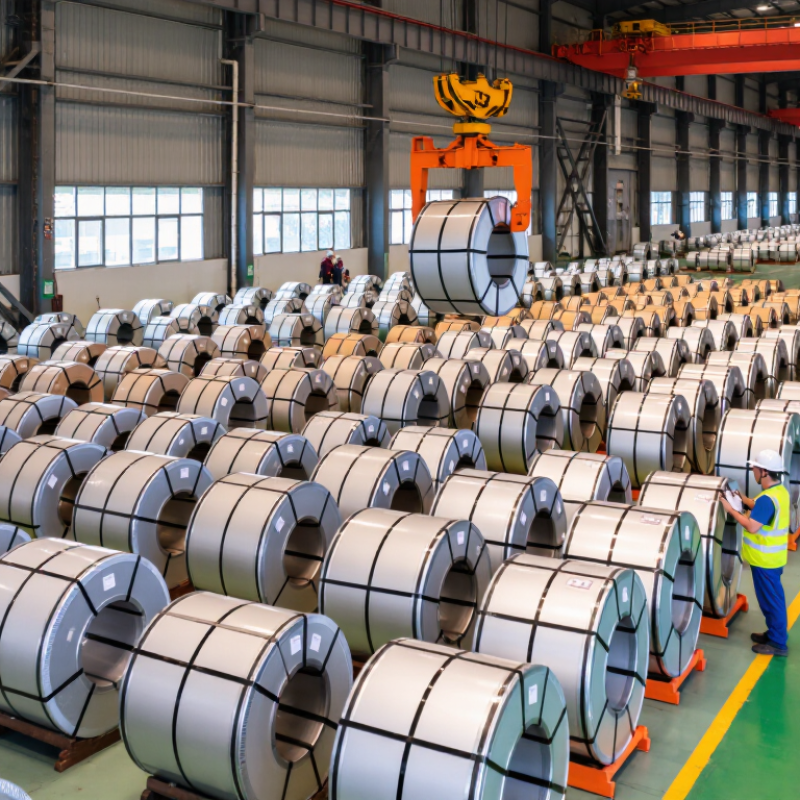
Before requesting quotes, define how the steel coil will be used. Specify its grade, thickness, width, inner and outer diameters, and target weight. State acceptable tolerances instead of relying on “standard” dimensions. Small details matter. A stamping line, for example, may stop if thickness varies beyond its setup range. Surface requirements matter too: clarify whether you need an oiled, dry, or film-protected finish. For corrosion resistance, specify the coating type and coating mass, not just its color.
Set quality criteria that match the job. Name the applicable material standard and request a mill test certificate linked to each coil’s identification number. Ask how the supplier checks thickness, width, surface defects, and coating consistency, and how inspection results are recorded. Do not guess. For critical orders, agree on sampling methods, acceptance limits, and how nonconforming material will be handled.
Packaging is easy to underestimate. Edge guards and dry, secure loading can help prevent damage before the coil arrives. Keep the specification practical; extra requirements can raise costs without improving performance. A careful checklist can still miss a detail, so review it with the people who will handle and process the coil.
How to Choose a Reliable Steel Coil Supplier? - Define Your Steel Coil Requirements and Quality Standards
| Requirement | Details to Define | Example Specification or Check |
|---|---|---|
| Steel type and grade | Choose the product form, grade, and governing standard to suit forming, structural, or corrosion-resistance needs. | Examples include cold-rolled sheet to ASTM A1008, hot-rolled sheet to ASTM A1011, or galvanized sheet to ASTM A653. Confirm the exact grade and applicable standard edition in the purchase order. |
| Thickness | Specify nominal thickness and the required permissible variation. State whether the measurement includes a metallic coating, where applicable. | Example order value: 1.00 mm nominal thickness. Agree on the measurement method and tolerance based on the selected product standard and order dimensions. |
| Width and length | For coil, state the required width and whether the material will be slit. For cut-to-length products, specify sheet length separately. | Example: 1,250 mm coil width. Confirm width tolerance, edge condition, and any slit-width requirements in writing. |
| Coil dimensions and handling | Define the acceptable inside diameter, outside diameter, maximum coil weight, winding direction, and packaging needs. | Example requirements might include a 508 mm inside diameter and a maximum coil weight of 10 metric tonnes; check that these suit the uncoiler and transport equipment. |
| Mechanical properties | Specify required yield strength, tensile strength, elongation, or hardness when these affect processing or end use. | Set acceptance limits using the selected grade and standard. Tensile testing is commonly performed using methods such as ISO 6892-1 or ASTM A370, as applicable. |
| Coating and corrosion protection | For coated products, define coating type, coating designation or mass, surface treatment, and any paintability requirements. | Examples include hot-dip galvanized sheet to ASTM A653 or continuously hot-dip coated products to EN 10346. Confirm the coating designation and how coating mass is reported. |
| Surface and edge quality | Describe acceptable surface finish, oiling, scratches, rust, dents, burrs, telescoping, and edge condition. | Agree on inspection criteria and defect limits before production. For exposed applications, specify the required surface quality and protective packaging. |
| Dimensional tolerances | Set tolerances for thickness, width, flatness, camber, and coil condition using the applicable product standard or a written agreement. | Do not rely on a generic tolerance: limits can differ by product standard, thickness, width, grade, and ordering conditions. |
| Inspection and testing | Identify required checks, sampling frequency, test methods, and whether third-party inspection is needed. | Typical checks may include dimensional measurement, visual inspection, mechanical testing, and coating verification. Agree on the inspection plan and acceptance criteria before shipment. |
| Documentation and traceability | Require records that link the delivered coils to their production and inspection results. | Request a material test certificate stating grade, standard, heat or lot number, dimensions, and applicable test results. Ensure coil identification matches the certificate and shipping documents. |
| Order and delivery controls | Confirm quantity, permissible quantity variation, delivery schedule, packaging, transport protection, and resolution process for nonconforming material. | Include the agreed specifications, inspection requirements, certificate requirements, and packaging details in the purchase order. |