Choosing a Chaga Powder supplier is more than comparing prices. The label may look polished, yet it cannot show where the raw material came from or how each batch was handled. Looks matter less. Ask for the harvest region, sourcing practices, and details about processing. A supplier should explain whether the powder is made from fruiting bodies, mycelium, or a blend, and provide a clear product specification. Request a recent certificate of analysis tied to a specific batch. Check whether it covers identity, microbiological quality, and relevant contaminants. Documentation matters.
A dependable supplier also makes consistency easier to assess. Compare particle size, aroma, color, packaging, and storage guidance across available product samples. Ask how the company monitors batch variation and what happens when a result falls outside its stated specifications. Clear answers are useful; vague assurances deserve a closer look. Price is part of the decision, but an unusually low quote may leave important quality questions unanswered. No supplier is perfect, and a certificate alone cannot tell the whole story. It is worth checking who issued the report and whether its findings match the product being offered. This guide explores practical ways to evaluate sourcing, testing, traceability, and communication before choosing a Chaga Powder partner. The aim is not to find impressive claims, but a supplier whose details can be checked and whose limitations are discussed openly.
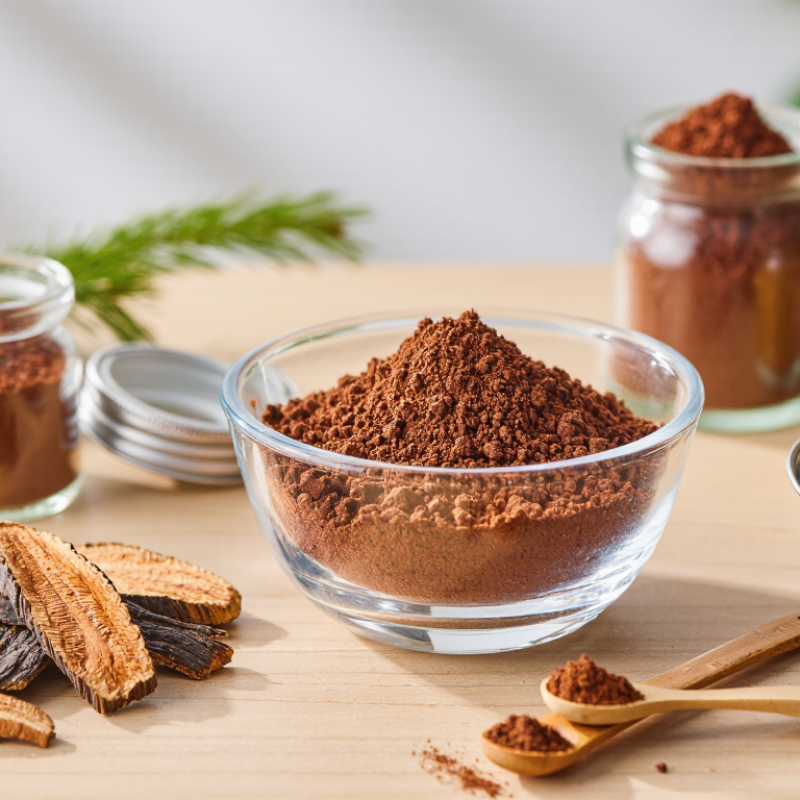
Before comparing Chaga powder suppliers, define how you will use the ingredient. A latte mix may need a fine, dispersible powder; capsules may require consistent particle size and bulk density. Decide whether you need whole-mushroom powder or an extract, and specify the extraction method and extract ratio. These are not interchangeable materials.
The choice also affects what you should verify. Request the Latin name, Inonotus obliquus, plus a batch-specific certificate of analysis covering identity, microbial quality, and heavy metals. For extracts, ask how key compounds are measured; a “standardized” claim means little without a test method and results. Grand View Research’s 2023 functional mushroom market report valued the broader market at USD 8.12 billion and projected 10.5% annual growth through 2030. That figure describes the category, not Chaga quality. Keep the distinction clear.
Tips: Send suppliers your target serving size, format, and required tests before requesting samples. Compare the documents alongside the powder’s color, aroma, and behavior in water. A darker sample is not automatically better. That detail is easy to overlook.
A reliable Chaga powder supplier should be able to explain exactly what is in the bag. Ask whether the material is identified as Inonotus obliquus and whether it comes from the fungal conk or mycelium. These are not interchangeable ingredients. Check how the supplier verifies identity, especially if processing makes visual inspection impossible. A clear answer matters.
Purity needs evidence, not just reassuring language. Request a recent, batch-specific certificate of analysis from an independent laboratory. It should report heavy metals, microbial contamination, and pesticide residues, with test methods and detection limits where available. Check that the batch number matches the product you are buying. A polished certificate can still leave questions. If results are missing or unusually vague, ask for clarification before purchasing.
Testing standards also depend on how the powder is made. Ask whether it is raw, extracted, or blended with other ingredients, and look for that information on the label. Extraction can change the powder’s composition, so identity testing alone may not tell the whole story. Review storage guidance and packaging, too; a damp, poorly sealed pouch can compromise quality. No supplier can remove every uncertainty, and paperwork is not a substitute for careful sourcing. Still, transparent records make comparison more grounded.
Choosing a chaga powder supplier starts with evidence, not polished packaging. Ask for the fungus’s scientific identity, harvest region, and whether it is wild-harvested or cultivated. Request records that link those details to the lot number on the bag. A traceable answer should identify the harvest or production site, not just the country. The Council for Responsible Nutrition’s 2023 Consumer Survey found that 74% of U.S. adults use dietary supplements. That broad demand makes clear quality records especially important, though the survey does not assess chaga products specifically.
Check credentials and testing documents closely. A current quality certificate should name the testing laboratory, methods, batch, and actual results—not merely say “passed.” Look for checks relevant to powdered fungi, including identity, heavy metals, microbes, and moisture. Ask how identity was confirmed; a single test may not resolve every concern in a processed powder. I would not treat a polished certificate as proof. It is only as useful as its methods and traceability.
Production details matter, too. Ask how the material is cleaned, dried, milled, and stored, and whether each step is documented under a quality system. Powder should arrive sealed, dry, and free of visible foreign material; clumping can prompt questions about storage, though it is not proof of contamination. Request a recent lot-specific certificate and compare its number with the package. If answers are vague, pause. Even a supplier with strong paperwork may leave gaps, so record what you verify and what remains uncertain.
A chaga powder quote is useful only when the specifications match. Compare the price per kilogram at the same particle size, moisture range, and test scope. Then add freight, sample fees, and any costs for smaller orders. Check the landed cost. A low unit price can look convincing before shipping is included. Ask whether the quoted price applies to a trial order or only to a much larger volume.
Minimum order quantity affects cash flow and freshness, not just convenience. Ask for the smallest paid sample, pilot lot, and regular production quantity. Request a recent certificate of analysis and lot identification before comparing offers. Ask how long each order takes, and whether lead times change during seasonal sourcing periods. Small lots matter. Even a careful spreadsheet can miss a delay, so confirm the dates in writing.
Supply reliability deserves equal weight with price. McKinsey Global Institute’s 2020 supply-chain research reported that 93% of surveyed leaders planned to increase resilience. That finding is not specific to chaga, but it supports checking backup capacity and sourcing visibility. Ask how suppliers handle delays, changing harvest volumes, and inconsistent batches. I still find this easy to overlook: a reassuring answer is not the same as a documented plan. Compare actual delivery records where available, and revisit the comparison after a few orders.
Choosing a chaga powder supplier starts with a sample, not a polished sales sheet. Ask for a sealed sample from a current production lot. Check its color, aroma, texture, and how evenly it mixes in warm water. These observations cannot confirm safety or identity, but they can reveal inconsistency. Request the Latin species name, country of origin, and whether the product is plain powder or an extract. The Council for Responsible Nutrition’s 2023 Consumer Survey found that 74% of U.S. adults use dietary supplements. That scale makes clear product information important. Still, a popular category does not guarantee a reliable supplier.
Review a lot-specific certificate of analysis, not a generic document. It should identify the tested batch, laboratory, methods, and results for identity, heavy metals, microbes, and pesticide residues. Check that the test method matches the claim; a vague “polysaccharide” result may not tell you much about beta-glucans. Ask for the sampling date and any limitations. I still find this easy to overlook. Details matter.
Customer support is part of quality control. Send a practical question about a missing result or an unexpected sample texture. Note whether the reply is specific, timely, and supported by records. Ask how the supplier traces a batch and handles a complaint. A clear answer beats a quick promise. Keep the email trail with the sample and documents; it helps you compare suppliers consistently.
| Evaluation Area | What to Request | How to Assess It | Positive Decision Signal | Priority |
|---|---|---|---|---|
| Product identity | Product specification stating the species, such as Inonotus obliquus, the material used, and whether the powder is whole mushroom material or an extract. | Check that the description is consistent across the specification, sample label, invoice, and certificate of analysis (COA). Ask which identity test is used and what it can verify. | Product form and identity are clearly described, with no vague or conflicting terminology. | High |
| Representative sample | A sample from the product and lot you are considering, plus the lot number and storage instructions. | Compare appearance, aroma, texture, and ease of handling with the written specification. Confirm whether the commercial order will come from the sampled lot or a later lot. | The supplier explains sample-to-lot matching and notifies buyers if the product or process changes. | High |
| Batch-specific testing | A current COA linked to a specific lot, including test results, units, test methods, and laboratory details. | Verify that the lot number matches the sample or proposed order. Check that results are reported as measured values or clearly stated pass/fail results against defined limits. | Testing is traceable to the supplied lot, and the supplier can explain the methods and specifications used. | High |
| Contaminant controls | Relevant test results for microbiological hazards and heavy metals; pesticide testing where appropriate to the sourcing and applicable requirements. | Review the organisms or substances tested, the units, and the limits used. For extracted products, ask whether residual-solvent testing is relevant to the extraction process. | The testing plan is appropriate to the product and intended market, and results can be interpreted against stated limits. | High |
| Origin and traceability | Country or region of origin, harvest or production details, lot coding, and a description of how incoming material is tracked. | Ask whether the supplier can trace a finished lot back to its source records and explain how mixed or changed lots are identified. | Origin information is specific enough to support traceability, and records connect incoming material to finished product lots. | High |
| Processing and specifications | A product specification covering processing, particle size, moisture or other relevant quality parameters, packaging, and storage conditions. | Check that the specification describes measurable characteristics and matches the intended use. Ask how changes to specifications are communicated. | Requirements are documented, understandable, and consistent with the sample and COA. | Medium–High |
| Food-safety documentation | Information about the supplier’s food-safety program and any applicable third-party audit or certification documents. | Confirm the document is current, covers the relevant site and activities, and applies to the product category. Certification scope and validity should be checked with the issuing organization where needed. | Documents are current and their scope is relevant; the supplier does not present a certificate as proof of qualities it does not cover. | Medium–High |
| Organic or other claims | Supporting certificates or records for any organic, sustainability, or other claim made about the product. | Check the certificate’s validity, scope, covered product, and supply-chain relevance. Requirements for claims vary by market. | Claims are supported by documentation applicable to the product and destination market. | As applicable |
| Customer support | A clear contact for technical and order questions, along with written procedures for complaints, returns, and product-quality issues. | Ask a specific question about the COA, sample lot, or testing plan. Evaluate whether the answer is timely, clear, and supported by records. | Responses address the question directly, provide requested documents, and explain how issues are investigated. | Medium–High |
| Commercial terms | Written information on minimum order quantity, lead time, packaging sizes, shelf life, storage, and change-notification practices. | Compare the terms with your purchasing needs and confirm whether quoted lead times and specifications apply to the product under review. | Terms are documented before purchase, with a clear process for communicating delays or product changes. | Medium |