
Choosing the right Assembly Machine can shape your production speed, product quality, and long-term operating costs. It is not simply a matter of selecting the fastest model. The machine must match your product design, assembly volume, workplace conditions, and future business plans. A small electronics workshop may need precise screw fastening and visual inspection. A high-volume automotive supplier may require automated feeding, robotic handling, and real-time quality checks.
Practical experience shows that machine selection often fails during the early assessment stage. Teams may focus on purchase price while overlooking tooling changes, operator training, maintenance access, and spare-part availability. That mistake can become expensive. A reliable evaluation should examine cycle time, accuracy, changeover requirements, safety features, energy use, and compatibility with existing equipment. Ask for production samples and factory acceptance tests. Watch how the machine handles minor defects, not only perfect components. Real production is rarely perfect.
Think beyond today.
The best Assembly Machine supports consistent output without creating unnecessary complexity. Suppliers should provide clear technical documents, service records, warranty terms, and measurable performance data. Independent testing can strengthen confidence before investment. Still, no machine is flawless. Your product may change, demand may fall, or integration may take longer than expected. A careful decision leaves room for these realities. This guide explains how to compare machine types, estimate total ownership costs, and identify a solution that remains practical as your business develops.
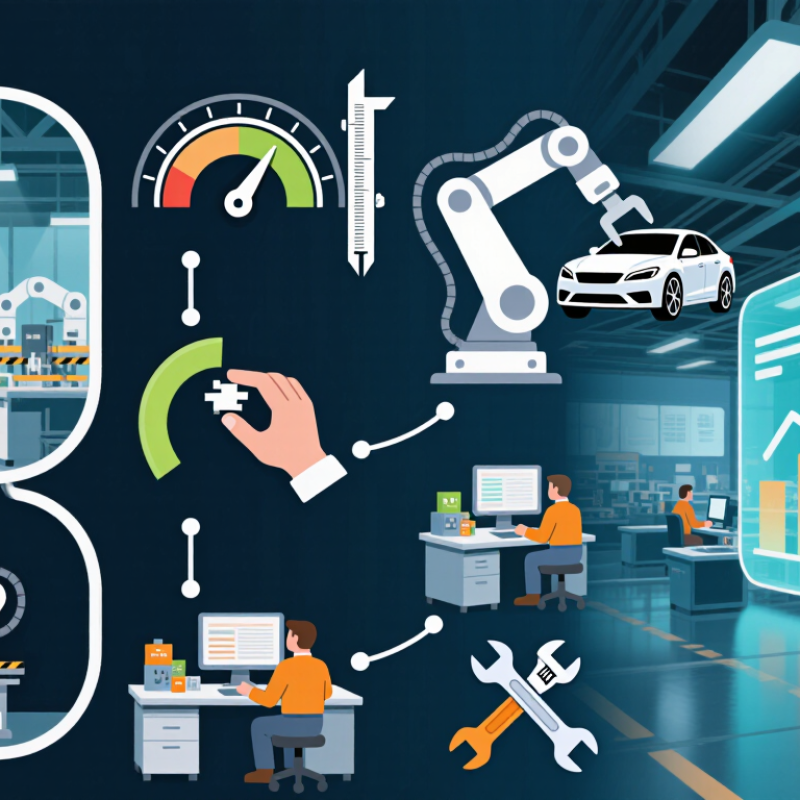
Choosing an assembly machine starts with a clear production definition, not a machine catalogue. Record the product’s dimensions, materials, joining method, tolerance, and cycle time. Measure real demand by shift, not annual forecasts alone. Include changeover frequency, operator skills, floor space, and inspection requirements. These details expose hidden constraints early.
Industry data supports careful planning. The International Federation of Robotics reported 541,302 industrial robots installed worldwide in 2023. Its World Robotics 2024 report also recorded a global density of 162 robots per 10,000 manufacturing employees. These figures show growing automation, but they do not prove that full automation fits every factory. A low-volume line may need flexible tooling and quick manual access. A stable, high-volume line may justify dedicated stations. Define the target.
Set measurable goals before requesting quotations. Specify acceptable cycle time, first-pass yield, uptime, scrap rate, and payback period. For example, a 12-second cycle means little if inspection rejects five percent of output. Test representative parts, including the awkward ones. Ask for data from similar applications, not only ideal demonstrations. Independent guidance from the Association for Advancing Automation stresses risk assessment, integration planning, and worker safety during automation projects.
Production data can be incomplete. Product variations may also increase after launch. Leave capacity for maintenance, software changes, and future models. A smaller machine with adaptable fixtures may outperform a faster system that becomes difficult to adjust. That choice may feel less impressive, but it can protect long-term production goals.
Choosing an assembly machine starts with the product, not the machine catalog. Compare part size, tolerance, joining method, and daily volume before reviewing specifications. A rotary indexing machine suits stable, high-volume products with repeated steps. It can deliver fast cycle times, but changeovers may become expensive when product variants increase.
A linear assembly system offers easier access and flexible station layouts. It works well for medium volumes, frequent adjustments, and products requiring manual inspection. Robotic cells provide strong repeatability for screwdriving, dispensing, or component handling. However, they need careful tooling and reliable part presentation. For delicate products, semi-automatic equipment may reduce damage and let operators correct small alignment errors.
The International Federation of Robotics reported 541,302 industrial robots were installed worldwide in 2023. That figure shows automation demand, but it does not prove that full automation fits every process. Deloitte’s 2024 Smart Manufacturing and Operations Survey found that 92% of manufacturers view smart manufacturing as a major competitiveness driver. Still, connectivity cannot fix poor process design. Test sample parts under real conditions. Measure cycle time, reject rate, operator access, changeover minutes, and maintenance response. A machine that looks efficient on paper may struggle beside a dusty feeder or inconsistent component tray. Leave room for learning. The first design is rarely perfect.
| Machine Type | Best Fit for Products | Typical Assembly Process | Typical Output Range | Product Variety | Changeover Time | Typical Assembly Accuracy | Labor Requirement | Integration Capability | Relative Investment | Main Advantages | Main Limitations |
|---|---|---|---|---|---|---|---|---|---|---|---|
| Manual Assembly Workstation | Low-volume or highly customized products with frequent design changes | Hand loading, fastening, pressing, inspection, labeling, and packaging | Approximately 10–120 units per hour | Very high | Minutes | Typically 0.5–1.0 mm, depending on fixtures and operator technique | One operator per workstation is common | Basic tools, barcode scanners, torque controllers, and inspection devices | Low | Lowest initial cost, maximum flexibility, and simple product changes | Higher labor cost per unit, variable cycle time, and limited production traceability |
| Guided Manual or Semi-Automatic Workstation | Small and medium batches with repeatable fastening, pressing, dispensing, or testing steps | Operator loading combined with automated tooling or controlled process modules | Approximately 60–300 units per hour | High | Approximately 10–60 minutes | Typically 0.1–0.5 mm with suitable fixtures and sensors | One operator can often manage one or more stations | Torque monitoring, presence sensors, PLC controls, barcode tracking, and basic data collection | Low to medium | Good balance between flexibility, process control, and investment | Output still depends on operator loading and material presentation |
| Rotary Indexing Machine | Medium- to high-volume products with a fixed sequence of repeatable operations | Parts move through multiple stations on a rotating indexing table | Approximately 300–2,400 units per hour | Medium | Approximately 1–8 hours | Typically 0.05–0.20 mm with precision tooling and controlled fixtures | One operator may load components and monitor the machine | Pressing, screwdriving, dispensing, welding, testing, vision inspection, and traceability | Medium to high | Compact layout, consistent cycle time, and efficient multi-step assembly | Less suitable for frequent product changes and complex part variations |
| Linear Transfer Assembly Machine | High-volume products requiring many sequential assembly and inspection operations | Workpieces transfer between dedicated stations on a linear conveyor or pallet system | Approximately 300–3,000 units per hour | Medium | Approximately 2–16 hours | Typically 0.05–0.20 mm, depending on pallet and tooling design | Usually one operator for loading, monitoring, and replenishment | Robotic handling, leak testing, electrical testing, vision inspection, and manufacturing data systems | High | Scalable station layout, strong process control, and suitable for complex sequences | Larger footprint, higher engineering effort, and longer commissioning time |
| Robotic Assembly Cell | Products requiring flexible handling, variable orientations, or multiple assembly tasks | Industrial robots or collaborative robots perform pick-and-place, dispensing, fastening, or inspection | Approximately 120–1,200 units per hour | High | Approximately 30 minutes–8 hours | Typically 0.1–0.5 mm; repeatability depends on robot type, tooling, and fixturing | One operator may supervise one or more cells after training | Vision systems, force sensing, automatic tool changing, PLCs, safety systems, and production databases | Medium to high | Flexible automation, reprogrammability, and good suitability for product families | Requires skilled programming, reliable part presentation, and proper safety validation |
| Custom Inline Assembly System | Stable, high-volume products with demanding cycle-time, quality, and traceability targets | Multiple dedicated stations, automated feeding, assembly, testing, inspection, and rejection | Approximately 600–6,000 units per hour | Low to medium | Several hours to multiple days | Often better than 0.1 mm when precision tooling and controlled processes are used | Low direct labor, but skilled maintenance and engineering support are required | Full line control, machine vision, statistical process monitoring, traceability, and factory systems | Very high | Highest potential throughput, repeatability, automation level, and unit-cost reduction | High initial investment, long development time, and limited flexibility after deployment |
Speed should begin with your real production rhythm, not the machine’s headline cycle time. Measure loading, inspection, rework, and changeover minutes. A machine rated for 60 cycles per minute may deliver far less beside a variable feeder.
The International Federation of Robotics reported 541,302 industrial robots were installed worldwide in 2023. This growth shows automation is expanding, but robot density alone does not guarantee useful output.
Run a timed trial using your smallest and largest products. Watch the pauses.
Accuracy deserves equal attention. Track first-pass yield, dimensional variation, fastening torque, and rejected units over several shifts.
Ask suppliers for repeatability data under normal temperature, vibration, and operator conditions. The ISO 9283 standard provides methods for evaluating robot performance, including positioning accuracy and repeatability.
Those figures are valuable, but they may not reflect your fixtures or materials.
A perfect laboratory result can disappoint on a dusty factory floor.
Test recipe changes, tooling swaps, and new component positions before signing. Modular fixtures and programmable controls can support product variation, though they often increase initial complexity.
Select automation levels according to labor stability, product volume, and inspection needs.
IFR’s World Robotics 2024 report recorded more than 4.28 million industrial robots operating globally at the end of 2023.
That figure encourages automation, but not blind automation. Sometimes a semi-automatic station is easier to maintain, train, and improve.
I have seen teams overbuy speed and underfund maintenance.
That mistake is expensive.
Choosing an assembly machine begins with total cost, not the purchase quote. Calculate tooling, integration, training, utilities, floor space, software, spare parts, and disposal. NIST lifecycle-cost guidance recommends evaluating acquisition, operation, maintenance, and end-of-life expenses together. Ask for evidence. Request cycle-time studies using your actual components, not ideal samples. A five-second cycle may become seven seconds after material changes or operator adjustments.
Maintenance can quietly decide whether automation creates value. The International Federation of Robotics reported 541,302 industrial robot installations in 2023, with more than 4.28 million robots operating worldwide. More equipment also means more sensors, drives, and replacement parts. Compare preventive-maintenance hours, technician availability, spare-part lead times, and remote-support requirements. Deloitte’s 2024 Smart Manufacturing and Operations Survey found that 92% of manufacturers viewed smart manufacturing as a major competitiveness driver within three years. That does not guarantee payback.
Build a conservative ROI model. Suppose a machine costs $180,000, saves $90,000 in labor, reduces scrap by $20,000, and avoids $30,000 in downtime annually. Subtract $35,000 for maintenance, energy, and software.
The estimated annual benefit is $105,000, producing a simple payback of about 1.7 years.
My first estimate is rarely right. Test slower production, overtime, training delays, and one unexpected repair. If the return disappears under those conditions, the machine may still improve quality, but the investment case needs more work.
A reliable machine is more than its cycle time. Supplier support can determine whether production recovers quickly after a fault. Ask about response times, technician availability, training, and spare-part storage. Request service records from similar installations. A confident supplier should explain limitations clearly, not promise perfection. That honesty matters.
Safety must be verified before purchase. Review guarding, emergency stops, lockout procedures, noise levels, and operator access. Request a documented risk assessment and factory acceptance test. Confirm that the machine can meet applicable workplace safety requirements in your region.
During a site visit, watch an operator perform a changeover. Small details matter. Awkward access may become a daily hazard.
Tips: Ask for a support agreement with clear response targets. Check whether training includes troubleshooting, not only basic operation. Test sample products using your actual materials. For future scalability, examine modular tooling, spare inputs, software update policies, and data connections. Leave floor space for inspection stations or added modules. I have seen teams focus heavily on today’s output and regret ignoring tomorrow’s product variations. Still, expansion plans can also be overestimated. Build flexibility around realistic forecasts, not optimistic guesses. A useful supplier will challenge your assumptions and provide evidence.