
Choosing the right Pvc Profile Mixer can shape product quality, production stability, and long-term operating costs. In real PVC processing, a mixer is not merely a large heated vessel. It controls powder distribution, plasticizer absorption, temperature uniformity, and discharge timing. A poor match may create uneven batches, burnt material, or inconsistent profile surfaces.
Experienced manufacturers usually begin with the formulation and output target. Consider resin type, stabilizers, fillers, additives, batch weight, and required cycle time. A rigid-profile producer may need a high-speed hot mixer with reliable temperature control and a separate cooling stage. Check the mixing chamber, rotor design, heating method, cooling efficiency, and wear-resistant contact surfaces. Small details matter. A loose temperature sensor can distort the entire process.
Supplier credibility also deserves careful attention. Review test data, factory references, maintenance records, and after-sales response. Ask for a trial using your actual formulation, not a convenient substitute. Confirm motor protection, emergency stopping, dust control, electrical standards, and documented operating procedures. These features support safer and more dependable production.
No mixer is perfect.
A larger motor does not automatically deliver better dispersion. Excessive speed may raise temperatures too quickly, while weak cooling can extend every cycle. Buyers should compare measurable results, including batch consistency, energy consumption, noise, cleaning time, and spare-part availability. One overlooked issue remains operator training. Even a well-designed Pvc Profile Mixer can perform poorly when settings are changed without records. Careful testing, honest supplier communication, and periodic process review provide a more reliable purchasing foundation.
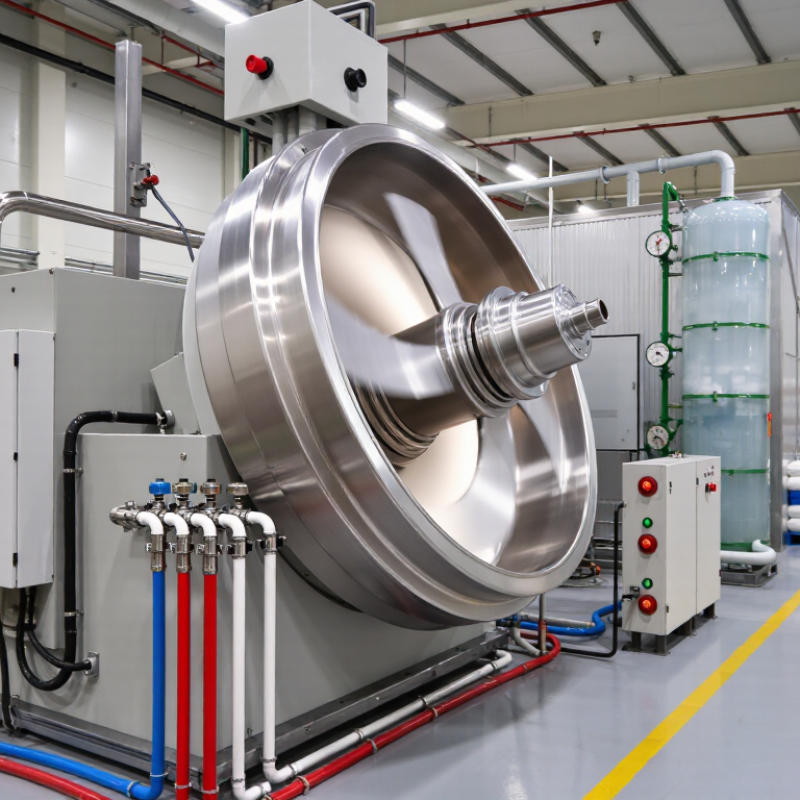
Before choosing a PVC profile mixer, define the production target in measurable terms. List the profile type, hourly output, batch size, formulation, and available floor space. A window frame compound needs different mixing behavior from a rigid cable duct. Start there.
PlasticsEurope’s Plastics – the Fast Facts 2023 report shows PVC accounted for about 9.6% of European plastics demand in 2022. This scale reflects varied processing requirements. If your line targets 300 kilograms per hour, a mixer designed for 80 kilograms per batch may create delays. Calculate usable volume, not the advertised vessel capacity. Powder loading, stabilizers, fillers, and moisture all reduce working space. Small details matter.
Check the heating and cooling sequence against your actual recipe. A high-speed hot mixer can improve dispersion, but excessive shear may raise temperature too quickly. PVC processing windows are not forgiving. Ask for measured discharge temperatures, mixing-cycle records, and energy use under comparable loads. The U.S. Department of Energy’s Industrial Technologies Program has repeatedly identified motor systems as major industrial electricity users, so inefficient drives deserve attention. In practice, operators often focus on throughput and overlook cleaning time. That is a mistake. Include changeover minutes, dust control, maintenance access, and future formulation changes in the specification. I would also leave some capacity margin. Maximum output looks attractive, but continuous operation near the limit can shorten equipment life.
Capacity should match the real batch size. A mixer filled below half capacity may produce uneven circulation. An overloaded vessel can leave powder near the walls. In practical operation, leave enough headspace for movement and thermal expansion. A 500-kilogram rating does not always mean a 500-kilogram working batch. Check bulk density, mixing time, motor torque, and discharge speed together.
Material handling also changes the best choice. Operators can load bags manually, but vacuum conveying reduces lifting and improves feeding consistency. Pneumatic transfer needs suitable filters and careful air control. Fine PVC powder can spread around an open charging point. Enclosed transfer usually supports cleaner work areas. Weighing systems help maintain additive accuracy, although calibration can be overlooked. It happens. Before purchase, test the actual formulation with its fillers and pigments. Measure temperature rise, discharge residue, cleaning time, and batch uniformity. A smaller mixer may perform better when changeovers are frequent.
Choosing the right PVC profile mixer starts with the finished profile, not the machine brochure. During trials, I check whether the dry blend disperses evenly across the batch. Small samples should show consistent color, filler distribution, and additive coverage. Uneven mixing often appears later as surface streaks or weak corners. That delay can make the original problem difficult to trace.
Temperature control deserves close attention. A reliable mixer should measure material temperature near the actual mixing zone. Jacket temperature alone may give a false sense of security. PVC can overheat when friction rises, even if the jacket reading looks normal. I watch the temperature curve, motor load, mixing time, and discharge condition together. The blend should leave smoothly, without burnt odor or visible agglomerates. Keep the sensor clean. A dirty sensor can create confident but inaccurate readings.
Energy use should be compared with output quality, not judged by motor size alone. Record kilowatt-hours per ton during repeatable production runs. Lower consumption is useful only when dispersion and throughput remain stable. I have seen operators reduce mixing time and save power, then spend more on rejected profiles. That approach looked efficient but was not. Variable-speed drives, efficient cooling, and controlled batch timing can reduce waste. Still, every formulation behaves differently. A machine that performs well in one trial may need adjustment after filler levels, moisture, or ambient temperature changes. Evaluate real production conditions, and leave room for an honest second trial.
Machine quality should be judged under real production conditions, not by polished brochures. Check the welds, shaft alignment, gearbox noise, and temperature stability during a full-load trial. A mixer that runs smoothly for ten minutes may vibrate after an hour. Ask for test records covering batch uniformity, power consumption, and emergency-stop response. ISO 12100 recommends risk assessment throughout the machine’s lifecycle, including operation, cleaning, and servicing.
Safety details deserve direct inspection. Fixed guards should block access to rotating shafts, while interlocked covers should stop motion before an operator reaches the chamber. OSHA recorded 1,644 machine-guarding violations in its FY2023 enforcement summary. That figure shows why safety cannot remain a checkbox. Verify lockout points, warning labels, overload protection, and safe discharge procedures. Test them yourself. Do not accept a verbal promise.
Maintenance access often decides whether a machine stays productive. Open the inspection doors and check if bearings, seals, filters, and electrical terminals are reachable without awkward climbing. Leave enough space for a technician’s hands and tools. IEC 60204-1 supports clear electrical safety practices, but access still depends on practical layout. A small design flaw can turn a ten-minute cleaning task into an hour. I would also inspect the manual carefully; unclear service intervals are a warning sign. No machine is perfect. The best choice makes its weaknesses visible early.
How to Choose the Right PVC Profile Mixer?
Select a Supplier Based on Customization, Support, and Total Cost
A PVC profile mixer should match your production conditions, not only your target output. Ask the supplier to review your formulations, batch sizes, and profile dimensions. A mixer for rigid window profiles may need different heating, cooling, and discharge controls than one for decorative trim. Request a practical trial with your PVC resin, stabilizer, and additives. Watch the powder flow, mixing temperature, cycle time, and residue inside the vessel. Small residue can become a large quality problem.
Customization matters when your factory has limited space or changing products. Check options for vessel volume, blade design, automation, dust control, and material contact surfaces. The supplier should explain why each change is needed. Avoid impressive specifications without production evidence. I once focused too heavily on motor power; that was a mistake. Mixing consistency and controlled cooling mattered more.
Tips: Compare the full cost, including installation, spare parts, energy use, training, and downtime. Ask for a clear maintenance schedule and response times for technical support. Confirm the availability of critical seals, sensors, and blades. A low purchase price can become expensive after repeated delays. Speak with experienced users, but inspect their operating conditions carefully. Your process may be different. Performance guarantees should include measurable tests, not vague promises. Get every agreed customization in writing.