
China Top POS Machine Battery Manufacturers How to Choose?
China’s POS hardware industry serves a rapidly changing payment environment. The Worldpay Global Payments Report 2024 states that digital wallets represented about 50% of global e-commerce transaction value in 2023. They also reached roughly 30% of in-store payment value. These figures increase pressure on retailers to keep terminals available, responsive, and portable. A dependable Pos Machine Battery is now an operating component, not merely a replacement part.
Choosing among China’s top manufacturers requires more than comparing capacity and price. Check the cell chemistry, rated voltage, cycle-life test conditions, connector design, and protection circuit. A 2,600 mAh pack may outperform a 3,000 mAh pack if it maintains stable voltage under receipt printing, wireless communication, and screen brightness. Ask for sample units and test them during repeated payment sessions. Measure operating temperature, charging time, standby loss, and battery swelling risk. Small details matter.
Safety evidence should be documented. Suppliers should explain compliance with IEC 62133-2, UN 38.3 transport testing, and relevant quality-management procedures. The International Electrotechnical Commission identifies IEC 62133-2 as a key safety standard for portable sealed secondary lithium cells and batteries. However, certificates alone do not prove consistent production. Review test dates, model numbers, factory traceability, and warranty terms. Audit reports from recognized laboratories add useful confidence. No shortlist is perfect. A supplier with strong samples may still have weak after-sales support. Conversely, a lower-cost factory may provide excellent customization but limited documentation. The practical choice balances safety, field performance, production capacity, communication, and total ownership cost.
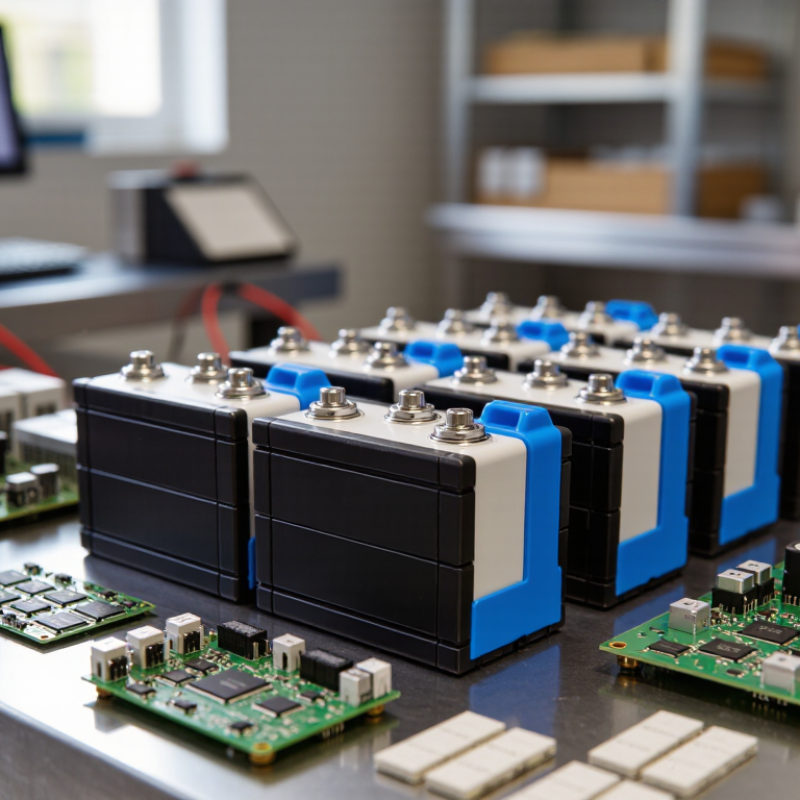
What Makes a POS Machine Battery Manufacturer Reliable in China?
A reliable POS machine battery manufacturer in China should prove performance, not merely promise it. The 2024 MarketsandMarkets report estimates the global POS terminal market will grow from about USD 110 billion in 2024 to USD 164 billion by 2029. This growth increases demand for stable, compact, and serviceable battery packs.
Ask for traceable cell records, production dates, and batch-level test results. A capable factory should measure capacity, internal resistance, charging time, and discharge performance. It should also test batteries under heat, cold, vibration, and repeated charging. Compliance with IEC 62133-2 and UN 38.3 shows that the supplier understands recognized battery safety requirements. ISO 9001 certification adds process discipline, but it does not replace product testing.
Look for practical experience with handheld terminals. The battery should fit securely, maintain steady voltage, and support a full working shift. Ask how the manufacturer handles swelling, early capacity loss, and warranty returns. Their answer matters more than a polished brochure. No factory is flawless. A reliable one admits possible failure points and explains corrective actions. Independent inspection is still worthwhile. The 2024 Global E-waste Monitor reported 62 million tonnes of electronic waste worldwide in 2022, with only 22.3% formally recycled. Therefore, ask about battery replacement, material documentation, and responsible end-of-life handling. Small details reveal reliability.
China Top POS Machine Battery Manufacturers How to Choose? - What Makes a POS Machine Battery Manufacturer Reliable in China?
| Evaluation Dimension | Practical Reference Data | Why It Matters for POS Devices | Evidence to Request | Reliability Rating |
|---|---|---|---|---|
| Battery Chemistry | Rechargeable lithium-ion or lithium-polymer cells are commonly used in portable POS terminals. Lithium iron phosphate may be selected when safety and cycle life are prioritized over compact size. | The chemistry affects energy density, weight, safety behavior, charging requirements, service life, and enclosure design. | Cell datasheet, chemistry declaration, safety data sheet, and an explanation of the selected cell grade. | High |
| Nominal Voltage Compatibility | A single lithium-ion cell is typically rated at about 3.6–3.7 V nominal, while a two-cell series pack is typically about 7.2–7.4 V nominal. The POS device determines the correct configuration. | Incorrect voltage can cause charging faults, poor runtime, overheating, or permanent damage to the terminal. | Approved electrical specification, charge-voltage limits, discharge cut-off limits, and compatibility test report. | Critical |
| Capacity Accuracy | Capacity should be specified in mAh or Wh with defined test conditions, including discharge current, temperature, and end-of-discharge voltage. Capacity should not be compared using mAh alone when nominal voltages differ. | Accurate capacity information helps predict payment transactions per charge and prevents unrealistic runtime claims. | Capacity test records, sampling method, test temperature, and production inspection limits. | High |
| Cycle-Life Performance | A cycle-life claim is meaningful only when the charge/discharge rate, temperature, depth of discharge, and remaining-capacity threshold are stated. A common specification format is “at least 80% of initial capacity after a defined number of cycles.” | POS equipment may be charged and discharged frequently, so cycle-life data is more useful than a simple calendar-life statement. | Cycle-life test report using the same cell, pack design, and battery-management settings as the proposed product. | High |
| Battery Management System | The protection circuit should normally address overcharge, over-discharge, overcurrent, short circuit, and excessive temperature. Multi-cell packs may also require cell balancing. | A properly designed protection system reduces safety risks and helps maintain stable battery performance during repeated use. | Protection thresholds, schematic or functional description, fault-response test results, and firmware revision controls. | Critical |
| Safety and Transport Compliance | For rechargeable lithium batteries, UN 38.3 testing is relevant to transport. IEC 62133-2 is commonly used for portable sealed secondary lithium cells and batteries. Additional market requirements may apply. | Compliance documentation supports safer shipping, import procedures, product approval, and risk management. | Valid test reports, certificates, battery model identification, and confirmation that the reports match the supplied configuration. | Critical |
| Dimensional and Connector Accuracy | The pack should match the approved length, width, height, connector type, cable routing, polarity, mounting points, and contact arrangement. Tolerances must be agreed in the drawing. | Even a correctly rated battery may fail if it does not fit the terminal or if the connector and polarity are incompatible. | Dimension drawing, 3D or 2D product file, connector specification, first-article inspection report, and fit test. | Critical |
| Thermal Performance | Operating and charging temperature limits must be stated by the cell and pack supplier. Charging lithium batteries outside the permitted temperature range can increase safety and degradation risks. | POS terminals may be used in warehouses, vehicles, retail counters, and outdoor service environments with changing temperatures. | Temperature-cycle test, charging-temperature protection test, thermal measurement data, and enclosure heat-dissipation assessment. | High |
| Manufacturing Quality Control | A controlled process should include incoming-cell inspection, voltage and resistance matching, welding inspection, insulation checks, protection-circuit testing, capacity testing, and final visual inspection. | Consistent process control reduces variation between batches and lowers the chance of early failures in the field. | Quality-control plan, inspection records, calibration records, traceability procedure, and sample production-line audit. | High |
| Traceability and Change Control | Each production batch should be traceable to cell lot, assembly date, inspection results, battery-management version, and approved component list. | Traceability makes it easier to investigate defects and prevents unapproved cell or component substitutions. | Lot-code format, bill of materials, engineering-change procedure, retention period for records, and corrective-action process. | High |
| Sample Validation | Samples should be tested in the actual POS terminal for charging, runtime, transaction operation, standby behavior, connector fit, vibration, drop exposure, and repeated recharge cycles. | Bench tests alone may not reveal firmware, connector, mechanical, or thermal issues that occur in the completed device. | A written validation plan, acceptance criteria, test logs, failure analysis, and signed sample-approval record. | Critical |
| Warranty and After-Sales Support | A dependable supplier should define warranty duration, covered failure modes, response time, replacement procedure, and responsibility for analysis of returned batteries. | Clear support terms reduce downtime and make it easier to manage field failures across different markets. | Written warranty policy, return-material authorization process, failure-analysis report template, and spare-part plan. | Medium to High |
| Quotation Transparency | The quotation should separately identify cell type, rated capacity, nominal voltage, protection circuit, connector, enclosure, testing, packaging, tooling, minimum order quantity, and lead time. | Transparent specifications make supplier comparisons fair and help prevent cost reductions through undisclosed component substitutions. | Detailed technical quotation, approved specification sheet, sample-versus-mass-production comparison, and written change-notification commitment. | Medium to High |