
Cuddon Freeze Dry Logo

How to Choose a Prefabricated Substation?

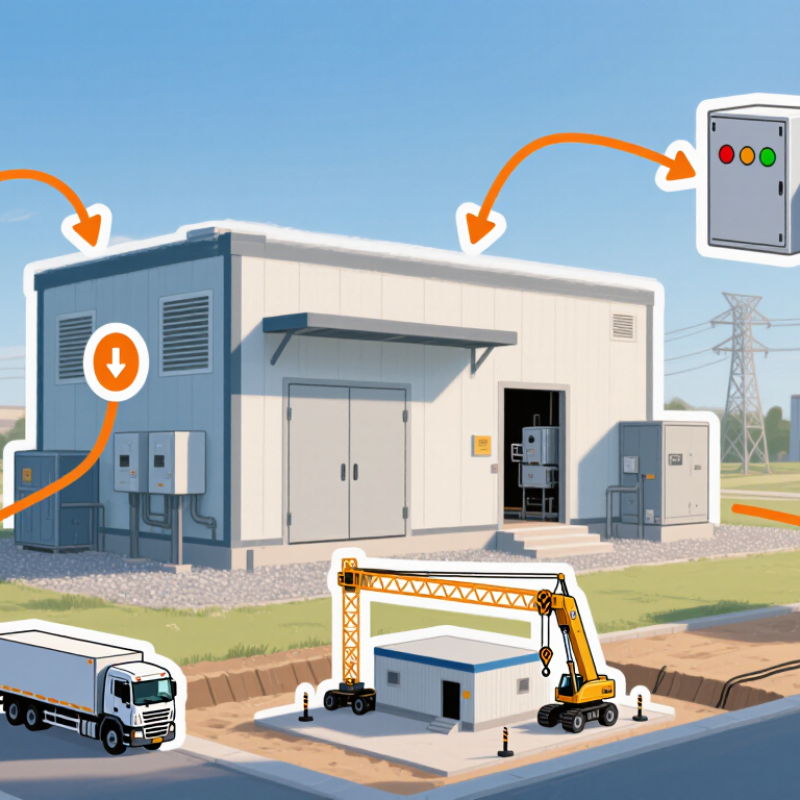
Choosing a Prefabricated Substation is not simply a matter of comparing prices. The equipment must suit the required voltage, expected load, site conditions, and future expansion plans. A factory-assembled unit can reduce on-site work, but its dimensions and access requirements still need careful checking. Picture the delivery route, crane position, cable trench, and space for maintenance before approving a layout. Small details matter. A narrow gate or poorly placed cable entry can complicate installation.

This guide introduces the main factors to review when comparing designs, including transformers, switchgear, protection systems, ventilation, enclosure ratings, and service access. It also explains why supplier drawings and technical specifications deserve close attention. Ask how the proposed configuration handles peak demand, local weather, and planned upgrades. Have a qualified electrical engineer verify the design against project requirements and applicable standards. A low initial quote can look reassuring, yet it may exclude useful monitoring features or long-term service support. That trade-off deserves a second look. No catalogue can fully represent a real site. By checking assumptions, clarifying what is included, and comparing lifecycle needs alongside purchase cost, buyers can make a more informed choice and avoid preventable surprises during installation and operation.
How to Choose a Prefabricated Substation?

Define the Substation’s Purpose and Electrical Requirements

A prefabricated substation should match the work it will actually perform, not just the site’s peak load. Will it serve a factory, a renewable energy installation, or a group of buildings? Each purpose affects transformer capacity, voltage levels, switching arrangements, and protection requirements.

Map the connected equipment and note which loads run together. Motors can draw high starting currents, while sensitive controls may need stable power. Small details matter. Record expected demand now and plausible growth later; the first estimate is rarely perfect, so document its assumptions.

Tips: Gather utility supply data, load schedules, and site conditions before comparing designs. Confirm the required primary and secondary voltages, phase configuration, fault level, metering, and protection interfaces with qualified electrical professionals.

Check the installation environment as carefully as the electrical figures. Dust, moisture, heat, altitude, and limited access can affect enclosure selection, cooling, maintenance, and equipment life.

Allow space for cable entry, safe operation, and future service work. A compact layout may look efficient on a drawing, yet prove awkward when technicians need to reach a switch or replace a component.

Verify transport routes, foundation dimensions, and connection points with the project team. If a requirement remains uncertain, mark it for review rather than treating an early guess as a final specification.

Assess Site Conditions and Installation Constraints

A prefabricated substation must fit the actual site, not just the drawing.

Walk the proposed location and measure its usable footprint, access roads, turning areas, and overhead clearance. Note slopes, soft ground, drainage channels, and nearby structures. Small details matter. A delivery truck may reach the gate but still lack room to turn or position the unit.

Ask a qualified site engineer to review soil bearing capacity, foundation needs, flood exposure, and cable routes. Check whether cranes can reach the installation point without crossing buried utilities or blocking essential access. Keep enough clear space around doors and ventilation openings for inspection and maintenance.

Measure twice. A site sketch can miss a low branch, a narrow gate, or a shallow trench; verify dimensions in the field before finalizing the layout. Also consider how equipment will be replaced years later, not only how it will arrive on installation day.

Local requirements and utility specifications vary, so confirm them with the responsible professionals early. One overlooked constraint can force costly changes, and even a careful survey may need revision after excavation reveals unexpected ground conditions.

Compare Equipment Layouts, Enclosures, and Protection Features

Compare layouts by tracing the real work path: transformer, switchgear, cable trench, and maintenance access. A compact arrangement saves land, but tightly packed panels can block replacement or inspection. Check door swing, lifting points, and cable bending space on the layout drawing. Space matters. The IEA’s 2023 report, Electricity Grids and Secure Energy Transitions, says about 80 million kilometres of grids may need to be added or refurbished by 2040. That scale makes repeatable, serviceable designs valuable, but it does not make every compact layout suitable.

Choose the enclosure for the site, not just the catalogue. Check ingress protection, corrosion resistance, ventilation, and internal temperature under the expected load. IEC 60529 defines IP ratings; an IP number alone does not prove suitability for salt spray, dust, or heat. Ask for test conditions. Compare protection features too: relay coordination, earth-fault detection, interlocks, surge protection, and arc-flash mitigation should match the network study. The IEA estimates grid investment must rise to more than USD 600 billion annually by 2030, from roughly USD 300 billion today. Budget pressure is real. Still, the cheapest enclosure or smallest footprint can create awkward maintenance later. A single drawing rarely reveals that. Check site conditions and operating procedures before approving the specification.

Verify Standards, Safety Measures, and Supplier Qualifications

Before comparing prices, identify the standards that apply to the substation’s location, voltage, and installation conditions. Requirements vary by market and project. Ask for a compliance matrix that names each standard, the equipment covered, and the evidence supporting compliance. Check that certificates and test reports match the exact configuration being offered, not merely a similar enclosure. Paperwork can look convincing.

Safety details deserve a close review. Confirm short-circuit ratings, grounding arrangements, interlocks, insulation clearances, and protection against dust or water ingress. Ask how internal faults are contained and how operators isolate equipment before maintenance. During a site visit, inspect cable entries, door seals, warning labels, and the space needed to work safely. Small details matter.

Supplier qualifications should be verifiable. Request records of comparable projects, factory quality procedures, component traceability, and commissioning support. Speak with past customers about delivery changes and how technical problems were handled. A factory audit can reveal more than a polished brochure, though one visit is not proof of consistent quality. I would also ask who reviews drawings and approves changes. Check carefully. Even a strong checklist can miss rushed workmanship, so leave time for an independent technical review before ordering.

Evaluate Installation, Maintenance, and Lifecycle Costs

How to Choose a Prefabricated Substation?

A prefabricated substation’s purchase price is only the entry point. Compare delivered-and-installed cost, not the enclosure quote alone. Include foundations, crane access, cable terminations, protection settings, testing, and outage planning. At a constrained site, a compact layout may reduce civil work. But transport limits or difficult ground can erase that saving. Ask for a site-specific installation schedule and a clear scope of supply. Small omissions matter.

Maintenance and energy losses shape lifecycle cost. Check access to relays, ventilation filters, batteries, and cable compartments; a hard-to-reach component can make routine work slower. Compare guaranteed no-load and load losses using your expected loading and electricity prices. The U.S. Department of Energy’s 2024 distribution-transformer standards analysis estimates cumulative energy savings of 10.3 quadrillion Btu over 30 years. This is a sector-wide estimate, not a promise for any one substation. Still, it shows why losses deserve a place in the cost model. Price inspections, replacement parts, and likely repair downtime over the same period. Then discount future costs consistently. A spreadsheet can still miss local labor rates or a delayed spare part. Check those assumptions with the people who will operate the site.