
Chicken Seasoning Cubes are becoming important in modern food manufacturing and home cooking. They deliver concentrated flavor, convenient storage, and consistent portion control. Euromonitor International’s consumer research highlights continued demand for convenient cooking aids, especially among households seeking faster meal preparation. This shift gives cube suppliers a practical advantage in retail, foodservice, and private-label markets.
Market growth alone does not identify the best supplier. Quality does.
This guide examines leading Chicken Seasoning Cubes suppliers worldwide through a professional purchasing lens. Key factors include ingredient transparency, flavor consistency, manufacturing capacity, export experience, packaging performance, and certification systems. Grand View Research’s spices and seasonings market analysis shows strong long-term demand for processed flavor products, supported by expanding foodservice and packaged-food consumption. However, market reports often group bouillon, seasonings, and spices together. That limitation deserves attention.
Supplier evaluation must also consider sodium levels, allergen controls, and regional labeling rules. The World Health Organization recommends consuming less than 2 grams of sodium daily, equal to less than 5 grams of salt. This recommendation does not make every low-sodium cube superior. Taste, stability, and formulation balance still matter.
Some suppliers offer attractive pricing but limited technical documentation. Others provide excellent certificates yet lack flexible minimum-order quantities. Buyers should request product samples, laboratory specifications, shelf-life evidence, and audit records before making decisions. The strongest suppliers combine reliable production with responsive communication. Small details matter, such as whether a cube remains intact in humid storage.
The following overview compares global suppliers and explains where their capabilities may fit different purchasing needs. No supplier is perfect. That is worth remembering.
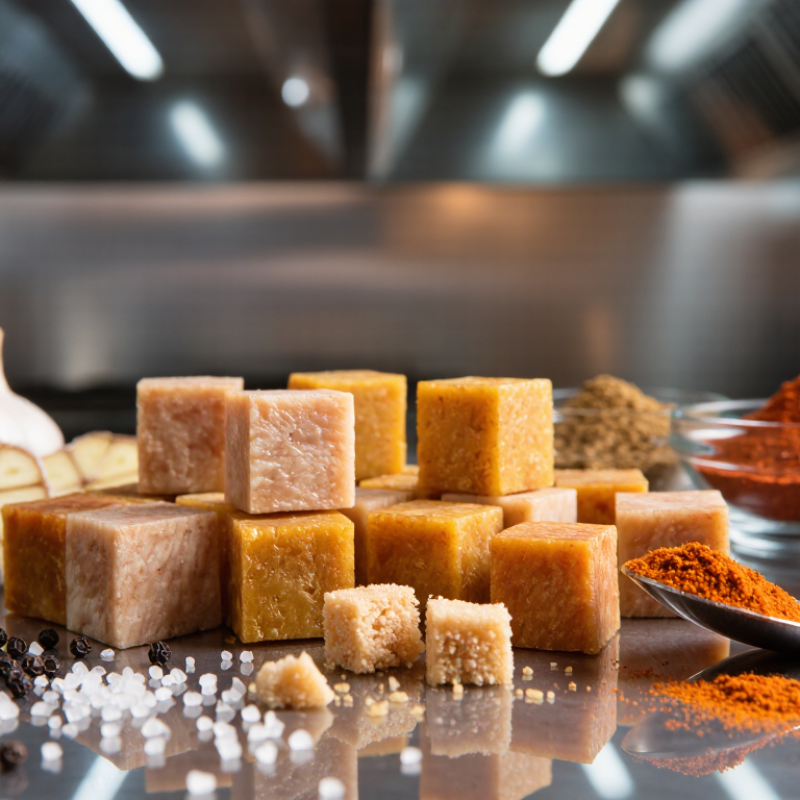
Chicken seasoning cubes are compact flavor concentrates made from salt, dehydrated chicken ingredients, spices, fat, and sometimes starch. They dissolve in hot water, sauces, rice, noodles, and vegetable dishes. One cube usually seasons about 500 milliliters of liquid, but concentration varies by manufacturer.
Professional use requires label reading. The World Health Organization recommends fewer than 2,000 milligrams of sodium daily, equal to less than five grams of salt. Therefore, a cube can significantly affect a meal’s sodium level. Home cooks should dissolve half a cube first, taste the broth, then adjust gradually. The United States Department of Agriculture also advises cooking poultry to 165°F (74°C), measured at the thickest point. A seasoning cube adds flavor; it does not make undercooked chicken safe. That distinction is easy to forget.
Tips: Crush the cube before mixing it with oil, garlic, or paprika. It spreads more evenly on chicken pieces. Store opened cubes in a dry, sealed container. Humidity causes clumping and weakens texture. I sometimes use too much because the aroma seems mild before cooking. That is a mistake. Taste after simmering, not immediately.
Look for clear allergen, sodium, and additive information in the technical label. Industry food-safety guidance also supports checking lot details and storage instructions, especially in warm kitchens.
Choosing top chicken seasoning cube suppliers worldwide requires more than comparing prices. A reliable supplier should provide clear ingredient lists, allergen declarations, batch records, and current certificates of analysis. Check sodium levels, moisture content, microbial results, and flavor consistency across several batches. Traceable raw materials matter, especially for poultry flavorings, spices, oils, and flavor enhancers. Ask how the supplier manages recalls and handles production deviations. Their answers reveal operational maturity.
Request samples from different production dates, not only one polished sample. Test them in soup, rice, and sauce, because performance can change with heat and dilution. Review cube hardness, dissolving time, aroma strength, packaging quality, and shelf-life data. Confirm minimum order quantities, lead times, export documents, and storage requirements. Independent audits can add confidence, but paperwork alone is not proof of daily quality. I once underestimated packaging during an evaluation. Humidity damaged cubes before their stated expiry date.
Tips: Compare suppliers using the same checklist. Keep retained samples for sensory review. Visit the facility when practical. Ask difficult questions politely, and record every answer. A supplier that admits a limitation may be more dependable than one promising perfection. Also, verify whether production capacity can support seasonal demand without changing the formula. Small inconsistencies can become expensive complaints. Pricing remains important, but the cheapest offer may hide higher testing, freight, or rejection costs.
Asia remains a major sourcing region for chicken seasoning cubes, supported by large-scale processing and strong flavor development skills. Suppliers in East and Southeast Asia often offer roasted chicken, garlic, ginger, and savory mushroom profiles. Buyers should inspect sodium levels, moisture control, allergen declarations, and lot coding. A sample may taste excellent, yet perform poorly in hot soup.
European suppliers commonly emphasize traceability, clean-label formulations, and tightly documented production systems. Many provide cubes for retail kitchens, foodservice, and private-label production. Their technical files may include microbiological results, ingredient origins, packaging specifications, and shelf-life data. Documentation matters. Still, “clean label” can mean different things across markets.
North American producers often focus on convenience, consistent flavor, and large-volume supply. Regional suppliers in Latin America may develop richer profiles with onion, paprika, herbs, or chili. Middle Eastern and African producers can be valuable for culturally familiar spice blends and flexible packaging formats. Regional fit matters more than a famous reputation. Taste panels, factory audits, and pilot orders reveal practical weaknesses, including slow communication or unstable cube texture. I have seen promising samples change after extended storage, so buyers should test products under real transport and kitchen conditions. Supplier reliability also depends on backup ingredients, production capacity, export experience, and clear responses when specifications change.
Top Chicken Seasoning Cubes Suppliers Worldwide?
Reliable suppliers usually offer several product types, including standard chicken cubes, reduced-sodium cubes, organic-style formulas, and halal or vegetarian alternatives. Cube texture matters. A firm cube should dissolve evenly in hot soup without leaving oily spots. Powdered and granulated versions may suit instant noodles, sauces, or industrial kitchens better.
Ingredients deserve close inspection. Common components include chicken flavoring, salt, yeast extract, spices, vegetable oils, starch, and dehydrated vegetables. Buyers should request a complete ingredient statement, allergen declaration, nutrition panel, and specification sheet. “Natural” does not always mean simple. It can still require careful verification. Suppliers should provide batch records, shelf-life data, and storage guidance. Samples tested in real recipes reveal more than a sales sheet.
Certifications help assess production controls, but certificates should be checked for scope, expiry, and issuing body. Useful systems may include HACCP, ISO 22000, BRCGS, halal, kosher, or organic certification, depending on the target market. Customization can cover sodium level, spice intensity, cube weight, packaging material, and private-label printing. Ask about minimum order quantities, lead times, mold fees, and formula ownership. A lower price may hide expensive tooling or weak documentation. I would also test three batches, not one, because flavor consistency can change.
Product Types, Ingredients, Certifications, and Customization Options
This non-company-specific benchmark summarizes ingredient categories commonly found on commercial chicken seasoning cube labels. Salt and starch-based carriers generally represent the largest formulation shares, while chicken-derived ingredients, herbs, spices, yeast extract, and flavor enhancers vary according to product positioning. Buyers should also compare standard, reduced-sodium, halal, kosher, vegetarian, and vegan formats, together with certifications such as HACCP, ISO 22000, BRCGS, FSSC 22000, Halal, and Kosher. Customization may include flavor strength, sodium level, cube size, fat content, packaging format, and private-label artwork.
Price comparison should begin with an identical specification. Check cube weight, chicken content, salt level, packaging, and order quantity. A lower quotation may hide weaker aroma or higher freight costs. UN Comtrade data groups many broth products under HS 210410, so trade values are useful but not perfectly cube-specific. This limitation deserves attention.
Supply capacity needs more than a factory claim. Request monthly output, minimum order quantity, lead time, and recent production records. The OECD-FAO Agricultural Outlook 2024-2033 expects continued growth in global poultry consumption, increasing pressure on chicken-based ingredients and processing schedules. Ask whether suppliers can maintain flavor consistency during raw-material shortages. Small samples can mislead.
Export service is equally important. Compare Incoterms, port options, carton dimensions, certificates, shelf-life documents, and customs support. The World Bank Logistics Performance Index 2023 shows major differences in logistics reliability across trading markets. A supplier near a strong port may still deliver late. I have seen buyers focus on unit price and overlook moisture damage during ocean transit. That was avoidable.
Use landed cost, not factory price. Include inspection, insurance, duties, inland delivery, and payment fees. Request two quotations: one for trial volume and one for annual volume. The best supplier is not always the cheapest. A realistic scorecard should measure price, capacity, documentation accuracy, response time, and complaint handling. No comparison is perfect. Recheck the assumptions.