Top Cold Rolled Steel Plate Suppliers Worldwide?
Choosing among the top Cold Rolled Steel Plate suppliers worldwide requires more than comparing prices or glossy product pages. Buyers must examine mill capacity, production consistency, delivery performance, and documented quality controls. A reliable supplier should provide clear chemical compositions, mechanical properties, surface grades, dimensional tolerances, and inspection records.
This guide approaches the market from a practical purchasing perspective. It considers established producers across Asia, Europe, North America, and other major steel regions. Factory experience matters. So does traceability. A well-prepared supplier can identify the heat number, rolling schedule, coating condition, and shipment history behind each plate.
Edwin Basson, Director General of the World Steel Association, has said, “Steel is essential to modern life.” That observation is simple, but important. Cold rolled steel supports automotive panels, electrical cabinets, appliances, construction components, and precision fabrication. Its smooth surface may look ordinary. Its manufacturing discipline is not.
The best supplier is not always the largest one. A smaller mill may offer closer technical support or more flexible minimum orders. However, assumptions can be costly. Some supplier rankings rely on outdated capacity figures, incomplete certifications, or unverified customer claims. That weakness deserves attention.
This overview compares suppliers through measurable factors, including product range, standards compliance, export experience, quality assurance, lead times, and after-sales communication. It also recognizes a difficult reality: no supplier performs perfectly in every region or application. Buyers should still request current test certificates, sample approval, and written delivery commitments before placing significant orders.
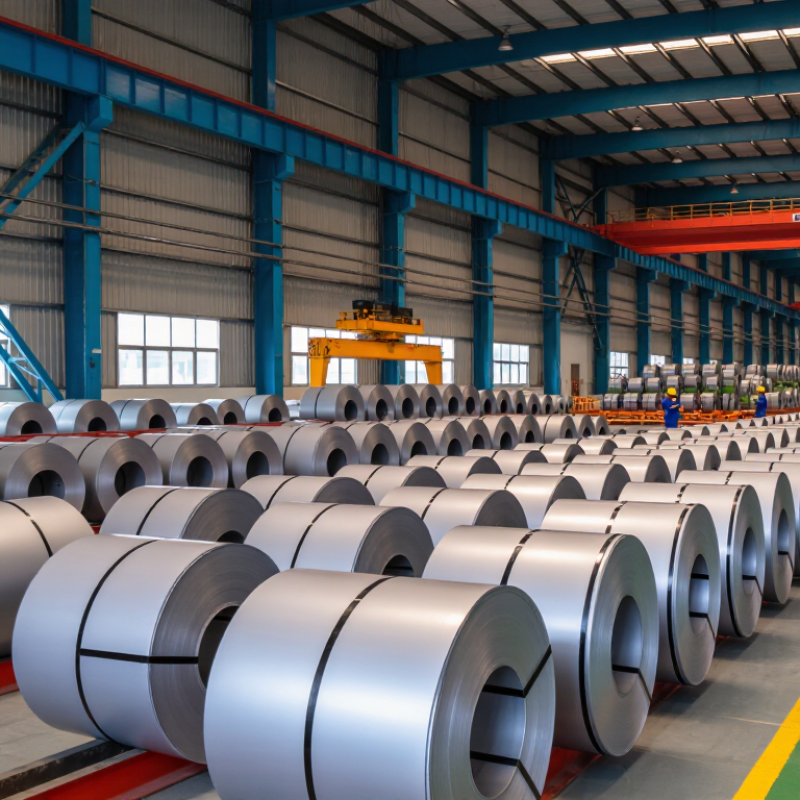
What Cold Rolled Steel Plate Is and Why Global Buyers Use It
Cold rolled steel plate is steel reduced at room temperature after hot rolling. This process creates a smoother surface, tighter thickness control, and cleaner edges. Annealing may restore ductility, while temper rolling improves flatness and appearance. These properties suit vehicle panels, electrical cabinets, precision machinery, and architectural components.
Global buyers use it when consistent dimensions matter. A difference of a fraction of a millimeter can affect bending, welding, or assembly. Buyers usually check grade, yield strength, elongation, surface finish, and dimensional tolerance. They also review mill test certificates and independent inspection records.
In my purchasing experience, reliable suppliers explain production limits clearly. They do not promise perfect results for every application. That honesty matters. The cheapest quotation may hide weak packaging, uncertain tolerances, or delayed documentation. I have seen small surface marks become costly after painting, so visual inspection should not be ignored.
Tips: Confirm the required standard before requesting prices. Ask about coil or plate origin, thickness range, edge condition, and rust protection. Request sample photos and recent test data. Check how plates are wrapped for long-distance shipping, especially in humid routes. Compare total delivered cost, not only the material price. Also, question unusually broad claims; a supplier serving every market may not specialize in your grade.
How to Evaluate Cold Rolled Steel Plate Suppliers
Evaluating cold rolled steel plate suppliers requires more than comparing prices. A reliable supplier should provide mill test certificates, heat numbers, dimensional records, and clear material standards. Check yield strength, tensile strength, elongation, thickness tolerance, flatness, and surface finish against the required specification. A polished certificate is not proof by itself. Verify whether its heat number matches the delivered plates.
Market context also matters. The World Steel Association’s 2024 Short Range Outlook projected global finished steel demand at about 1.75 billion tonnes in 2024. The OECD’s 2024 steel market analysis continued to highlight excess capacity and uneven regional demand. These conditions can encourage aggressive quotations. Ask suppliers to explain their production route, stock position, and delivery assumptions. A low quote can still be the wrong quote.
Request samples, inspection photos, packaging details, and a written claims procedure. Look for corrosion protection suited to ocean transport, especially sealed wrapping and moisture control. For critical applications, use independent inspection before shipment. Environmental records deserve attention too. The International Energy Agency reports that steelmaking contributes roughly 7% to 9% of global energy-related emissions, so verified carbon data can separate real progress from vague claims. No checklist is perfect. I would also assess communication quality during a small trial order. Delayed answers often predict larger problems later.
Leading Regions in the Worldwide Cold Rolled Steel Plate Market
Top Cold Rolled Steel Plate Suppliers Worldwide?
Leading Regions in the Worldwide Cold Rolled Steel Plate Market
Asia remains the central supply region for cold rolled steel. The World Steel Association reported 1,367.2 million tonnes of crude steel production in Asia and Oceania during 2023. China produced about 1,019 million tonnes, while India exceeded 140 million tonnes. This scale supports broad rolling capacity, integrated mills, and shorter delivery routes for automotive and appliance manufacturers.
Strong supply also exists in Europe and North America. World Steel Association data recorded approximately 126 million tonnes of crude steel production in the European Union and 111 million tonnes in North America in 2023. These regions often compete through tight thickness tolerances, surface quality, and specialized grades. Their buyers usually require detailed inspection records, coating compatibility checks, and reliable shipment schedules.
Regional strength does not guarantee suitability. It depends on grade, width, surface finish, and minimum order volume. Cold rolled sheet is sometimes marketed as plate, which can create technical confusion. A careful buyer should verify the applicable standard, gauge conversion, yield strength, and testing method. The OECD Steel Outlook has also warned about persistent global excess capacity, so production volume alone is an imperfect supplier measure. The map looks clear. Reality is not. Prices can change quickly when energy costs, freight rates, or trade policies shift. Supplier audits and sample testing remain practical safeguards.
Key Factors Behind Supplier Quality, Pricing, and Delivery
Top Cold Rolled Steel Plate Suppliers Worldwide?
Supplier quality depends on more than a bright, smooth plate. Experienced buyers check thickness tolerance, flatness, surface finish, yield strength, and chemical composition. Reliable suppliers provide traceable mill certificates and inspection records for each batch. Ask for recent test samples, not only polished photographs. A practical review should also examine edge condition, protective packaging, and storage methods. Small scratches can become costly during stamping or painting.
Pricing requires a wider view. A low quotation may exclude cutting, certificates, inland transport, insurance, or port charges. Compare the full delivered cost instead. Payment terms, minimum order quantity, and currency changes also affect the final figure. I have seen attractive offers fail because the supplier used unclear tolerance language. That mistake delayed production and weakened trust.
Tips: Request a written specification sheet. Confirm production capacity before ordering. Check whether the stated lead time includes inspection and packing. Delivery reliability often comes from realistic planning, not promises. Suppliers with documented quality systems, responsive technical staff, and clear corrective-action procedures usually manage problems better. Still, no supplier is perfect. A test order can reveal communication gaps before a large shipment is committed.
How to Select the Right Supplier for Your Application
Selecting a cold rolled steel plate supplier requires more than comparing prices. Your application should define the material grade, thickness, width, surface finish, and forming requirements. A supplier experienced with automotive panels may not understand precision machine covers or electrical enclosures.
Ask for mill test certificates, dimensional inspection records, and clear traceability from heat number to shipment. Check whether the supplier follows relevant ASTM, EN, or JIS requirements. Quality systems such as ISO 9001 can support consistency, but a certificate alone proves little. Request recent test samples when possible. Measure thickness at several points, inspect the surface under angled light, and examine edges for dents or cracking.
Logistics also influence real performance. Confirm production capacity, minimum order quantities, packaging methods, and realistic delivery times. Sheets should arrive dry, securely strapped, and protected against handling damage. Ask how claims are investigated and how replacement material is managed. Good communication matters when specifications change.
Do not choose the lowest quotation automatically. A cheap offer may exclude testing, protective packaging, or transport costs. A trial order can reveal problems before full production begins. Still, one successful shipment is not enough evidence. Review several batches and record flatness, surface quality, and delivery accuracy. I have found that supplier selection is sometimes less tidy than expected, because technical fit, service reliability, and cost rarely align perfectly. The right decision may require compromise, documented checks, and a second review.
Top Cold Rolled Steel Plate Suppliers Worldwide? How to Select the Right Supplier for Your Application
A practical first step is to compare the mechanical requirements of commonly specified cold-rolled grades. The chart shows typical minimum tensile-strength levels used in widely recognized standards; always confirm the exact grade, thickness range, coating condition, and mill certificate with the supplier.
DC01, DC03, DC04, SPCC, and ASTM commercial steel grades commonly specify a minimum tensile strength around 270 MPa, while higher-strength HSLA products are designed for substantially stronger applications. Use these values as an initial screening reference, then evaluate dimensional tolerances, surface quality, production capacity, lead time, testing documents, and total landed cost.