
Choosing reliable Rubber Bushes manufacturers requires more than comparing prices, catalogues, or attractive product photographs. These small components control vibration, noise, movement, and load transfer in vehicles, machinery, rail systems, and industrial equipment. Their performance depends on rubber formulation, hardness, bonding quality, sleeve design, and resistance to heat, oil, ozone, and repeated stress.
Rubber technology author Dr. John S. Dick offers a practical principle: “A rubber compound must be judged against its service conditions.” That idea should guide every global purchasing decision. A supplier may provide impressive tensile data, yet the bushing may fail under real compression, misalignment, or temperature cycling. Data sheets are useful. They are not the whole story.
This guide examines leading Rubber Bushes manufacturers through technical capability, production experience, quality systems, customization, testing, and international supply reliability. Strong manufacturers usually document compound specifications, curing controls, dimensional tolerances, and bonding procedures. They should also support samples, inspection reports, and traceable batch records. Certifications such as ISO 9001 or IATF 16949 can strengthen confidence, but certification alone does not guarantee suitable performance.
The best supplier depends on the application. A heavy truck bushing needs different priorities from a railway suspension component. Buyers should share load ranges, operating temperatures, movement angles, and installation conditions before requesting quotations. That step is sometimes skipped. It should not be.
No manufacturer is perfect. Even experienced suppliers can misunderstand a demanding application. Careful validation remains essential. The following overview helps global buyers compare capable producers and ask sharper technical questions before placing an order.
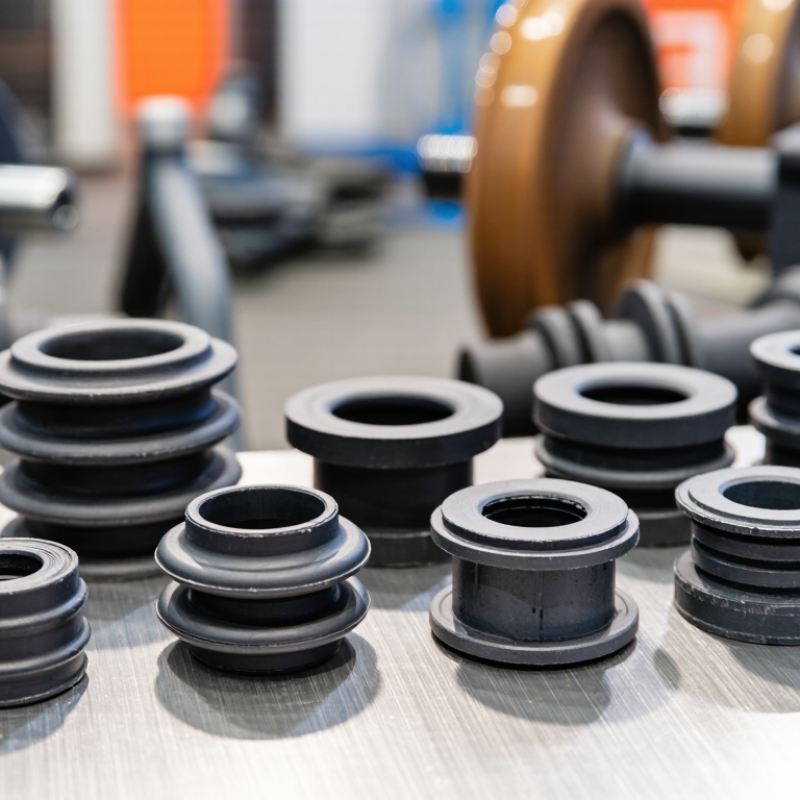
Rubber bushes are flexible components that control movement, reduce vibration, and limit metal-to-metal contact. Common types include cylindrical, flanged, bonded-metal, and conical bushes. Each design manages load and movement differently. Natural rubber offers strong elasticity for general vibration isolation. EPDM performs well against weather and heat. NBR suits applications exposed to oils. Material selection should match temperature, chemicals, load, and movement.
A practical inspection checks for cracks, bulging, uneven wear, compression set, and sleeve misalignment. Small defects matter. In vehicles, bushes support control arms, stabilizers, engine mounts, and suspension links. Industrial equipment uses them in pumps, compressors, generators, conveyors, and HVAC systems. They absorb shock while allowing controlled movement. Excessively soft rubber may permit unwanted movement. Excessively hard rubber can transmit noise and vibration. Installation also affects service life. Clean bores, correct orientation, and proper tightening are essential. Torque may need application at normal ride height.
Global buyers should request hardness data, dimensional tolerances, compound details, test reports, and batch traceability from manufacturers. Samples should face the real operating temperature, load, moisture, and chemical exposure. A polished datasheet is not enough. No design is perfect. Field conditions often expose assumptions made during selection. Reliable suppliers normally provide clear drawings, consistent inspection records, and responsive technical support. That judgment takes time.
Selecting a rubber bushes manufacturer requires more than comparing unit prices. I examine material traceability, production records, and test reports before approving samples. The compound should match the application’s temperature, oil, ozone, and load conditions. Hardness alone is not enough.
Dimensional accuracy matters during installation. Ask how the manufacturer controls inner diameter, outer diameter, bonding, and concentricity. A capable supplier should explain its inspection methods clearly. Look for calibrated gauges, batch records, and documented nonconformance procedures. Practical evidence is stronger than attractive claims.
Request samples made with the intended tooling, not generic stock. Check compression set, tensile strength, adhesion, and dynamic performance where relevant. Small differences can create noise, vibration, or early failure. I also review packaging, labeling, lead times, and replacement support for international shipments. Communication speed matters.
Do not overlook factory capacity. A supplier may produce excellent prototypes but struggle with repeat orders. Ask for realistic monthly output and contingency plans. Independent audits can reveal process weaknesses, although audits are not perfect. I have seen impressive facilities miss basic documentation. That is worth remembering.
Reliable manufacturers welcome technical questions and accept reasonable scrutiny. They should identify design limits instead of promising universal performance. A trial order, clear specifications, and agreed acceptance criteria reduce uncertainty. The cheapest quotation can become expensive after tooling changes, rejected batches, or delayed delivery. Experience suggests patience here.
Rubber bushes manufacturers are increasingly judged by product specialization, not production volume alone. Suppliers for suspension bushes focus on fatigue resistance, precise stiffness, and stable performance under road vibration. Engine-mount and anti-vibration producers emphasize heat resistance, noise control, and long service life. Industrial suppliers often develop bushes for conveyors, pumps, rail systems, and construction equipment. Each application requires a different rubber compound and bonding process.
The International Rubber Study Group reported global rubber consumption of roughly 31 million tonnes in 2023, reflecting strong demand from transportation and industrial sectors. This scale supports large manufacturers with automated molding, in-house testing, and multi-region logistics. However, market strength is not only measured by factory size. A smaller supplier may offer better tooling flexibility, faster samples, or stronger support for low-volume engineering projects. That matters to global buyers.
According to the 2024 Global Automotive Supplier Study by a leading mobility research organization, vehicle platforms increasingly require lighter components and longer maintenance intervals. Manufacturers with product data, fatigue testing, and traceable material records are better positioned for these requirements. Buyers should request compression-set results, hardness tolerances, temperature ranges, and batch inspection reports. Certificates help, but they do not replace practical validation. Some suppliers still publish impressive figures without explaining test conditions. That gap deserves attention.
Top Rubber Bushes Manufacturers for Global Buyers
Manufacturing Standards, Materials, and Quality Control Practices
Reliable rubber bushes begin with controlled material selection. Natural rubber offers strong elasticity and vibration absorption. EPDM performs well against weather, ozone, and moderate heat. NBR suits applications exposed to oils and fuels. Polyurethane can provide higher wear resistance, but it may transmit more vibration. Material choice should follow load, temperature, chemical exposure, and service movement.
Experienced manufacturers normally operate under documented quality systems, such as ISO 9001. Automotive suppliers may also follow IATF 16949 practices. These systems control traceability, process changes, inspection records, and corrective actions. Production teams should verify rubber hardness, tensile strength, elongation, and compression set. Dimensional checks are equally important. A bush that is slightly oversized can distort during installation.
Bonded bushes require additional testing. Inspectors examine metal surface preparation, adhesive coverage, curing temperature, and bond strength. Batch samples may undergo fatigue, heat aging, ozone, and salt-spray testing. Results should connect to clear lot numbers. That detail matters when a defect appears months later. It is not enough to inspect only finished parts. Compound mixing and mold temperature can already create hidden variation. No test plan is flawless. Smaller suppliers may also rely too heavily on visual checks, which deserve closer review. Buyers should request recent test reports, material certificates, and sample approval records before placing large orders.
| Manufacturer Capability Category | Typical Applications | Common Rubber Materials | Typical Hardness Range | Relevant Standards and Specifications | Manufacturing Practices | Quality Control Practices | Buyer Verification Points |
|---|---|---|---|---|---|---|---|
| Automotive-grade suspension bushing producers | Control arms, stabilizer bars, subframes, engine mounts, and chassis assemblies | Natural rubber, SBR, EPDM, and NR/SBR compounds | 50–80 Shore A, depending on load and vibration requirements | IATF 16949 quality management; ISO 9001; ASTM D2000 or customer-specific automotive specifications | Rubber-to-metal bonding, compression molding, transfer molding, post-curing, and automated assembly | Compound traceability, rheometer testing, hardness checks, tensile and elongation testing, bond-strength testing, dimensional inspection, and durability testing | IATF 16949 certificate, PPAP capability, control plans, process capability data, and validation test reports |
| Heavy-duty and commercial vehicle bushing producers | Trucks, buses, trailers, agricultural equipment, and off-road vehicles | Natural rubber, NR/BR blends, SBR, and high-load elastomer compounds | 60–90 Shore A for high-load and high-deflection components | ISO 9001; IATF 16949 where automotive supply-chain certification is required; ASTM D2000 reference classifications | High-tonnage compression molding, reinforced steel sleeves, controlled vulcanization, and shot-blasting or surface preparation of metal parts | Metal-part dimensional checks, rubber rheology, hardness mapping, compression-set testing, static stiffness measurement, and sample fatigue testing | Load-deflection curves, fatigue-cycle results, corrosion protection for metal inserts, and documented batch identification |
| Industrial machinery and vibration-isolation specialists | Pumps, compressors, motors, generators, conveyors, and industrial equipment mounts | NR, neoprene (CR), NBR, EPDM, and polyurethane elastomers | 40–90 Shore A, selected according to frequency, load, and deflection | ISO 9001; ISO 10846 for laboratory measurement of transfer properties where applicable; ASTM D2240 for hardness | Compression molding, bonded or non-bonded designs, CNC-machined tooling, and static or dynamic stiffness tuning | Hardness, compression set, static stiffness, dynamic stiffness, dimensional tolerances, and visual inspection for voids or surface defects | Specified operating frequency, load range, temperature range, dynamic stiffness data, and installation orientation |
| Oil- and fuel-resistant bushing producers | Hydraulic systems, engine compartments, pumps, fuel systems, and machinery exposed to oils | Nitrile rubber (NBR), hydrogenated nitrile rubber (HNBR), neoprene (CR), and fluorocarbon rubber (FKM) | 60–85 Shore A for many molded bushing applications | ASTM D2000; ASTM D471 for liquid resistance; ASTM D2240 for Shore A hardness; ISO 1817 for effects of liquids on rubber | Controlled compound mixing, precision molding, post-curing where required, and compatibility testing with specified fluids | Volume and mass change after fluid immersion, tensile retention, hardness change, compression set, and dimensional inspection | Exact fluid type, exposure temperature, immersion duration, allowable volume change, and required compound designation |
| Weather-, ozone-, and outdoor-environment bushing producers | Outdoor machinery, railway equipment, construction equipment, HVAC systems, and electrical enclosures | EPDM, neoprene (CR), silicone rubber (VMQ), and specialty weather-resistant compounds | 40–80 Shore A, depending on sealing and load requirements | ASTM D2000; ASTM D1149 for ozone resistance; ASTM D573 for accelerated aging in air | Compression or transfer molding, controlled post-cure, protective surface finishing, and outdoor exposure simulation | Ozone-crack inspection, heat-aging tests, tensile-retention testing, hardness change, compression set, and UV or weathering tests when specified | Required service temperature, ozone concentration, aging duration, UV exposure conditions, and permissible cracking criteria |
| Railway and infrastructure component producers | Rail vehicles, track equipment, bridges, expansion joints, and structural vibration-control systems | Natural rubber, NR/CR blends, EPDM, and specialty low-temperature compounds | 50–85 Shore A, selected according to structural load and movement | ISO 9001; EN 45545-2 for applicable railway fire-performance requirements; project-specific railway or infrastructure standards | Large-format molding, rubber-to-metal bonding, controlled lamination, and low-temperature or fatigue-resistant compound development | Static and dynamic stiffness, fatigue cycling, bond integrity, low-temperature performance, dimensional inspection, and fire-performance testing where required | Approved drawings, fire and smoke classification, fatigue-life evidence, traceability records, and independent laboratory reports |
| Custom low-volume and engineered prototype manufacturers | Prototype vehicles, replacement parts, laboratory equipment, specialized machinery, and development programs | NR, SBR, EPDM, NBR, CR, silicone, polyurethane, and customer-specified blends | Typically 30–90 Shore A, subject to design requirements | ISO 9001 where certified; ASTM D2240, ASTM D412, ASTM D395, and ASTM D2000 as applicable | CNC tooling, 3D-printed or soft tooling for prototypes, compression molding, hand assembly, and design-for-manufacturing review | First-article inspection, material certificate review, dimensional reports, hardness testing, visual inspection, and functional fit checks | Prototype approval process, mold ownership, engineering change control, sample retention, and clearly defined acceptance criteria |
Global buyers should compare rubber bush suppliers through evidence, not polished catalogs. The International Rubber Study Group’s 2024 outlook placed worldwide rubber demand near 31 million metric tons, showing the scale of this supply chain. Large demand does not guarantee consistent parts. Request material specifications, hardness ranges, compression-set results, tensile strength, and operating-temperature data. Check whether testing follows recognized standards, such as ISO or ASTM methods. Small gaps matter.
Ask each supplier for a drawing review and a sample approval process. Compare rubber compound, reinforcement design, tooling ownership, minimum order quantity, and production capacity. A supplier offering 500,000 pieces monthly may still struggle with a controlled batch of 2,000 pieces. Inspect the first samples at the actual load and temperature expected in service. This is where many comparisons become too shallow.
For ordering, send a clear purchase package: approved drawing, tolerance table, packaging photos, inspection plan, delivery terms, and payment milestones. Confirm how changes will be authorized. Freight rates and lead times can shift; the World Bank’s commodity data shows repeated volatility in industrial raw-material prices. Ask for a dated quotation, not a verbal promise. A pre-shipment inspection is useful, although it cannot replace process control. I have seen buyers focus heavily on unit price and overlook replacement costs. That judgment is understandable, but incomplete. Include spare quantities, traceable batch numbers, and written acceptance criteria before production starts.