
Process Water Treatment is becoming a practical necessity, not a distant sustainability promise. Factories use water for cooling, washing, steam generation, chemical processing, and product protection. Each use creates a different contaminant profile. Oil droplets, suspended solids, metals, salts, microbes, and changing pH can appear in the same facility. The treatment system must respond to these details.
The United Nations World Water Development Report 2024 reports that agriculture still accounts for about 70% of global freshwater withdrawals. Industry also faces growing pressure to reduce intake and discharge. The International Water Association highlights water reuse, resource recovery, and stronger operational control as important industry directions. These findings explain why Process Water Treatment now supports production continuity, environmental performance, and water resilience.
Treatment usually begins with sampling and equalization. Screening removes larger debris. Coagulation and clarification separate suspended particles. Biological treatment can reduce biodegradable pollutants. Membranes, activated carbon, ion exchange, or advanced oxidation may follow. The final process depends on the water chemistry and reuse target. Small changes matter.
Professor Menachem Elimelech, a leading water-treatment researcher, has emphasized that “water treatment is a multidisciplinary field.” That observation remains highly relevant. Chemistry alone cannot solve every plant problem. Energy use, membrane fouling, sludge handling, maintenance skills, and monitoring also shape results. A perfect treatment train does not exist. That is an uncomfortable truth.
This guide examines how Process Water Treatment works, where each technology fits, and why real operating data matters. Reported removal rates can look impressive. Yet performance may decline within weeks without proper testing, cleaning, and control.
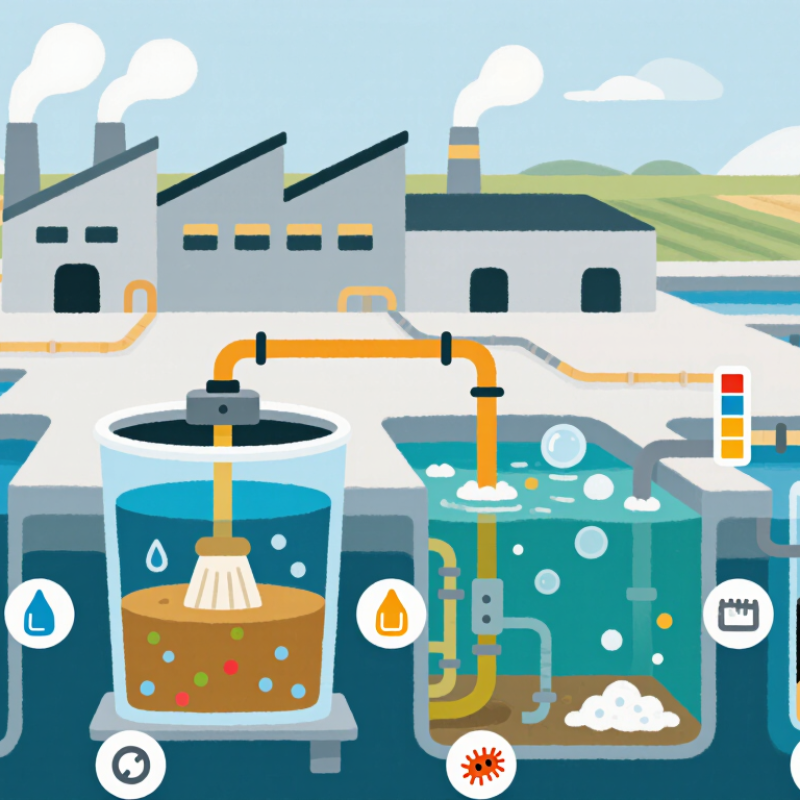
Process water treatment manages water used during manufacturing, cooling, cleaning, and production. Unlike drinking water treatment, it targets site-specific contaminants and operating conditions. A food facility may remove organic residues, while a metal plant may control oils, suspended solids, or dissolved metals.
The process usually begins with screening and equalization. These steps reduce large debris and balance changing water quality. Chemical treatment can adjust pH or help particles form larger clusters. Filtration, flotation, biological treatment, or membrane systems may follow. Each stage has a defined purpose. None works well when the incoming water is poorly understood.
Good treatment protects equipment, workers, nearby waterways, and production reliability. For example, excess hardness can leave scale inside a heat exchanger. High solids can block pumps and shorten filter life. Operators often check pH, conductivity, turbidity, temperature, and chemical oxygen demand. Small shifts can reveal a larger process problem.
Reuse can lower freshwater demand, but it requires careful control. Water that looks clear may still contain dissolved pollutants or microbes. No treatment plan is perfect. Sampling points may be limited, and test results can arrive too late. Regular calibration, accurate records, and practical operator training make the system more dependable. Treatment targets should also change when raw materials, production rates, or cleaning methods change.
Process water comes from many points inside an industrial facility. Fresh municipal water may feed boilers, cooling towers, rinsing lines, and production equipment. Groundwater and captured rainwater can also enter the system. Some facilities reuse water from earlier treatment stages, creating a mixed and changing stream.
It is rarely clean. Process water may contain suspended solids, dissolved salts, oils, detergents, organic compounds, metals, and microorganisms. Food and beverage operations often add sugars, fats, proteins, and cleaning chemicals. Metalworking wastewater may carry fine particles, lubricants, and traces of metals. Cooling water commonly shows higher conductivity after repeated evaporation.
The water’s temperature and pH also matter. Hot water can damage biological treatment processes, while extreme pH can reduce chemical performance. In practice, operators should sample different locations, not only the final drain. A single sample misleads. Flow rates change during cleaning, production shifts, and equipment maintenance. Reliable testing usually checks pH, temperature, conductivity, chemical oxygen demand, suspended solids, and site-specific contaminants. Laboratory results guide filtration, oil separation, biological treatment, membrane processes, or chemical adjustment. However, no treatment train fits every facility. That assumption fails when the water source changes. Regular sampling and accurate process records help reveal those changes before they disrupt treatment performance.
Process water can come from raw-water intake, production steps, equipment washing, cooling systems, and boiler operations. Before treatment, it may contain suspended solids, biodegradable organics, dissolved chemicals, nutrients, oil, and grease. The chart shows representative concentration ranges commonly reported for industrial wastewater; actual values vary by industry, process design, water source, and operating conditions. Treatment usually combines screening, clarification, biological treatment, filtration, and targeted chemical processes.
Concentrations are shown in milligrams per liter (mg/L) and are representative screening ranges rather than regulatory limits.
What Is Process Water Treatment and How Does It Work?
How Process Water Is Assessed Before Treatment
Process water assessment begins with understanding where the water comes from. Operators review production steps, cleaning cycles, raw materials, and discharge points. This process map often reveals contamination sources that routine testing might miss. Flow rate matters too. A strong treatment plan can fail when water volume changes sharply during shift changes.
Technicians collect samples from representative locations and times. One sample is rarely enough. Grab samples show current conditions, while composite samples reveal average quality over several hours. Testing commonly includes pH, temperature, turbidity, total suspended solids, chemical oxygen demand, and biological oxygen demand. Oil, metals, salts, and specific process chemicals may also require analysis. Each sample needs clear labeling, preservation, and documented handling. Small mistakes can distort the results.
Laboratory data is compared with reuse goals, equipment limits, and applicable discharge requirements. The assessment should examine seasonal changes, production peaks, and accidental load increases. Treatability tests can show whether filtration, biological treatment, chemical adjustment, or membrane separation is suitable. Yet laboratory results are not the whole story. Site conditions, maintenance habits, operator experience, and available space influence performance. I have found that teams sometimes overvalue a perfect test result and undervalue daily variability. That judgment deserves another look. A practical assessment connects reliable measurements with the realities of the operating floor.
Process water treatment removes contaminants from water used in manufacturing, cooling, cleaning, or production. The treatment goal depends on the process, not only on the water source. Operators usually begin with screening and equalization, which remove larger debris and balance changing flow conditions. This step matters. Sudden chemical or temperature changes can upset downstream equipment.
Coagulation and flocculation bring fine particles together into larger clusters. Clarifiers then separate these solids by gravity. Pressure filters may capture remaining particles, while activated carbon can reduce organic compounds, odors, and certain chemicals. Membrane systems, including ultrafiltration and reverse osmosis, provide finer separation when low-mineral water is required. Each technology has limits. Membranes, for example, can foul quickly without proper pretreatment.
Disinfection may use ultraviolet light, ozone, or carefully controlled chemical treatment. The correct choice depends on water quality, contact time, and the intended reuse. Sensors track pH, conductivity, turbidity, flow, and microbial indicators. Experienced operators do not rely on one reading alone. They compare trends, laboratory results, and equipment performance. Sludge also needs controlled handling and dewatering, because treatment transfers contaminants rather than making them disappear. A design may look efficient on paper, yet real factories have temperature swings, irregular production, and maintenance gaps. That is where continuous review becomes necessary.
| Stage | Main Objective | Typical Contaminants or Parameters | Common Technologies | How It Works | Typical Treatment Result |
|---|---|---|---|---|---|
| 1. Screening and Equalization | Protect downstream equipment and balance flow and water quality. | Large solids, debris, fibers, fluctuating flow, variable pH, temperature, and contaminant concentration. | Bar screens, rotary screens, strainers, grit removal, equalization tanks, mixing, and flow control. | Screens physically retain larger particles, while an equalization basin temporarily stores and mixes wastewater to reduce hydraulic and concentration peaks. | More stable flow and loading conditions for subsequent treatment units. |
| 2. pH Adjustment and Chemical Conditioning | Create suitable chemical conditions for separation, biological treatment, or reuse. | Acidity, alkalinity, dissolved metals, emulsified oil, and unstable pH. | Acid or caustic dosing, neutralization, coagulation, flocculation, oxidation, and chemical precipitation. | Chemicals change pH, destabilize colloids, convert dissolved substances into separable forms, or promote the formation of larger flocs. | Improved solids separation and a pH range appropriate for the next process; many biological systems operate near neutral pH. |
| 3. Primary Solid-Liquid Separation | Remove suspended solids, settled material, and separated oil or grease. | Suspended solids, settleable solids, flocculated particles, free oil, and grease. | Clarifiers, sedimentation tanks, dissolved air flotation, hydrocyclones, and oil-water separators. | Gravity removes denser particles, flotation lifts low-density solids and oil, while hydrocyclones separate particles using centrifugal forces. | Lower suspended-solids and oil loading, reduced turbidity, and less risk of fouling in later units. |
| 4. Biological Treatment | Biologically degrade biodegradable organic matter and, where required, transform nitrogen compounds. | Biochemical oxygen demand, biodegradable dissolved organics, ammonia, nitrate, and some nutrients. | Activated sludge, sequencing batch reactors, moving-bed biofilm reactors, trickling filters, and anaerobic reactors. | Microorganisms use organic pollutants as food. Aerobic systems require oxygen, while anaerobic systems operate without supplied oxygen and can produce biogas. | Substantial reduction of biodegradable organic load; nitrogen removal may require separate nitrification and denitrification conditions. |
| 5. Secondary Clarification or Membrane Separation | Separate biological solids or retain fine particles and microorganisms. | Biomass, fine suspended solids, colloids, turbidity, and some microorganisms. | Secondary clarifiers, microfiltration, ultrafiltration, and membrane bioreactors. | Clarifiers use gravity to settle biological flocs. Membranes use a pressure-driven barrier to retain particles and microorganisms. | Clearer treated water with lower suspended solids; membrane systems generally provide a stronger physical barrier than conventional clarification. |
| 6. Advanced Dissolved Contaminant Removal | Remove dissolved salts, specific ions, trace organics, color, and residual nutrients. | Total dissolved solids, hardness, nitrate, phosphate, metals, dissolved organic compounds, and color. | Reverse osmosis, nanofiltration, ion exchange, activated carbon, adsorption media, and targeted precipitation. | Membranes reject contaminants by size, charge, and solubility effects. Ion exchange swaps dissolved ions, while adsorption captures compounds on a porous surface. | Water quality suitable for demanding process reuse or specialized discharge requirements, depending on the selected technology. |
| 7. Disinfection and Final Polishing | Control pathogens and improve final water quality before reuse or discharge. | Bacteria, viruses, residual organic compounds, trace color, and remaining odor-causing substances. | Ultraviolet treatment, chlorination, ozonation, advanced oxidation, final filtration, and activated carbon polishing. | Ultraviolet light damages microbial genetic material. Chemical oxidants inactivate microorganisms and can break down certain organic compounds. | Microbiologically safer water and improved appearance or odor; the selected method depends on water clarity and the intended end use. |
| 8. Sludge Treatment and Management | Reduce sludge volume, improve handling, and prepare solids for recovery or disposal. | Water-rich biological sludge, chemical precipitates, adsorbed contaminants, and concentrated solids. | Thickening, conditioning, dewatering, drying, stabilization, anaerobic digestion, and approved solids disposal or recovery. | Water is removed mechanically or by gravity. Stabilization reduces odor and biological activity, while digestion can reduce volatile solids and generate biogas. | Lower sludge volume, improved transportability, and a more controlled route for beneficial use or final disposal. |
Process water treatment removes or reduces oils, suspended solids, metals, salts, and biodegradable pollutants from industrial water. The treatment route depends on the process, not just the water’s appearance. A sample may look clear while still containing dissolved contaminants.
After treatment, facilities often reuse water for equipment washing, cooling towers, dust control, or other non-potable tasks. Reuse reduces freshwater demand and lowers the volume sent to discharge. However, reused water can slowly accumulate salts and trace chemicals. Operators must check conductivity, pH, temperature, turbidity, and site-specific pollutants before each major reuse decision.
Some treated water is discharged under a controlled permit or internal standard. Routine testing may include chemical oxygen demand, total suspended solids, nutrients, metals, and biological indicators. Automatic sensors can track pH and flow continuously, while laboratory testing confirms less visible risks. Records should connect each result with its sampling time, location, method, and operator.
Monitoring is not a single final test. It is a feedback system. If readings change, operators may adjust chemical dosing, filtration, aeration, or membrane cleaning. Small errors matter. A blocked sampler or poorly mixed tank can produce misleading results. Experienced teams verify unusual data, repeat samples, and investigate the process before releasing water. No treatment system is perfect, and that limitation should remain visible in operating decisions.