
What Does RCCB Mean China Top 10 RCCB Suppliers?
Rccb Meaning is the first question buyers should answer before comparing China’s leading RCCB suppliers. RCCB stands for Residual Current Circuit Breaker. It monitors the balance between live and neutral currents, then disconnects power when residual current exceeds its rated threshold. That action can reduce electrical shock and leakage-fire risks, but it does not replace safe wiring or proper installation. Important distinction: a standard RCCB does not provide overload or short-circuit protection. It is commonly paired with an MCB, while an RCBO combines both functions in one device. Small details matter. A test button, clear terminal markings, and a suitable rated residual current make the product easier to check and install.
A “top 10” supplier list can help buyers begin research, but rankings may reflect different criteria and should not be treated as proof of quality. Compare manufacturers by product range, published technical data, factory experience, quality-control process, and responsive after-sales support. Ask for the rated current, sensitivity, pole configuration, breaking capacity where applicable, and test documentation. Check whether the offered model matches the installation and the requirements in the destination market. A catalog photo is not enough. Samples and traceable records can provide better evidence, though they still cannot guarantee performance in every installation. I would also verify claims directly with the supplier; even a polished product page can leave key questions unanswered. Done carefully, this comparison makes China’s RCCB market easier to assess without confusing marketing language with engineering evidence.
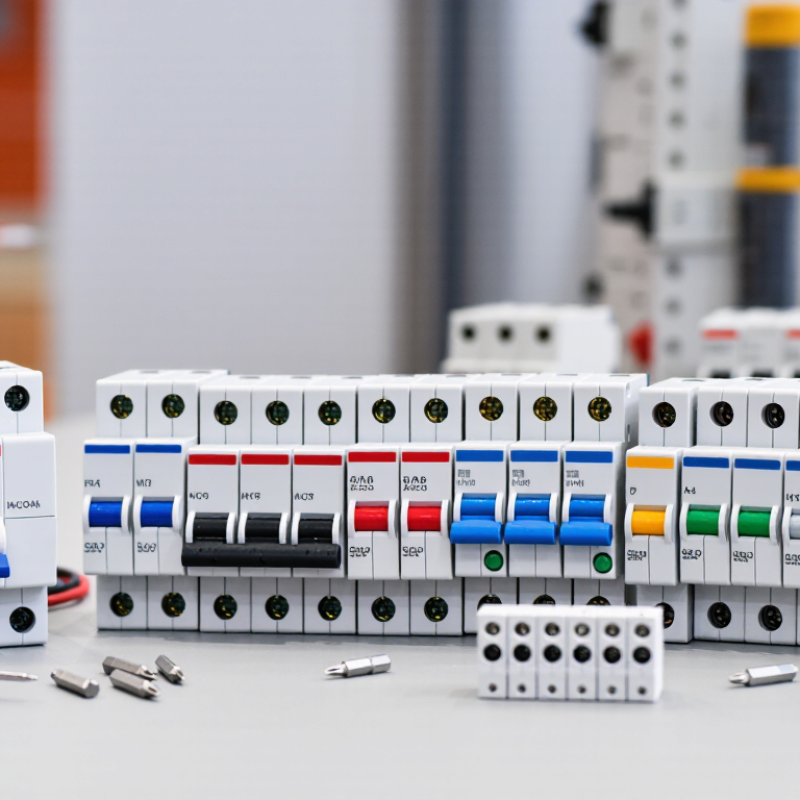
What RCCB Means and What It Protects Against
RCCB means residual current circuit breaker. It monitors current flowing through live and neutral conductors and trips when the amounts differ beyond its set threshold. That difference may indicate electricity leaking through damaged insulation, a wet appliance, or a person touching a live part. The device disconnects the circuit quickly, reducing the risk of severe electric shock. It can also lower the chance of some electrical fires caused by leakage. That distinction matters.
An RCCB does not usually protect against overloads or short circuits; those need suitable overcurrent protection. Nor can it prevent every shock, especially when current does not create a detectable imbalance. In a home, an electrician should select the correct sensitivity and rated current for the circuit, then check that wiring and earthing are sound. A test button provides a simple functional check, but it is not a substitute for proper inspection. Small details matter, and I would not treat a tripped RCCB as proof that the fault has disappeared. Identify and fix the cause before restoring power.
What Does RCCB Mean China Top 10 RCCB Suppliers? - What RCCB Means and What It Protects Against
RCCB means Residual Current Circuit Breaker. The table below lists ten practical technical checks for understanding and evaluating RCCBs; it does not rank or identify suppliers.
| No. | Evaluation dimension | Technical fact | What to check |
|---|---|---|---|
| 1 | Meaning and function | An RCCB detects an imbalance between the current flowing in live conductors and the current returning through them. | Confirm the device is selected for residual-current protection in the intended circuit. |
| 2 | Protection provided | An RCCB can disconnect a circuit when residual current reaches its specified operating threshold, helping reduce electric-shock and earth-leakage fire risks. | Choose the residual-current rating and device type to match the installation and applicable regulations. |
| 3 | Overcurrent protection | A standard RCCB does not provide integral overload or short-circuit protection. | Provide suitable overcurrent protection separately, or consider an RCBO, which combines residual-current and overcurrent protection. |
| 4 | Rated residual operating current (IΔn) | Common product ratings include 10 mA, 30 mA, 100 mA, and 300 mA; availability and permitted uses vary by product and local rules. | Check the marked IΔn and follow local requirements. A rating alone does not guarantee suitability for every application. |
| 5 | RCCB type | Type AC is intended for sinusoidal AC residual currents; Type A also detects specified pulsating DC residual currents. Types F and B cover additional residual-current waveforms as specified by their standards. | Match the type to the connected loads and manufacturer guidance; electronic equipment may require a type beyond AC. |
| 6 | Rated current (In) | Rated current is the current the RCCB is designed to carry under specified conditions. It is not an overload-trip setting. | Coordinate the RCCB’s rated current with the circuit design and the upstream overcurrent protective device. |
| 7 | Number of poles | Two-pole devices are commonly used for single-phase circuits, while four-pole devices are commonly used for three-phase circuits with a neutral. | Verify the supply arrangement, pole configuration, and wiring diagram before installation. |
| 8 | Frequency and supply voltage | Voltage and frequency ratings are product-specific; many products are marked for 50 Hz, 60 Hz, or both. | Compare the device markings with the installation’s nominal voltage and frequency. |
| 9 | Applicable product standard | IEC 61008-1 covers RCCBs without integral overcurrent protection; IEC 61009-1 covers RCBOs with integral overcurrent protection. | Check the exact standard edition, conformity documents, and approvals required in the destination market. |
| 10 | Testing and maintenance | A test button checks the device’s test mechanism; it does not replace inspection of the installation or prove that earthing is adequate. | Operate the test button at the interval stated in the product instructions and follow applicable maintenance procedures. |