10 Tips for Buying a Conical Burr Hand Grinder?
A good hand grinder can make a morning cup feel more deliberate. The Conical Burr Hand Grinder is popular with travelers, home brewers, and anyone who values control over convenience. But a familiar shape does not guarantee a good fit. Burr alignment, adjustment range, handle comfort, and build quality all affect daily use.
Small details matter. A handle that wobbles or a grind setting that shifts can turn a calm routine into a frustrating one. Before buying, consider what you brew, how much coffee you grind, and whether you need repeatable settings for espresso or coarser methods. Check whether the grinder is easy to clean and whether replacement parts are available. Manufacturer specifications can help, but they do not always reveal how a grinder feels after several weeks of use. That is worth remembering.
These 10 tips will help you compare grinders with practical questions, not marketing claims alone. You will learn what to inspect, which trade-offs deserve attention, and how to match a grinder to your budget and brewing habits. No hand grinder is perfect. A compact model may be portable but slower; a larger one may feel steadier but take up more space. Choose the compromises you can live with.
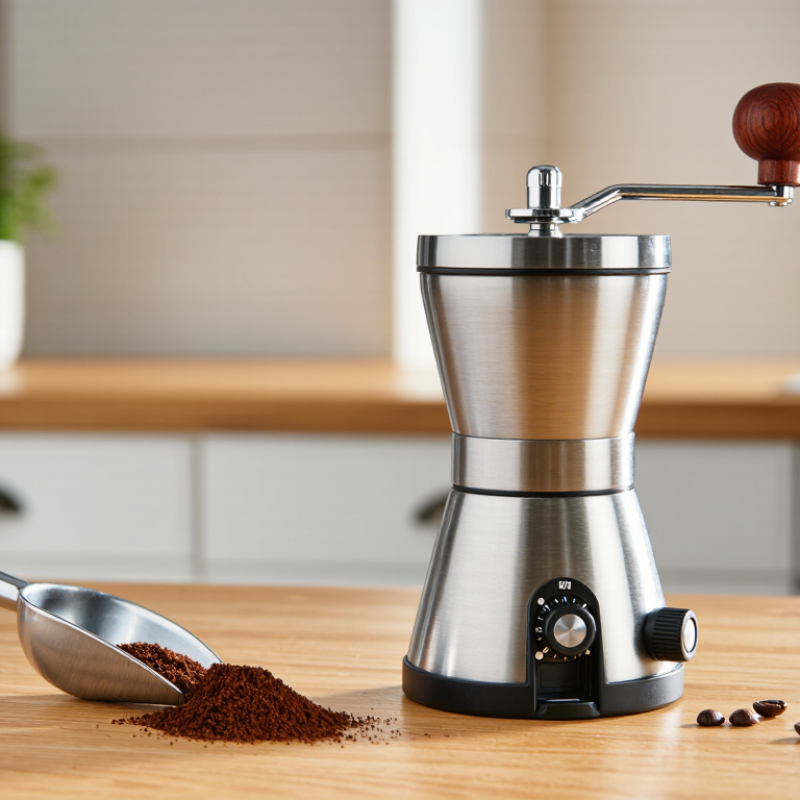
How a Conical Burr Hand Grinder Works
A conical burr hand grinder crushes coffee beans between two ridged surfaces: a cone-shaped burr and a surrounding ring. Turning the crank rotates one burr while the other stays in place. Whole beans move downward through the gap, becoming smaller as the burrs break them apart. The grounds then fall into a collection chamber. It is a simple mechanism, but alignment and burr quality affect how evenly it grinds.
A dial or threaded adjustment changes the distance between the burrs. A narrower gap usually produces finer grounds for espresso; a wider gap suits methods like French press. Each grinder uses its own adjustment system, so settings are not universal. Start with a moderate setting, brew a small dose, and adjust based on taste and flow. Too fine, and water may pass slowly. Too coarse, and the cup can taste thin.
The hand crank supplies the force, so grinding speed depends on the user and the beans. Darker or denser beans can feel noticeably different under the handle. A steady pace helps. Not always perfectly. Some grinders produce more fine particles than others, even at the same setting, and a few grounds may cling inside after use. Check the grind directly; the adjustment number alone cannot guarantee a particular brew.
Choosing Burr Size, Material, and Grind Adjustments
A conical burr hand grinder can make fresh coffee without taking up much counter space. When comparing burr size, remember that larger burrs may grind faster, but they do not automatically produce better coffee. The burr shape, alignment, and adjustment system matter too. For a portable grinder, check whether its body feels steady in your hand and whether the handle turns smoothly under load.
Tip: Match burr material to your routine. Stainless steel burrs are common and resist everyday wear; ceramic burrs can stay sharp for a long time but may chip if dropped. Either can work well. Look for clear care instructions, and avoid rinsing parts that the maker says should stay dry.
Grind adjustments deserve a real test. Fine steps make it easier to tune espresso, while broader steps can suit pour-over or French press. If possible, turn the dial and check whether it clicks securely or drifts during grinding. A small adjustment may change flow time noticeably. Keep notes on the setting and brew result; memory gets fuzzy before the coffee does.
Tip: Grind a small dose at your intended setting. Feel for a consistent handle motion, then inspect the grounds for obvious boulders and excess dust. No hand grinder is perfectly uniform, and I sometimes misjudge a setting on the first try. That is normal. A removable catch cup and accessible burr chamber also make cleanup less frustrating.
Assessing Build Quality, Capacity, and Ease of Use
A hand grinder should feel steady before it ever touches coffee. Check the handle for wobble and turn the burrs slowly with no beans inside. A gritty scrape or uneven resistance may point to poor alignment. The body should sit firmly in your hand, with no sharp seams or loose parts. Metal can feel reassuring, but a well-fitted, durable composite body may also serve well. Weight is a trade-off: a heavier grinder can feel stable, yet becomes tiring on a long trip.
Capacity affects daily convenience more than many buyers expect. If you brew one cup, a small chamber may be enough, but measure your usual dose rather than guessing. Some grinders hold less than their shape suggests. That matters. A narrow opening can also make loading beans awkward, especially when you are in a hurry. Look for clear markings, a lid that stays put, and a grounds container that unscrews without spilling.
Ease of adjustment is worth testing in person when possible. Move the setting dial and notice whether each step feels distinct. A broad range helps with different brewing methods, though tiny markings can be hard to read. Cleaning should not require special tools or a complicated teardown. Ask how the burrs come out, and whether reassembly can shift their alignment. I would not judge a grinder by a polished finish alone; even a good model may have a fiddly adjustment ring. Try the handle with a few beans, if permitted. Your wrist will tell you more than a product photo.
Matching Grinder Performance to Brewing Methods
A conical burr hand grinder can serve several brew methods, but the right choice depends on the grind range and consistency it can deliver. For pour-over, look for clear adjustment steps and burr alignment that produce evenly sized grounds. A bed of coffee should look fairly uniform, not like a mix of dust and gravel. Too many fines can slow the drawdown and make a cup taste dry or bitter.
For French press, a grinder needs room to move toward a coarse setting without forcing the handle or trapping beans. Check whether its adjustment mechanism stays put during grinding. For espresso, fine settings and tiny, repeatable adjustments matter more than a long list of settings. Many hand grinders struggle with espresso because turning the handle takes effort. That is worth testing, if possible. A few sample turns can reveal more than a specification sheet.
Match the grinder to how you actually brew. If you switch between methods, a wide usable range helps, though changing settings can take time. For a single-cup pour-over, a modest capacity may be fine; larger batches need fewer refills. Notice how the handle feels after grinding a full dose, and whether the grounds are easy to empty. I once focused too much on speed and overlooked adjustment clarity. It was a small mistake, but daily use made it obvious.
Comparing Price, Maintenance, and Long-Term Value
A conical burr hand grinder can cost more than a basic blade grinder, but the purchase price is only part of the calculation. Compare burr material, adjustment range, and how firmly the handle attaches. A low-cost model may suit occasional weekend brewing. For daily use, a steadier build can feel worthwhile. Feel matters.
Maintenance affects value, too. Coffee oils and fine particles collect around the burrs, especially after dark roasts. A small brush and a few minutes of cleaning can help keep grinding consistent. Check whether the burr assembly comes apart without special tools. If cleaning feels like a chore, it may happen less often. That is easy to underestimate.
Consider replacement parts and repair options before buying. A grinder with available burrs or a simple mechanism may stay useful longer than one that must be replaced after wear. Hand grinding also takes effort: a very fine setting can make your wrist work harder, especially for espresso-sized doses. Try turning the handle, if a shop allows it, and notice wobble or slipping. I would not judge long-term value by price alone, though this judgment is imperfect; comfort and cleaning habits vary from person to person.
10 Tips for Buying a Conical Burr Hand Grinder
Compare estimated purchase price with five-year upkeep costs. Choose a grinder that fits your budget, brewing habits, and willingness to maintain it.
How to use this chart: These illustrative cost estimates are not market averages or product quotes. The five-year total combines the estimated purchase price with routine cleaning supplies and possible replacement parts. Check burr availability, adjustment consistency, capacity, and warranty before buying.