
Choosing an Air Detection Drone is not simply about buying the longest-flying aircraft. It is about matching the platform to the air quality task, operating environment, and people who will use the data. A drone may look impressive in a showroom, yet perform poorly beside factory vents, coastal winds, or dusty construction sites. Small details matter. Sensor accuracy, payload weight, battery endurance, weather resistance, and software compatibility can change the entire result.
Drone Analyst founder Colin Snow puts it clearly: “The future of drones is not about the drone; it’s about the data.” That idea should guide every purchase decision. A useful Air Detection Drone must collect dependable readings, record location and time, and present results that trained staff can understand. Check whether the sensor supports gases, particulates, temperature, or other required measurements. Ask about calibration, replacement parts, technical support, and data export. Do not trust impressive specifications alone. Real performance can be different.
This guide presents seven practical tips for comparing models. It considers flight stability, sensor integration, battery planning, operator training, maintenance, data security, and responsible operation. Some buyers may focus too heavily on camera quality. That is an easy mistake. A sharp image cannot repair inaccurate measurements. I would also question whether every advertised feature is necessary. Sometimes, a simpler drone with stronger support delivers better long-term value. Test the system in realistic conditions before making a final decision. A short field trial may reveal more than a polished demonstration.
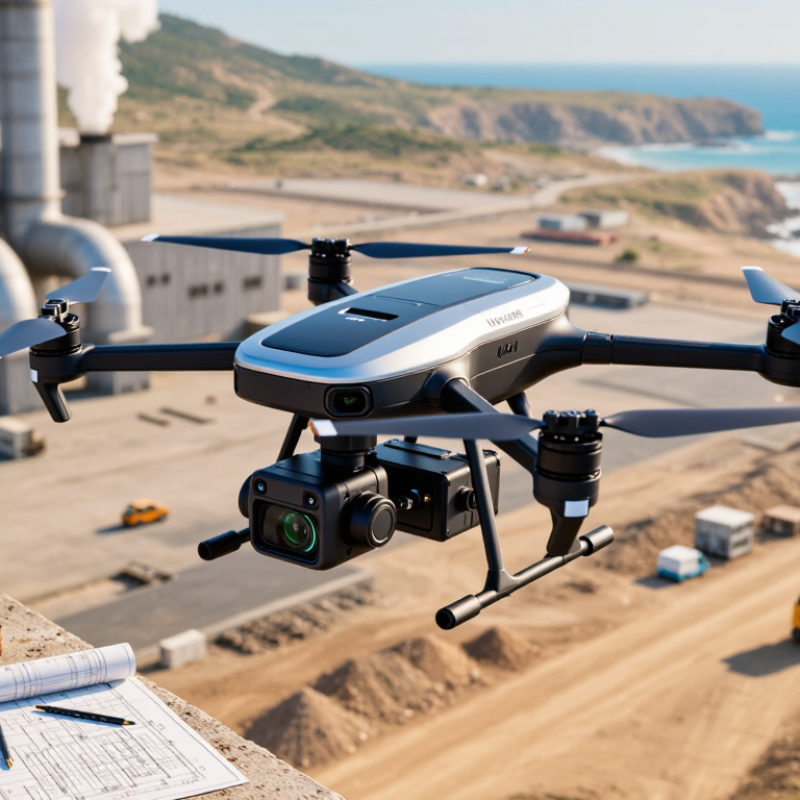
Before buying an air detection drone, define the mission in measurable terms. Are you mapping particulate matter, detecting gas leaks, measuring smoke, or identifying heat plumes? Each task needs different sensors, flight heights, sampling intervals, and weather limits. A camera alone cannot measure concentration.
The State of Global Air 2024 reported 8.1 million pollution-related deaths in 2021. That figure shows why sensor selection deserves more than a sales specification. For particulate monitoring, record PM2.5 range, resolution, response time, and calibration method. The Air Sensor Guidebook recommends comparing portable sensors with reference instruments under real conditions. Plan that comparison before deployment.
Weather changes the evidence. Wind direction, humidity, temperature, and turbulence can distort readings within seconds. Add a compact weather sensor and log every measurement with time and coordinates. For thermal work, check temperature accuracy and emissivity settings. For gas detection, confirm cross-sensitivity and detection limits. Small details matter.
Keep the mission narrow at first. A drone carrying many sensors may lose flight time and stability. It may also create noisy data. The International Energy Agency reported that methane is responsible for roughly 30% of near-term warming, making methane surveys valuable where suitable sensors and trained operators are available. Still, a detection result is not automatically proof of a source. Validate unusual readings from the ground or with an independent instrument. This step is easy to skip. That is a weakness.
Define the target before comparing aircraft. Thermal cameras suit heat mapping, while gas, particulate, and multispectral sensors serve different inspections. Match the drone type to the site. Multirotor models hover precisely near structures, but fixed-wing models cover wider areas. Hybrid aircraft may extend range, though they usually require more training and open space.
Check flight performance under real conditions. Compare endurance with the expected survey time, not the advertised maximum. Wind, cold, payload weight, and repeated takeoffs reduce battery life. Look for stable hovering, accurate positioning, obstacle awareness, and a reliable return function. It matters.
Inspect the detection payload carefully. Ask about sensor range, sampling speed, calibration intervals, and data resolution. A sensitive detector is not automatically useful. It may produce unstable readings near dust, moisture, or strong airflow. Request independent test results when available. Practical trials reveal weaknesses that brochures often miss.
Review the control link and data storage process. Encrypted transmission, clear logs, and protected access support trustworthy reporting. Confirm that the software exports usable maps and timestamps. Keep operators trained and follow local aviation and privacy requirements.
A cheaper drone can become expensive when batteries, calibration, repairs, and training are overlooked. I have seen teams prioritize camera quality and regret ignoring sensor maintenance. Detection accuracy depends on the whole system, not the aircraft alone.
Buying an air-detection drone requires more than checking flight time. Start by matching each sensor to the pollutant you need to measure. Optical particle sensors can react to humidity, dust shape, and condensation. The World Health Organization’s 2021 Air Quality Guidelines set PM2.5 limits as low as 5 µg/m³ annually, so small measurement errors matter. Ask for laboratory accuracy data, detection limits, and cross-sensitivity tests.
Check whether the system supports field calibration and sensor collocation. The U.S. Environmental Protection Agency’s 2022 Air Sensor Guidebook recommends comparing sensors with reference equipment before interpreting results. Confirm timestamp accuracy, GPS quality, and data-loss controls. A beautiful map can still be wrong. Inspect the sampling inlet, airflow path, and protection against rain. Then review operating limits for temperature, humidity, altitude, wind speed, and battery performance. High humidity may distort particle readings, while strong wind can create uneven sampling. Look for an appropriate ingress-protection rating, but do not treat it as waterproof certification.
Request raw data, calibration records, and uncertainty estimates. Verify how often the sensors require replacement or recalibration. Ask whether readings remain stable during vibration and rapid altitude changes. I would test the drone over a known site before buying. My own checklist would include a cold morning and a humid afternoon; one test is not enough. Also examine software export formats and audit trails, because reliable evidence needs traceable processing. EPA guidance warns that sensor data often needs quality assurance, correction, and careful interpretation. That limitation is easy to underestimate.
Compare sensor accuracy with the environmental limits required for your mission. The benchmark values below represent practical target specifications for evaluating air-monitoring payloads; always verify the final limits in the sensor and aircraft datasheets.
How to read the chart: Lower error indicates better measurement accuracy. The operating-limit values show common minimum requirements for outdoor deployment: at least 95% relative-humidity tolerance, a 10 m/s wind rating, and a 400 m maximum operating altitude. Confirm calibration procedures, response time, cross-sensitivity, and local flight regulations before purchasing.
7 Tips for Buying an Air Detection Drone
Safety should guide every purchase. Look for obstacle avoidance, return-to-home protection, geofencing, encrypted control links, and redundant positioning. A visible status light helps operators monitor the aircraft during low-light inspections. The FAA’s 2024–2044 Aerospace Forecast reported more than 850,000 registered drones in the United States by the end of 2023. That scale increases the need for reliable identification and collision awareness. Small details matter.
Regulations vary by location and mission. Confirm registration, pilot certification, operating limits, remote identification, and airspace authorization before purchasing. Choose a drone that can store flight logs and export evidence securely. It should also support required altitude and communication settings. Local rules can change faster than product manuals. Check them directly with the relevant aviation authority.
Maintenance and compatibility often decide long-term value. Request battery-cycle data, motor inspection intervals, weather limits, and spare-part availability. ISO 21384-3 guidance emphasizes structured operational procedures, including inspection and maintenance controls. Match the drone’s detection sensors with existing mapping, command, and data-storage systems. Check file formats, application programming interfaces, and network security. A perfect sensor is useless if your software cannot read its output. I would also test one complete workflow before buying several units. That step is easy to skip, and expensive to regret.
| Tip | What to Check | How to Verify It |
|---|---|---|
| 1. Define the gases and measurement goals | Confirm which gases or vapors need to be detected, the expected concentration range, required detection limits, and whether readings are needed continuously or at specific locations. | Compare the sensor’s stated measurement range, resolution, response time, and operating conditions with the site’s monitoring requirements. Check whether the sensor can detect the target substance in the expected environment. |
| 2. Check sensor performance and limitations | Review the sensing technology, accuracy specifications, cross-sensitivity to other substances, temperature and humidity limits, and any warm-up or stabilization requirements. | Request the sensor’s technical documentation and test it against suitable reference gas or a validated test method. Confirm how the system indicates out-of-range readings, sensor faults, and overdue calibration. |
| 3. Evaluate flight and operational safety | Look for appropriate obstacle awareness, return-to-home behavior, low-battery warnings, loss-of-link procedures, emergency landing options, and clear status alerts. | Review the operating manual and conduct controlled tests in a safe area. Check that the aircraft’s payload does not prevent it from maintaining the required flight stability or safe operating time. |
| 4. Confirm regulatory and site requirements | Drone rules vary by country and may cover pilot qualifications, registration, airspace, line of sight, flights near people, and operations at night. Worksites may also have separate rules for hazardous areas. | Check the applicable aviation authority’s current requirements and the site’s safety procedures before purchase and deployment. A gas sensor does not make a drone safe to fly in a potentially explosive atmosphere; confirm any required hazardous-location certification for the complete aircraft and payload. |
| 5. Assess maintenance and calibration needs | Account for sensor calibration intervals, bump testing where applicable, replacement parts, battery care, propeller inspections, cleaning, and service availability. | Ask for a maintenance schedule, calibration procedure, expected consumable life, and records format. Confirm that calibration gases and servicing can be obtained and that maintenance can be documented for audits. |
| 6. Verify payload and system compatibility | Check payload weight, mounting method, power requirements, data connections, flight-controller compatibility, and whether sensor readings are synchronized with position and time. | Request a compatibility list and conduct an integration test using the intended aircraft, sensor, software, and communications equipment. Verify that data can be exported in a usable format and integrated with existing monitoring or mapping workflows. |
| 7. Review communications, training, and total operating cost | Consider control and telemetry range, coverage limitations, data security, operator training, spare batteries, software fees, insurance, and ongoing service costs. | Test the communications link in representative conditions and review how data is stored and shared. Compare total ownership costs over the expected service life, and ensure operators are trained for both flight procedures and gas-detection limitations. |
Buying an air detection drone requires more than comparing flight time and camera resolution. Estimate total ownership cost across three years. Include the aircraft, gas sensors, calibration kits, batteries, software, training, insurance, repairs, and data storage. The Federal Aviation Administration’s 2024 Aerospace Forecast identifies continued commercial uncrewed aircraft growth, increasing the need for trained operators and reliable maintenance planning. A low purchase price can hide expensive sensor replacement and frequent battery failures.
Tip: Build a monthly cost model before requesting quotations. Record expected flights, charging cycles, calibration intervals, and technician hours. Add a 15% contingency for weather delays and unexpected repairs. The International Energy Agency reports that methane detection is becoming more important as measurement requirements expand across energy operations. That trend may justify a more accurate sensor, but only if your team can process its data. More capability is not always better.
Choose the best-fit drone by matching its payload to the inspection task. A compact aircraft may suit short site surveys, while a heavier platform may support multiple sensors and longer missions. Compare usable flight time, not the advertised maximum. Wind, payload weight, and cold temperatures reduce endurance. The National Institute of Standards and Technology emphasizes repeatable measurement practices for trustworthy UAS data. In practice, poor calibration can undermine an otherwise excellent flight. I would also test one aircraft through a full month of real operations before committing to a larger fleet. The result may challenge the original specification.