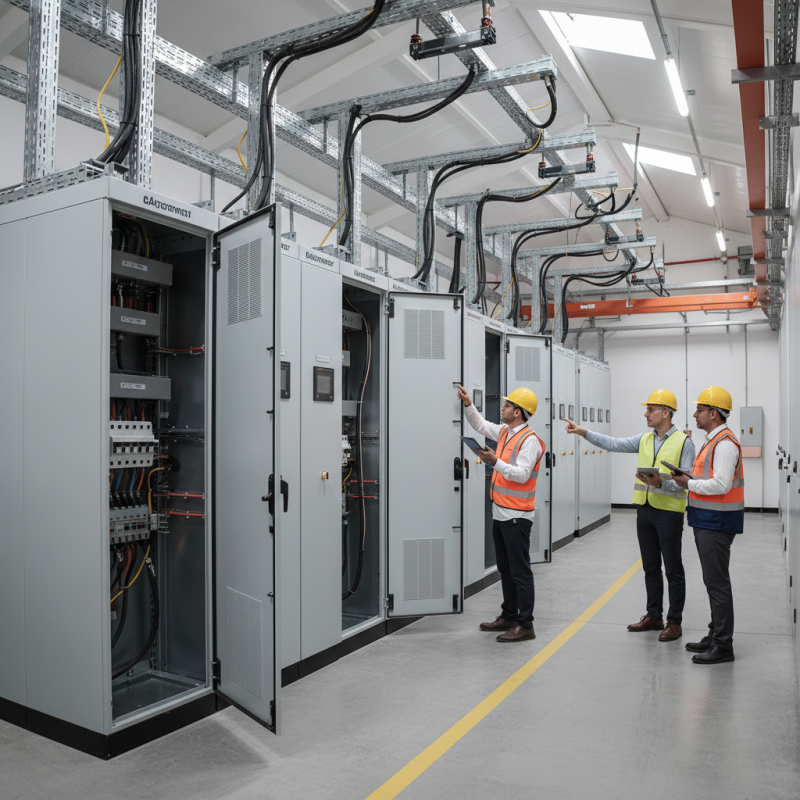
Essential Tips for Choosing Medium Switchgear for Your Needs?
Choosing the right Medium Switchgear is crucial for various applications. It plays a key role in electrical distribution systems. Understanding your specific needs can greatly enhance safety and efficiency.
Medium Switchgear comes in various configurations and sizes. Each meets different operational requirements. Factors such as load capacity, voltage ratings, and environmental conditions should be considered. These aspects directly impact your system's performance and reliability.
It's easy to overlook some details when selecting switchgear. Ignoring specific requirements can lead to costly mistakes later. Make sure to evaluate your options thoroughly. Seek expert advice if needed. Understanding complexities in Medium Switchgear is essential for making informed decisions.
Understanding Medium Switchgear: Key Features and Benefits
Medium switchgear plays a pivotal role in electrical systems. Its features and benefits significantly impact operational efficiency. These systems typically include metal-enclosed, air-insulated, and gas-insulated switchgear. According to a recent report by ResearchAndMarkets, the global medium voltage switchgear market is projected to reach $24 billion by 2027, reflecting a steady compound annual growth rate of 3.5%.
Understanding the key features of medium switchgear is crucial. These units must provide safety, reliability, and ease of maintenance. Current technologies include advanced protection mechanisms that ensure equipment longevity. A recent analysis by MarketsandMarkets identified that 60% of switchgear failures stem from inadequate maintenance or outdated designs. Investing in contemporary features can significantly mitigate these risks.
Moreover, the benefits of medium switchgear extend to operational continuity. Efficient systems can reduce downtime by up to 40%. They often integrate real-time monitoring, enhancing system resilience. However, many operators still face challenges in implementing these technologies effectively. Regular training and updates are, therefore, vital to maximize system capabilities and address any emerging vulnerabilities.
Essential Tips for Choosing Medium Switchgear
This chart illustrates the importance levels of various features to consider when choosing medium switchgear. Key features such as capacity, number of circuits, protection features, customization options, and installation type are ranked based on their significance.
Assessing Your Power Requirements for Medium Switchgear Selection
Assessing power requirements is crucial when selecting medium switchgear. Understanding your facility's energy consumption patterns will allow you to make informed decisions. According to the International Electrotechnical Commission (IEC), medium voltage applications range between 1 kV and 36 kV. Depending on your operations, this application can heavily influence your equipment choices.
You should evaluate both peak and average load demands. Industry data indicate that peak demands can reach up to 150% of average loads in some facilities. This variability must be accounted for when sizing your switchgear. Oversizing can lead to increased costs and inefficiencies, while undersizing risks failures and downtime. Consider your expansion plans; a facility with forecasted growth should opt for equipment that accommodates increased capacity.
Furthermore, assess the fault current rating of your switchgear. This rating defines the maximum current it can withstand during fault conditions. According to the IEEE, fault levels can vary significantly, leading to potential equipment damage or safety hazards if not properly analyzed. Collaboration with electrical engineers ensures an accurate assessment of both the current and future needs of your systems. Ensure that these analyses are regularly revisited as operational demands change.
Essential Tips for Choosing Medium Switchgear for Your Needs
| Parameter | Description | Recommended Values |
| Voltage Rating | The maximum voltage the switchgear can handle. | 3.3 kV to 36 kV |
| Current Rating | The maximum current the switchgear is designed to carry. | Up to 4000 A |
| Short-Circuit Rating | The maximum short-circuit current the switchgear can withstand. | Up to 25 kA for 1 second |
| Insulation Type | Type of insulation used in the switchgear (air, vacuum, SF6). | SF6 or Vacuum preferred |
| Protection Features | Features that protect the system from overloads, faults, etc. | Overcurrent, Earth fault protection |
| Installation Environment | Conditions under which the switchgear will be installed (indoor, outdoor). | Indoor/Adequate weatherproofing for outdoor |
| Maintenance Requirements | Frequency and type of maintenance needed. | Annual inspections recommended |
Evaluating Different Types of Medium Switchgear Available
When selecting medium switchgear, it's crucial to evaluate the different types available based on your specific requirements. Medium switchgear can be broadly classified into several types, including air-insulated switchgear (AIS), gas-insulated switchgear (GIS), and hybrid systems. Each type comes with its own advantages and drawbacks. For example, AIS is often more cost-effective and easier to maintain. However, it may occupy more space than GIS, which is known for its compact design and high safety levels.
Another factor to consider is the voltage rating. When choosing switchgear, ensure it matches your operational voltages. Higher voltage ratings often mean enhanced performance, but they also come with increased costs and complexity. Proper installation is vital, too. Misplacement or poor connection can lead to inefficiency or failures over time, making it essential to plan your layout carefully. It's worth consulting industry experts to understand which switchgear type best fits your needs. They can provide insights based on similar projects or unique scenarios from diverse sectors.
Adaptability is another important aspect. As your operations grow or change, your switchgear should be able to accommodate that. Future-proofing your investment can save costs and headaches later. Opting for flexible designs allows for easier upgrades. However, be cautious: not all switchgear adapts well. A mismatch between system compatibility and equipment can lead to significant issues. Therefore, thorough research and expert advice are essential in making an informed decision.
Factors to Consider: Reliability, Maintenance, and Safety Standards
When selecting medium switchgear, several critical factors must be evaluated. Reliability is paramount. Equipment failure can lead to costly downtimes and safety hazards. Therefore, look for switchgear with a proven track record. Examine usage history in similar environments. This assessment contributes to making an informed decision.
Maintenance is another key consideration. Regular checks and servicing are essential for longevity. Review the ease of maintenance for the switchgear you are considering. Accessibility to components can save significant time and effort. Complex designs may complicate repairs and increase operational risks, which is a concern that often gets overlooked.
Safety standards cannot be taken lightly. Each piece of switchgear should comply with local and international regulations. Ask for certifications and documentation that outline safety features. While the guidelines can seem overwhelming, take time to understand them. Your choice impacts not only your operation but also the safety of your team working in proximity.
Steps for Installation and Integration of Medium Switchgear Systems
When considering the installation and integration of medium switchgear systems, a few critical steps ensure effectiveness. Proper planning is vital for a seamless transition. A well-researched layout based on electricity load analysis is essential. According to the International Electrotechnical Commission, improper installation can lead to inefficiencies and safety hazards. Adhering to regulatory standards is crucial.
Next, installation requires skilled technicians. They should thoroughly understand both the design and local codes. Many reports indicate that poorly executed installations can escalate maintenance costs by up to 30%. Ensuring adequate grounding and protection systems significantly lowers these risks. Integrating advanced technologies, such as remote monitoring, can enhance functionality and reliability, yet it introduces complexity.
As systems evolve, regular checks are necessary. Feedback loops from operators help identify inefficiencies. It’s crucial to employ real-time monitoring tools to capture issues early. A survey by Schneider Electric revealed that 60% of operators face challenges in system adjustments due to insufficient data. Flexibility in the initial design allows for future upgrades, making the switchgear more adaptable to changing demands without substantial overhauls.