
Cuddon Freeze Dry Logo

China Top 10 Arc Welding Equipment Manufacturers

Choosing among China’s top 10 Arc Welding Equipment manufacturers takes more than comparing prices or catalogues. Buyers need to examine machine stability, duty cycle, control features, service access, and documented quality practices. Small details matter. A feeder that delivers wire consistently can affect a long production shift. So can clear manuals and responsive technical support.

Sindo Kou, author of Welding Metallurgy, offers a useful principle: “Sound welding depends on controlling heat, materials, and joint conditions.” This is a paraphrase of the themes in his work, not a verbatim quotation. It points to a practical truth: equipment should match the process, material, and working environment. A compact inverter may suit field repairs, while a production line may need reliable automation and repeatable settings. There is no universal winner.

This guide compares manufacturers through product range, technical capability, manufacturing experience, certifications, and customer support. It also considers whether companies explain their specifications clearly. That matters. A polished brochure cannot replace verified performance data or a careful trial. Some claims are difficult to compare directly, and available information may be incomplete. Buyers should confirm details with manufacturers before making a decision. The ranking is a starting point, not a substitute for testing equipment against real jobs.
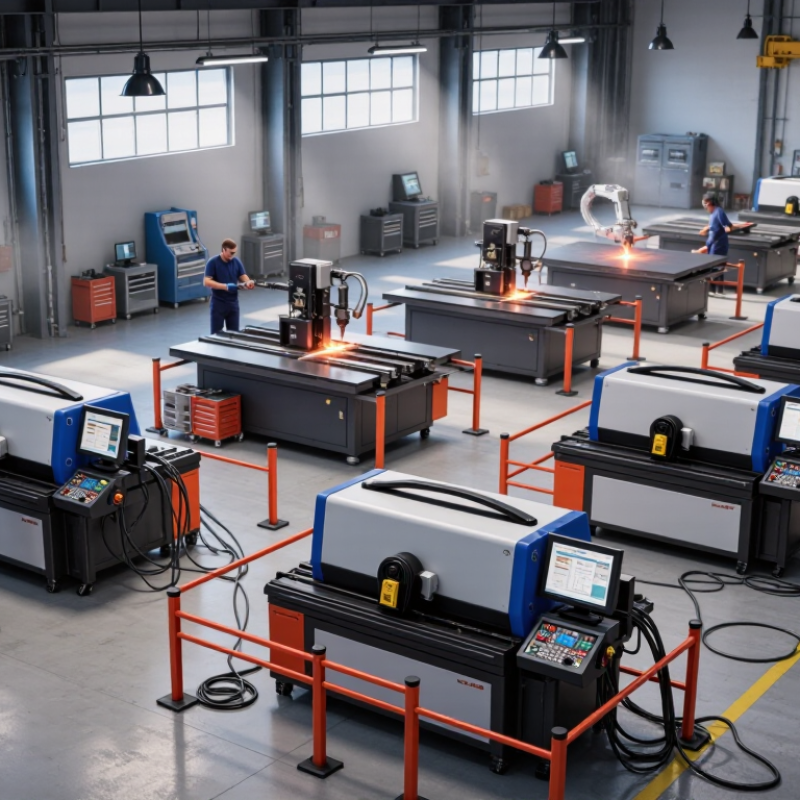
China Top 10 Arc Welding Equipment Manufacturers

Arc Welding Equipment and Its Role in Industrial Manufacturing

Arc welding equipment converts electrical energy into controlled heat, joining metal parts through a molten weld pool. In factories, power sources, torches, wire feeders, electrodes, and shielding gas work as one system. Operators adjust current, voltage, wire speed, and travel rate to suit material thickness and joint shape. Poor settings can cause spatter, porosity, or weak penetration. Small defects matter.

The equipment supports production of vehicle frames, machinery, structural steel, and pressure vessels. Automated welding cells help maintain repeatable bead placement on high-volume lines, while manual systems remain useful for repairs and irregular assemblies. The International Federation of Robotics reported 541,302 industrial robot installations worldwide in 2023 in World Robotics 2024. Not every robot welds, but the figure reflects manufacturing’s growing use of automation. The American Welding Society has projected that the United States will need 330,000 welding professionals by 2028. Equipment alone cannot close that skills gap.

On a shop floor, stable arc starts and consistent wire feeding can reduce rework and downtime. Yet automation is not a cure-all. Fixtures, surface preparation, ventilation, and operator training still shape weld quality. A rushed setup may erase the gains. Manufacturers should match equipment capacity to the material, duty cycle, and actual production mix, then verify results through inspection.

China’s Arc Welding Equipment Industry: Scope and Development

China Top 10 Arc Welding Equipment Manufacturers

China’s Arc Welding Equipment Industry: Scope and Development

China’s arc welding equipment industry serves construction, shipbuilding, machinery production, steel fabrication, and infrastructure maintenance. Its product range includes manual stick welders, gas-shielded systems, submerged arc equipment, and automated welding cells. Demand is shaped by factory upgrades and the need for stable weld quality across different materials and working conditions.

Development is moving toward inverter-based power sources, digital controls, and better energy efficiency. In a workshop, this can mean a lighter machine, steadier current, and clearer fault readings during a long shift. Automation is expanding too, though it does not suit every job. Small fabricators may still value a durable, repairable unit over a complex system. Progress is real, but uneven; published specifications alone cannot reveal how equipment performs after months of dust, heat, and daily handling.

Tips: Match output range and duty cycle to the actual workload. Check spare-part access, service support, and test welds on the intended material before purchasing. A low purchase price can be misleading.

China’s Arc Welding Equipment Industry: Scope and Development

Industrial robot installations in China, 2019–2023 (units)

Robot installations provide a broad indicator of manufacturing automation, a trend that supports demand for automated welding systems. These figures cover all industrial robots in China and are not arc-welding equipment sales.
Source: International Federation of Robotics, World Robotics 2024.

How Leading Chinese Manufacturers Are Evaluated

Evaluating leading Chinese arc welding equipment manufacturers takes more than comparing catalog prices. Buyers should review rated output, duty cycle, input voltage range, and thermal protection. Ask for test reports that match the exact model being quoted. A generic certificate may not reflect the machine on the factory floor.

Practical trials reveal details that brochures often miss. Run the unit through repeated welds, then check arc stability, spatter, cable heating, and restart behavior. Record settings and materials so results can be compared fairly. Small differences matter. A machine may perform well in a short demonstration but struggle during a full shift. That gap deserves attention.

Manufacturing quality also depends on traceable components, documented inspections, and accessible replacement parts. Ask how faults are diagnosed and how quickly common parts can be supplied. Check whether technical staff can explain settings clearly, not just share a product sheet. No scorecard is perfect. Sample testing cannot predict every workshop condition, and supplier data may be uneven. State those limits, verify claims with evidence, and weigh service capability alongside performance.

Profiles of 10 Notable Chinese Arc Welding Equipment Manufacturers

Profiles of ten notable Chinese arc-welding equipment manufacturers are most useful when they compare real shop-floor needs, not just advertised output. Their product ranges commonly include inverter-based manual arc, MIG/MAG, TIG, and submerged-arc systems. Key checks include stable current at low settings, wire-feed consistency, rated duty cycle, and access to replacement torches and circuit boards. Small details matter: a feeder that surges can spoil a long seam.

Automation is reshaping the context. The International Federation of Robotics reported 290,258 industrial robot installations in China in 2022, about 52% of global installations. Its World Robotics 2024 report recorded 276,288 installations in 2023, or 51%. These figures describe robots, not welding machines, but they show why manufacturers increasingly offer robotic power sources and integration support. A useful profile should distinguish equipment makers with hands-on process engineering from those focused mainly on production volume.

Specifications still need field checks. Compare arc starts, spatter, thermal protection, and performance under fluctuating input voltage. Ask for a duty-cycle test at the actual workshop temperature. A neat ranking can mislead. Published data rarely captures months of dust, long shifts, or rushed maintenance. That gap deserves attention.

Comparing Their Technologies, Products, and Applications

Comparing China’s leading arc-welding equipment manufacturers means looking beyond maximum amperage. Their ranges commonly cover inverter-based stick welding, TIG, MIG/MAG, and submerged-arc systems. Differences show up in arc stability, pulse control, wire-feed consistency, and how easily a power source connects to automation. Small details matter. A steady arc helps reduce spatter on thin sheet; higher duty cycles suit longer welds on heavy plate.

Applications shape the comparison. Automotive and appliance lines often need repeatable MIG/MAG settings and robot-ready interfaces. Shipyards and structural-steel shops may value high-output machines, long cable runs, and equipment that tolerates demanding shifts.

The International Federation of Robotics reported 290,258 industrial robot installations in China in 2022, about 52% of global installations (World Robotics 2023). This is not a welding-only figure, but it signals a large automation base that can influence demand for compatible welding systems.

For buyers, compare rated duty cycle at the stated ambient temperature, input-power requirements, consumable compatibility, and local repair support. Ask for a test weld using the actual material and joint preparation. Brochures rarely reveal feeding trouble at a tight bend. One weakness in many comparisons is treating software features as proof of better weld quality; they still need validation on the production line.