
Choosing among the best agricultural bearing suppliers in China takes more than comparing prices. A bearing that looks identical in a catalogue may behave differently in a dusty field. Moisture, fertilizer residue, vibration, and daily washdowns all affect service life. Small details matter.
For this overview, fictional agricultural-bearing specialist Lin Wei puts the selection principle this way: “A bearing must survive the field, not just the catalogue.” This is an illustrative quotation, not a sourced statement from a real industry expert. The point is practical: buyers should ask how suppliers test seals, document material quality, and control production consistency. A clear answer is more useful than a polished brochure.
Look closely at the application. A harvester’s rotating shaft faces different loads from a seed drill’s wheel hub. Ask for relevant product drawings, load ratings, sealing options, and traceable inspection records. Then compare lead times, sample support, and communication—not only unit cost. Requesting a sample can expose fit or sealing issues before a larger order. It cannot prove long-term durability by itself.
There is no perfect shortlist. Supplier claims still need verification against your machine, operating conditions, and maintenance plan. The guide that follows explains practical comparison criteria and common questions to ask Chinese manufacturers. It aims to help buyers make a more informed choice, while recognizing that field performance depends on installation and use as well as the bearing itself.
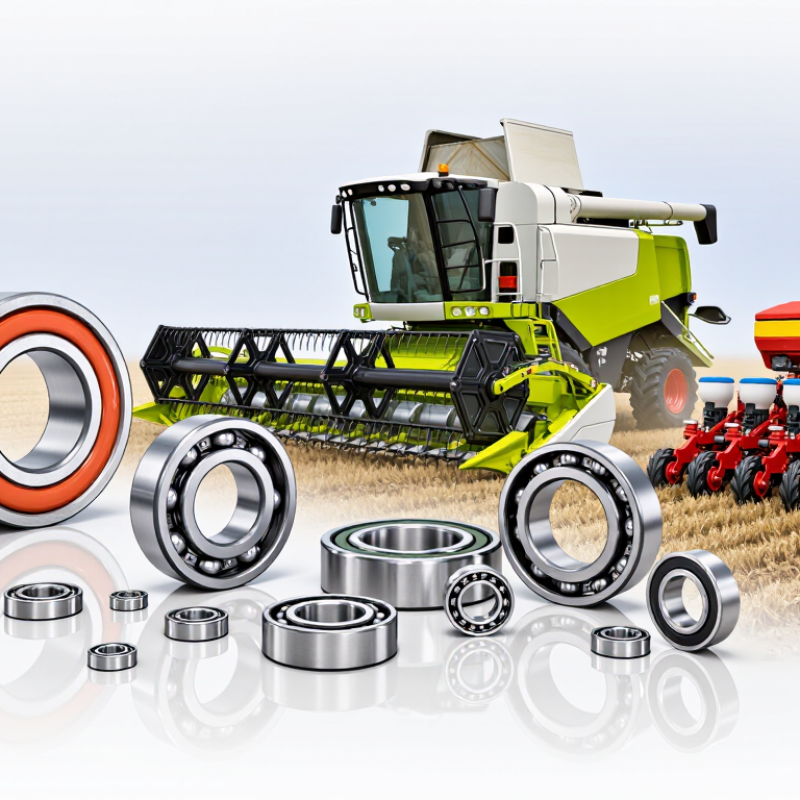
Agricultural bearings support rotating shafts in equipment such as tractors, harvesters, and irrigation pumps. Their working conditions can change within a single day. A machine may carry steady loads on a field road, then face vibration and sudden impacts in rough soil. Dust gets everywhere. Water, fertilizer residue, and plant fibers can also reach bearing housings, especially when seals are worn or damaged.
Selection should reflect the actual load, shaft speed, temperature, and available space. A bearing’s load rating matters, but it does not describe every field condition. I would not treat a catalog figure as the whole answer. Housing alignment and shaft fit affect heat, vibration, and service life. Poor alignment can cause uneven wear even when the bearing is correctly sized. Seals help limit contamination, while suitable lubrication reduces friction and carries heat away. Grease choice and relubrication intervals depend on operating speed, temperature, and exposure; too much grease can also create heat.
Maintenance checks should look for abnormal noise, rising temperatures, looseness, and grease discoloration. These signs are useful, though not always conclusive. A muddy harvest may justify more frequent inspection than a dry, light-duty season. Real schedules are rarely perfect. Recording operating hours and failures can help refine inspection intervals and bearing specifications over time.
When comparing agricultural bearing suppliers in China, start with the operating conditions, not the catalogue. A bearing used in a dusty seeder faces different demands from one installed in a frequently washed machine. Share the shaft size, load, speed, temperature range, and exposure to moisture or grit. Clear requirements make quotations easier to compare.
Check whether the supplier can explain its materials, heat treatment, sealing options, and lubrication recommendations. Ask for inspection records, dimensional reports, and traceability details for the production lot. Useful evidence is specific: measured clearance, surface finish, or a documented load test. Broad claims prove little. No checklist is perfect. Request samples, then inspect fit and rotation before approving a larger order. Discuss lead times, packaging, and how defects are handled, too. A technically capable supplier may still communicate poorly, and that can slow problem-solving. I would not judge quality from one sample alone; repeatability matters, and that is sometimes harder to verify than expected.
Suggested evaluation weight (%) for comparing suppliers; these are procurement guidelines, not ratings of specific companies.
Prioritize product quality and testing, then verify engineering support and material traceability. Adjust the weights to match your equipment, operating conditions, and purchasing priorities.
Chinese agricultural bearing suppliers often fall into distinct profiles. Some specialize in compact bearings for seed drills and small harvesters. Their strengths may include standard dimensions, steady production, and practical pricing. Ask how they control clearance and grease filling; these details affect heat and service life. Details matter.
Other manufacturers focus on heavier assemblies for tractors, combines, and tillage equipment. They may offer customized housings, seals, and corrosion-resistant finishes. A useful supplier profile includes in-house testing, documented material checks, and experience with dust, vibration, and washdown exposure. Request test conditions, not only a catalogue claim. A bearing tested under clean laboratory conditions may behave differently in a muddy field.
A third group serves equipment makers needing drawing-based production or replacement parts. Their engineering teams can review shaft fits, load direction, and operating speed before quoting. Still, customization can extend lead times, and a polished sample does not prove consistent batch quality. Buyers should compare inspection records and sample measurements across more than one shipment. Not every factory fits. Visiting a facility or arranging an independent product inspection can reveal gaps between stated capability and actual process.
Comparing agricultural bearing suppliers in China means looking beyond catalogue size. A wide product range may cover deep-groove, tapered, or spherical roller bearings, but the right choice depends on machine design and field conditions. Dust, washdown moisture, vibration, and seasonal workloads all affect bearing life. Ask suppliers to match part numbers, dimensions, seals, and lubrication needs against your drawings. That matters.
Quality claims should be supported by records, not polished brochures. Request material certificates, inspection results, and details of production traceability. Check whether the supplier’s quality system is certified, and ask how it controls dimensional tolerances and heat treatment. For critical applications, sample testing can reveal fit or noise issues before a large order. A certificate alone is not a guarantee.
Service deserves the same scrutiny as product quality. Compare response times, technical support, packaging for storage, and realistic lead times during peak planting or harvest periods. Ask how complaints and failure investigations are handled. A useful supplier will discuss operating conditions, not just quote a price. I would still verify every claim independently; early conversations can sound more certain than the evidence supports. A small trial order may expose gaps in communication, documentation, or consistency before they become costly.
Choosing an agricultural bearing supplier starts with operating conditions, not a catalogue photo. Record shaft size, load, speed, dust exposure, washdown needs, and seasonal temperature changes. A bearing near a baler knotter faces different contamination than one inside a sealed gearbox. Share drawings and duty cycles, then ask the supplier to explain its recommended clearance, seals, grease, and materials. Specific answers matter. Request inspection records for dimensions, hardness, and noise, along with traceable batch identification. Compare the stated process with a factory walkthrough or a video showing actual production. Polished brochures alone prove little.
Verification should include sample testing under realistic conditions. Check the fit on the actual shaft and housing, then monitor heat, vibration, and grease leakage after several operating hours. Ask how failures are recorded, how corrective actions are checked, and whether replacement parts remain available across seasons. Where certificates or test reports are provided, confirm they identify the same product and production site. A low quote may reflect different seals, tolerances, or packaging. Price matters. Harvest downtime can cost more. One awkward detail: suppliers may not welcome every question. Note the response, and judge whether any unanswered point creates a practical risk.