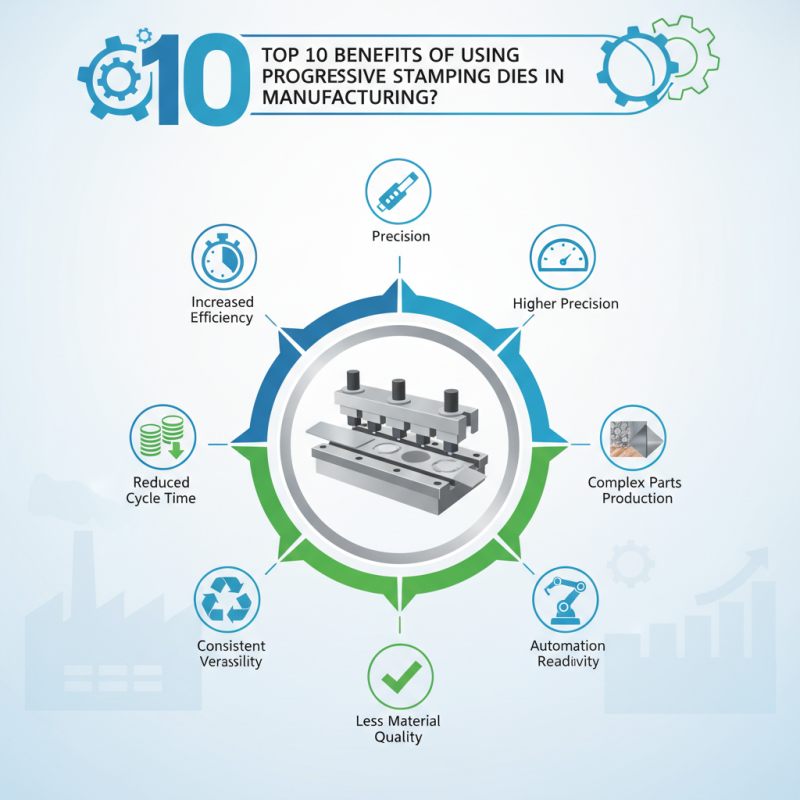
Top 10 Benefits of Using Progressive Stamping Dies in Manufacturing?
In the world of manufacturing, efficiency and precision are paramount. The use of Progressive Stamping Die has transformed many production processes. These innovative tools allow for continuous operations in metal forming. They perform multiple operations in a single pass, reducing cycle time significantly. Manufacturers are increasingly gravitating toward progressive stamping for its speed and adaptability.
Progressive stamping dies produce complex parts with tight tolerances. This ability is crucial in industries like automotive and electronics where precision matters. The dies can work with various materials, enhancing design flexibility. However, not all companies adopt this technology seamlessly. Some face challenges in operation and maintenance.
Choosing the right equipment is critical. Manufacturers must weigh their specific needs against the benefits of progressive stamping. While the advantages are compelling, continuous improvement and adaptation are necessary. It’s essential to seek expert advice and invest in training to maximize the potential of progressive stamping dies. With the right approach, manufacturers can harness these tools for greater productivity and innovation.
Benefits of Improved Efficiency through Progressive Stamping Dies
Progressive stamping dies stand as a hallmark of efficiency in manufacturing processes. These tools allow manufacturers to execute multiple operations in a single cycle. As a result, production speeds are significantly enhanced. The streamlined workflow reduces the need for manual handling. This leads to fewer errors in production. Consequently, product quality sees a noticeable improvement.
One of the major advantages lies in the reduction of material waste. Progressive dies host several stations where specific cuts and bends take place. This design minimizes offcuts, making the process more cost-effective. Remember, careful planning in tooling can enhance die life. Regular maintenance checks can further improve efficiency.
Consider focusing on employee training as well. Adequate knowledge about operating die machinery helps reduce mishaps. When workers are proficient, output increases. This also fosters a culture of safety. However, relying solely on machines might overlook vital human insights. Balancing automation and human involvement could offer better results than technology alone.
Top 10 Benefits of Using Progressive Stamping Dies in Manufacturing
| Benefit | Description | Impact on Efficiency |
| High Productivity | Ability to produce complex parts in a single operation, reducing cycle time. | Increases production speed significantly. |
| Reduced Waste | Minimizes scrap material through precise stamping. | Improves material utilization by up to 20%. |
| Consistency and Accuracy | Maintains tight tolerances and uniformity in parts. | Reduces variability in product quality. |
| Lower Labor Costs | Automated processes require fewer operators. | Cuts labor expenses significantly. |
| Faster Setup Times | Quick changeovers between jobs with minimal downtime. | Enhances overall equipment effectiveness. |
| Flexibility | Easily adaptable for different designs and components. | Allows quicker response to market changes. |
| Improved Safety | Minimized handling and manual intervention reduces risk. | Enhances working conditions for operators. |
| Cost-Effective Production | Economies of scale achieved by high-volume run capabilities. | Decreases cost per unit significantly. |
| Enhanced Design Possibilities | Facilitates intricate shapes and designs not possible with other methods. | Expands product innovation opportunities. |
| Sustainability | Efficient use of materials and reduced emissions during production. | Contributes to environmentally friendly manufacturing practices. |
Cost-Effectiveness and Waste Reduction in Manufacturing Processes
Progressive stamping dies are revolutionizing manufacturing by focusing on cost-effectiveness and waste reduction. This powerful method allows manufacturers to produce complex parts in a streamlined manner, significantly cutting labor costs. According to a report by the Metal Stamping Association, companies using progressive dies can achieve up to 30% lower production costs. This effect is primarily due to fewer steps required in the stamping process.
Waste reduction is another major advantage. Traditional stamping processes often result in material waste of 20% to 30%. In contrast, progressive stamping can minimize scrap to as low as 5%. This is because the design often maximizes the use of available materials. Such efficiency not only helps the environment but also improves the bottom line for manufacturers.
Tip: Regular maintenance of stamping dies is crucial. Dull or damaged dies can lead to increased scrap rates.
Furthermore, quality control becomes simpler with progressive dies. They produce consistent parts, reducing the need for extensive rework or adjustments. However, transitioning to this method may require initial investment in equipment and training. Companies must weigh short-term costs against long-term benefits.
Tip: Consider partnering with experts for a smoother transition. They can help ensure you are poised for success in adopting this innovative approach.
Versatility of Progressive Stamping Dies for Various Materials
Progressive stamping dies offer exceptional versatility across various materials, making them a popular choice in manufacturing. They effectively work with metals such as steel, aluminum, and copper, accommodating diverse thicknesses. This adaptability allows manufacturers to create complex parts without needing multiple tools. It streamlines workflows and reduces production time significantly.
Moreover, the capability of these dies extends beyond metals to include plastics and composites. Each material presents its challenges. For instance, when stamping plastics, maintaining precision is crucial to avoid warping. Complex shapes require careful planning. While progressive dies can handle this, not all setups yield perfect results on the first attempt. Continuous testing and adjustments are necessary to achieve optimal quality.
Additionally, the effectiveness of progressive stamping dies can vary based on material characteristics. Factors like hardness and ductility can influence the stamping process. Manufacturers must consider these aspects during design stages. Sometimes, a die may not perform as expected, requiring innovative solutions. Embracing this unpredictability can lead to better designs and improved manufacturing processes overall.
Enhanced Precision and Quality Control in Stamping Operations
Progressive stamping dies play a crucial role in enhancing precision and quality control within manufacturing processes. These dies enable manufacturers to produce complex parts with high accuracy. By sequentially shaping materials, they minimize the risk of errors. This leads to consistent dimensions and improved surface finishes. Operators can achieve tighter tolerances than with traditional methods.
Quality control is another significant advantage. With progressive stamping, products are inspected at multiple stages. This approach allows for early detection of defects. Manufacturers can adjust settings on the fly, maintaining high quality throughout production. However, the complexity of these dies can be challenging. Engineers must carefully design each stage to avoid misalignment and ensure optimal performance.
Investing in progressive stamping dies may require substantial upfront costs. Yet, the long-term benefits often outweigh these expenses. Improved efficiency can lead to reduced cycle times and lower labor costs. Nonetheless, companies must monitor their processes closely. Continuous improvement is essential to fully capitalize on the advantages of progressive stamping.
Reduction of Production Time with Progressive Stamping Techniques
Progressive stamping techniques significantly reduce production time in manufacturing. These methods allow multiple operations to be performed in one continuous process. This means fewer setups and reduced handling time. The result is a more efficient workflow that can handle complex parts quickly.
Using progressive stamping dies, manufacturers can achieve higher output rates. Each stroke of the press completes several operations, increasing productivity. For instance, punching, bending, and forming happen in one pass. This integration minimizes wasted time between stages. However, it requires precise engineering to avoid errors, as any mistake can halt production.
Manufacturers also benefit from reduced tool wear and tear. With fewer changeovers, tools last longer and cost less to maintain. Yet, achieving balance in tool design and process efficiency can be challenging. Understanding these dynamics is crucial for companies aiming to improve their bottom line. Embracing progressive stamping is a journey with learning curves but offers substantial rewards.