
Choosing reliable conveyor suppliers can shape the efficiency, safety, and operating cost of an entire material-handling project. Global buyers often compare more than price. They examine engineering capability, manufacturing capacity, quality controls, export experience, and after-sales support. This guide explores China’s leading suppliers of Conveyors Equipment for mining, logistics, warehousing, food processing, and industrial production. It focuses on practical evidence, not attractive claims alone.
Experienced suppliers should provide clear drawings, load calculations, component specifications, and realistic delivery schedules. Buyers may also inspect factory processes, welding quality, motor brands, belt materials, and testing records. A dependable manufacturer explains how its equipment performs in dust, moisture, heat, or continuous operation. Certifications can support trust, but they should be checked against the actual model and destination requirements. Details matter here. A polished brochure cannot replace a verified production line.
Supplier selection still involves uncertainty. Some companies present broad product ranges but have limited experience with complex installations. Others offer excellent machinery yet provide weak documentation or slow technical support. That gap can become expensive after shipment. Buyers should request references, sample reports, spare-parts lists, warranty terms, and installation plans before signing a contract. We may not identify one perfect supplier for every project. Instead, this overview compares capabilities, applications, communication quality, and long-term reliability. The aim is a clearer decision, grounded in operating conditions rather than assumptions.
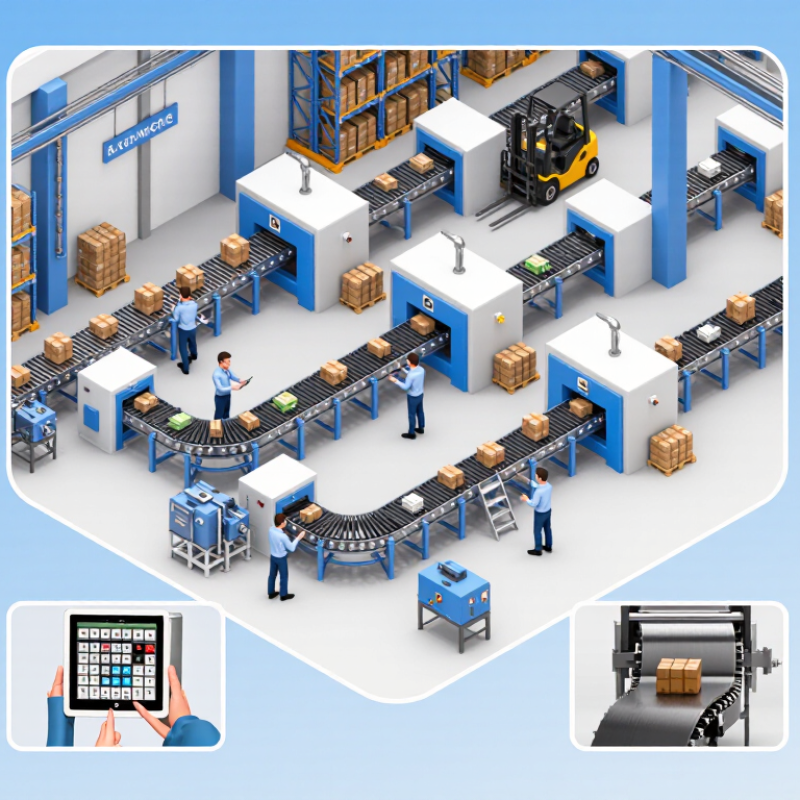
China’s conveyor equipment industry has become an important part of global material-handling supply chains. Its strength comes from broad manufacturing capacity, competitive production costs, and access to steel, motors, rollers, and control components. Suppliers serve mining, ports, warehouses, construction sites, and processing plants. The details matter.
Many Chinese manufacturers now build systems for different climates, load levels, and operating distances. Buyers may request belt conveyors, roller conveyors, stackers, feeders, or customized transfer stations. Experienced suppliers usually provide layout drawings, load calculations, technical data sheets, and factory inspection support. These documents help buyers compare performance rather than price alone. However, product quality can vary between factories. Independent audits remain valuable.
China’s global market role also depends on engineering communication and after-sales capability. Reliable suppliers explain belt width, throughput, incline angle, spare parts, installation conditions, and maintenance requirements before production. They should also support international electrical standards and provide clear safety documentation. A practical buyer may inspect welds, pulley alignment, bearing protection, and emergency-stop access. Small defects can become expensive delays. That gap matters.
Shipping routes and regional service partners influence the final project cost. Delivery time may change with customization, port congestion, or certification requirements. Some quotations look attractive but exclude commissioning, training, or replacement parts. Buyers should challenge unclear terms and confirm every technical assumption in writing. A perfect procurement process is unlikely, but careful verification reduces avoidable risk.
China manufactures a wide range of conveyor equipment for mining, ports, warehouses, food plants, and assembly lines. Belt conveyors suit long, steady routes and heavy materials. Roller conveyors work well for cartons, pallets, and flat-bottom loads. Screw conveyors move powders, grains, and wet materials through enclosed channels. Chain conveyors handle hot, bulky, or irregular products. Bucket elevators lift materials vertically, saving valuable floor space. Each type solves a different handling problem.
Project reviews often reveal one repeated mistake: selecting equipment by price before checking site conditions. Belt width, motor capacity, incline angle, dust levels, and material temperature all affect performance. China-based manufacturers can provide customized frames, drives, guards, and control systems. Reliable suppliers should share drawings, load calculations, testing records, and clear spare-parts lists. Buyers should also verify production experience through factory audits or independent inspections. No conveyor choice is perfect. Even experienced teams sometimes underestimate cleaning access or future capacity.
Tips: Describe your material, throughput, route length, elevation, and operating hours before requesting quotations. Ask for a complete layout, not only a unit price. Confirm electrical standards, installation support, warranty terms, and delivery responsibilities in writing. Request sample footage or a factory test when the material behaves unpredictably. A small pilot test may prevent a costly redesign later.
How to Evaluate Chinese Conveyor Equipment Suppliers
Choosing Chinese conveyor equipment suppliers requires more than comparing quotations. MHI’s 2024 Annual Industry Report found that 55% of respondents planned to increase supply chain technology investment. This signals stronger demand for reliable automation, not simply cheaper machinery. Evaluate the supplier’s engineering capacity, production records, testing process, and experience with similar materials. Ask for layout drawings, load calculations, motor data, and a documented factory acceptance test. A polished factory tour can still mislead.
Check quality systems carefully. An ISO 9001 certificate is useful, but it does not prove every conveyor will perform well. Verify the certificate with the issuing body and inspect sample inspection records. Request customer references from comparable industries. Review belt tracking, emergency stops, guarding, noise levels, spare parts, and software support. The International Federation of Robotics continues to report high global automation demand, so controls and integration skills deserve close attention. A supplier may offer excellent frames but weak commissioning support. That difference becomes expensive.
Tips: Compare total cost of ownership, not the purchase price. Request a clear warranty, delivery schedule, acceptance criteria, and responsibility matrix. Confirm export packaging and installation training. Use an independent inspection before shipment when risk is high. I would also ask uncomfortable questions about failure rates and delayed projects. Suppliers who answer with evidence are usually safer partners. Still, no checklist replaces a realistic site test. Evaluate twice.
Recommended procurement weighting for global buyers evaluating conveyor equipment suppliers
Technical fit and total cost typically receive the greatest emphasis because conveyor systems must meet required capacity, speed, load, layout, installation, and operating-cost targets. Buyers should also verify documented quality systems, compliance with applicable standards, delivery capability, after-sales support, and spare-parts availability before placing an order.
The percentages represent a practical evaluation framework and should be adjusted to match the project’s industry, risk level, and operating environment.
China’s conveyor equipment supply base is concentrated in several industrial regions. The Yangtze River Delta offers strong machining, electrical integration, and port access. The Pearl River Delta is known for flexible fabrication and fast export production. Northern and central provinces add heavy-duty steelwork, bulk handling, and mining-related capacity.
Grand View Research estimated the global conveyor systems market at about USD 10.6 billion in 2023. Its report also projects continued growth through 2030, supported by logistics, manufacturing, and warehouse automation. This demand is visible in Chinese factories, where laser-cut frames, modular belt lines, rollers, and control cabinets are produced under one roof. Some suppliers maintain testing areas with loaded conveyors, emergency-stop checks, and simulated incline sections.
Manufacturing capability still varies widely. ISO 9001 certification can indicate documented quality processes, but it does not guarantee reliable field performance. Buyers should examine weld records, motor test data, spare-parts planning, and commissioning experience. The International Federation of Robotics reported continued investment in industrial automation worldwide, which raises expectations for sensor integration and tracking accuracy. Yet, a polished specification sheet may hide weak installation support. Factory audits and sample testing remain necessary, even when the supplier appears technically capable.
China Top Conveyor Equipment Suppliers for Global Buyers
Export performance depends on more than price. MarketsandMarkets reported that the global conveyor system market may grow from USD 7.7 billion in 2023 to USD 10.6 billion by 2028. This growth increases supplier choices, but also increases sourcing risks. Export buyers should request material certificates, electrical diagrams, packing photos, and a complete spare-parts list. A low quotation can still become expensive.
Quality must be verified before shipment. Suppliers should provide factory acceptance testing, belt tracking checks, load trials, and noise measurements. Ask for risk assessments aligned with ISO 12100 and safety controls aligned with ISO 13849. Compliance is destination-specific. CE-related documentation may suit European trade, while North American projects often require different electrical and workplace safeguards. Certificates alone are not enough.
After-sales support needs measurable terms. Require response times, remote diagnosis procedures, commissioning support, and replacement-part availability. A practical contract should define warranty coverage, exclusions, installation duties, and software access. Reports from Interact Analysis indicate continued automation investment in material handling, making control-system compatibility increasingly important. Yet suppliers can misunderstand site conditions. Buyers should share drawings, ambient temperatures, product dimensions, and duty cycles early. Some projects still fail because everyone assumes the conveyor will “fit.” That assumption needs challenging.
| Evaluation Dimension | What Global Buyers Should Request | Typical Evidence or Reference | Why It Matters | Recommended Buyer Action |
|---|---|---|---|---|
| Export Experience | Documented experience shipping conveyor systems, spare parts, and electrical components to the target destination. | Redacted bills of lading, packing lists, export declarations, and destination-market references. | Export procedures, packaging, labeling, and customs requirements vary by country. | Ask for verifiable, redacted shipping records and references for comparable projects. |
| Conveyor Configuration | Belt, roller, chain, screw, bucket, or modular designs matched to the conveyed material and process layout. | General arrangement drawings, load calculations, belt-speed data, elevation details, and equipment schedules. | Correct selection affects throughput, wear, energy use, safety, and maintenance frequency. | Provide material characteristics, capacity, conveying distance, incline, operating hours, and site conditions. |
| Capacity and Performance | Rated capacity expressed in consistent units, such as tonnes per hour, kilograms per hour, or cubic metres per hour. | Approved technical datasheet, performance curve, motor rating, belt speed, and acceptance-test procedure. | Nominal capacity may differ from actual capacity because of bulk density, loading method, and operating conditions. | Define guaranteed throughput and test conditions in the purchase contract. |
| Material and Wear Resistance | Material grades and thicknesses for frames, rollers, chutes, liners, belts, chains, and fasteners. | Material certificates, coating specifications, hardness information, and replacement-part list. | Abrasive, corrosive, hot, wet, or food-contact materials require different construction choices. | Specify operating temperature, moisture, particle size, abrasiveness, and chemical exposure. |
| Quality Management | A controlled manufacturing process covering incoming inspection, fabrication, assembly, testing, and nonconformance handling. | Current quality-management certificate, inspection plan, welding records, calibration records, and corrective-action procedure. | Consistent process control reduces dimensional errors, premature failures, and undocumented substitutions. | Verify certificate scope and validity through the issuing certification body where possible. |
| Factory Acceptance Testing | Defined inspection and functional tests before dispatch, including no-load and, where practical, loaded testing. | FAT checklist, inspection photographs, test results, dimensional report, and signed release record. | Testing before shipment identifies alignment, noise, vibration, control, and guarding issues earlier. | Make FAT approval a milestone linked to payment and shipment authorization. |
| Electrical Compliance | Electrical design compatible with the destination voltage, frequency, control architecture, enclosure requirements, and local rules. | Electrical schematics, component list, control-panel drawings, short-circuit data, and conformity documentation where applicable. | Incorrect electrical specifications can cause commissioning delays, unsafe operation, or costly rework. | Approve the electrical design before production and identify the responsible local electrical authority. |
| Machine Safety | Guards, emergency stops, pull-cord switches, warning labels, safe access, lockout provisions, and risk-reduction measures. | Risk assessment, safety-circuit diagram, guarding drawings, operating instructions, and applicable conformity declaration. | Conveyors contain moving parts and may present entanglement, nip-point, fall, and stored-energy hazards. | Use the safety requirements applicable at the installation site, not only the supplier’s standard configuration. |
| International Standards | A clear statement of the design standards used for machinery safety, electrical equipment, steelwork, welding, and components. | Standards list, design calculations, inspection records, and project-specific compliance matrix. | A certificate or logo alone does not prove that the complete conveyor system meets project requirements. | Require clause-by-clause documentation for the standards named in the contract. |
| Packaging and Shipping | Export packaging suitable for long-distance sea, road, or rail transport, including moisture and corrosion protection. | Packing specification, crate dimensions, gross and net weights, lifting points, container plan, and shipping marks. | Poor packaging can cause rust, impact damage, missing components, and customs or handling problems. | Approve packaging drawings and require a complete packing list before dispatch. |
| Documentation Package | Complete documentation in the agreed language and format, including manuals, drawings, certificates, and spare-parts information. | Document register, approved drawings, operation and maintenance manual, parts catalogue, and inspection dossier. | Accurate documents support installation, operator training, maintenance, audits, and future modifications. | Set document submission dates and acceptance criteria in the technical specification. |
| Installation and Commissioning | Defined scope for supervision, installation support, alignment, trial operation, operator training, and performance verification. | Commissioning method statement, installation drawings, training agenda, punch list, and site acceptance test procedure. | Many project risks arise at interfaces between the supplier’s equipment and the buyer’s site systems. | Define responsibilities for civil works, utilities, controls integration, lifting, and site labor. |
| Warranty Terms | Warranty duration, start date, covered components, exclusions, response time, and remedy obligations. | Signed warranty clause, defect-reporting process, service-level commitments, and warranty claim form. | Warranty value depends on clear scope, practical response procedures, and access to replacement parts. | Confirm whether labor, travel, freight, consumables, and consequential losses are included or excluded. |
| After-Sales Support | Technical support channels, service coverage, troubleshooting capability, remote assistance, and escalation contacts. | Service organization chart, response-time commitments, support contact list, and representative service cases. | Downtime costs can exceed the original equipment price in continuous-production facilities. | Include measurable response and resolution targets in the service agreement. |
| Spare Parts Availability | Recommended start-up spares, critical spare parts, consumables, lead times, and part-number traceability. | Spare-parts list, stock policy, interchangeability details, preservation instructions, and quotation validity. | Availability of belts, rollers, bearings, sensors, drives, and wear parts directly affects uptime. | Purchase critical spares with the initial order and agree long-term part-support arrangements. |
| Commercial and Contract Controls | Clear Incoterms, payment milestones, delivery schedule, liquidated damages, change control, inspection rights, and acceptance criteria. | Detailed quotation, technical annex, purchase contract, approved deviation list, and milestone schedule. | Transparent commercial controls reduce ambiguity over scope, delays, substitutions, and payment disputes. | Compare total delivered cost, including freight, duties, installation, commissioning, spares, and lifetime maintenance. |