
Cuddon Freeze Dry Logo

Top Enclosure Boxes Manufacturers for Global Buyers

Enclosure Boxes do more than cover electrical and control components. They help protect equipment from dust, moisture, impact, and everyday handling. For global buyers, choosing a manufacturer involves more than comparing prices. Buyers also need to consider material options, enclosure dimensions, sealing methods, mounting features, and the conditions where each box will be used. A poorly matched enclosure can complicate installation or expose equipment to avoidable wear. Small details matter.

This guide introduces manufacturers serving international markets and explains practical points for comparing them. Look for clear product specifications, consistent quality information, customization options, and responsive technical support. Photographs can help, but they cannot confirm wall thickness, gasket fit, or finish durability. Ask for drawings or samples when those details affect a project. Shipping schedules and minimum order quantities deserve attention, too. A low quoted price may not include the full cost of packaging, freight, or later design changes.

No shortlist is perfect for every application. Product availability and service can vary by region, and a manufacturer’s strengths may not fit every project. That is worth remembering. Use the comparisons that follow as a starting point, then verify current specifications, certifications, lead times, and warranty terms directly with each supplier. Careful checks take time, but they can prevent costly surprises after delivery.
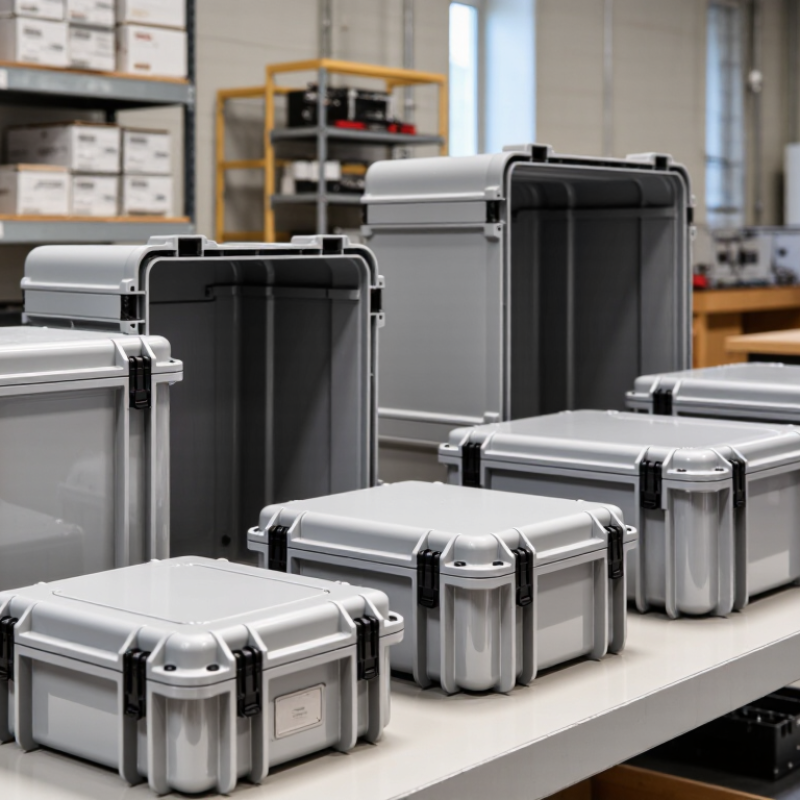
Top Enclosure Boxes Manufacturers for Global Buyers

Enclosure Boxes: Definition, Functions, and Main Types

An enclosure box is a protective housing for electrical or electronic equipment. It limits contact with live components and helps shield circuits from dust, moisture, impact, and accidental damage. Inside a workshop, it might hold a control panel; outdoors, it may protect a meter from rain and grit. The right enclosure also supports heat management, cable entry, and maintenance access. It is not just a shell.

Common types include junction boxes for joining or routing cables, wall-mounted boxes for compact controls, and floor-standing cabinets for larger assemblies. Rack enclosures organize servers and network equipment, while sealed outdoor enclosures are built for harsher exposure. Materials matter: steel offers strength, stainless steel resists corrosion, and polycarbonate is lighter and electrically insulating. IEC 60529 defines IP ratings for resistance to solids and water. A rating alone does not guarantee suitability for every site.

Market demand reflects the spread of electrical systems across industries. Grand View Research’s Electrical Enclosure Market Size, Share & Trends Analysis Report estimated the global market at USD 6.33 billion in 2023 and projected a 5.8% compound annual growth rate from 2024 to 2030. Those figures describe a broad market, not a checklist for selecting a box. A sealed unit can trap heat, and a large cabinet can complicate access. Measure the equipment, wiring space, ambient conditions, and service needs before choosing.

Materials, Protection Ratings, and Industry Standards

Choosing an enclosure starts with its environment, not its appearance. Powder-coated steel suits many indoor control panels, while stainless steel can better withstand washdown or corrosive conditions. Aluminum is lighter and sheds heat well; polycarbonate resists corrosion and can be useful where electrical insulation matters. No material is best everywhere. Salt spray, sunlight, impact, and temperature changes can alter the choice.

Protection ratings need careful reading. The IP code under IEC 60529 describes protection against solid objects and water. NEMA enclosure types address environmental conditions differently, so the ratings should not be treated as direct equivalents. Dust finds gaps. A door gasket, hinge, or cable entry can determine whether the finished assembly keeps its stated protection. Ask manufacturers for test evidence covering the exact enclosure configuration, not just a similar product.

Industry standards also vary by market and application. Buyers should confirm required electrical, mechanical, and environmental tests before approving a design. Details matter. Check material thickness, corrosion-resistant hardware, temperature limits, and whether windows or ventilation affect the rating. Even good documentation can leave questions about field installation. That is worth reviewing early, especially when panels will face rain, vibration, or frequent cleaning.

Water Protection Levels for Electrical Enclosures

IEC 60529 classifies water protection from IPX0 (no protection) to IPX8 (continuous immersion under conditions specified for the enclosure). These levels are ordinal categories, not a measure of immersion depth or duration. The rating applies to the tested enclosure configuration; material, seals, and assembly can all affect the result.

How to Evaluate Enclosure Box Manufacturers for Global Sourcing

A global enclosure-box sourcing decision starts with the application, not the catalog. Define dimensions, mounting points, cable openings, material, finish, and required ingress protection. Ask manufacturers to show how they verify these details on production parts, not just prototypes. Check drawing revision control, inspection records, and material traceability. A tidy audit file helps, but it cannot prove a stable process.

The World Bank’s 2023 Logistics Performance Index assessed 139 economies across customs, infrastructure, shipment arrangements, logistics competence, tracking, and timeliness. Use those factors to assess a supplier’s shipping route as well as its factory. UNCTAD’s Review of Maritime Transport 2024 reported that global maritime trade grew 2.4% in 2023 after contracting in 2022. Freight conditions can shift. Request realistic lead times, protective packaging details, and a clear plan for delayed shipments. Review a sample for sharp edges, uneven coating, and misaligned holes. Then ask how defects are contained and corrected. I would also request references for comparable enclosure projects; they are useful, though not a substitute for testing. One detail is easy to miss: confirm that replacement parts can be identified from the supplier’s records years later.

Top Enclosure Boxes Manufacturers for Global Buyers - How to Evaluate Enclosure Box Manufacturers for Global Sourcing

Manufacturer evaluation framework for comparing enclosure suppliers across regions. Use current product documentation and project-specific requirements when making a selection.
Evaluation Dimension What to Verify Useful Evidence or Benchmark Why It Matters for Global Sourcing
Enclosure application and design Confirm the enclosure is designed for the intended use, such as electrical distribution, automation, instrumentation, or outdoor equipment. Dimensioned drawings, mounting details, door and gasket design, cable-entry options, and rated operating conditions. Similar-looking boxes can differ in usable space, mounting strength, access, and suitability for the installed equipment.
Ingress protection Check the exact IP rating required for exposure to dust and water, and whether the rating applies to the complete assembled enclosure. IEC 60529 test documentation. For example, IP66 indicates dust-tight protection and protection against powerful water jets; IP67 includes specified temporary immersion testing. Ratings depend on configuration, including doors, seals, cable glands, and accessories. Confirm the tested configuration matches the order.
NEMA enclosure type For North American projects, determine whether the specified NEMA type is required and verify the enclosure’s intended environmental application. Documentation to the applicable NEMA 250 requirements, including the stated type and product configuration. NEMA enclosure types and IEC IP codes use different classification systems; they should not be treated as direct one-to-one equivalents.
Material and corrosion resistance Compare material options such as painted steel, stainless steel, aluminum, and non-metallic plastics against the site environment. Material and coating specifications, corrosion-test information where applicable, and details on fasteners, hinges, and seals. Salt exposure, chemicals, humidity, UV, and cleaning agents can affect the enclosure and its hardware differently.
Standards and conformity Identify the standards and approvals required in the destination market and for the final electrical assembly. For relevant products, review IEC 62208 documentation for empty enclosures used in low-voltage switchgear and controlgear assemblies, and applicable UL 50 or UL 50E evidence for the U.S. market. An enclosure approval does not automatically certify the complete assembled equipment. Confirm scope, certificate holder, model coverage, and market applicability.
Dimensions and customization Confirm external and internal dimensions, cutouts, mounting plates, hinges, locks, and any required custom features. Approved production drawings, revision control, tolerance information, and a first-article inspection plan. Clear drawings reduce fit-up problems and help control changes between samples and production orders.
Thermal and operating conditions Check the specified ambient temperature range and assess heat dissipation for the installed components. Product datasheet limits, material and gasket temperature limits, and thermal calculations or testing for the actual assembly when needed. Allowable temperatures vary by design and materials; do not assume one range applies to every enclosure from a supplier.
Manufacturing quality controls Review how the supplier controls forming, welding, surface preparation, coating, assembly, and final inspection. Documented inspection criteria, traceability practices, calibration records, and nonconformance and corrective-action procedures. Consistent controls help reduce variation in dimensions, finishes, sealing, and repeat production orders.
Production capacity and lead time Validate available capacity, order-size constraints, tooling needs, and lead times for samples and repeat orders. Written production schedule, stated assumptions, capacity plan, and confirmation of material availability. Quoted lead times can depend on customization, raw materials, approval cycles, and seasonal demand.
Packaging and transport Check protection against moisture, impact, abrasion, and movement during the planned shipping route. Packaging specification, pallet or crate details, labeling requirements, and shipping dimensions and weights. Packaging affects freight cost and the risk of damage during long-distance transport and handling.
Commercial and delivery terms Compare quotation scope, minimum order quantities, payment terms, delivery terms, and responsibilities for freight and insurance. Itemized quotation and clearly stated Incoterms® rule, named place, currency, and quotation validity period. Consistent commercial assumptions make supplier quotations easier to compare and help clarify cost responsibilities.
After-sales support and risk Assess responsiveness for technical questions, replacement parts, warranty claims, and quality issues. Written warranty terms, escalation contacts, spare-parts policy, and documented process for corrective actions. Accessible support can reduce downtime and simplify issue resolution across time zones and borders.

Selection note: Treat this table as a sourcing checklist, not a ranking of specific manufacturers. Request current, model-specific documents and verify certifications with the relevant issuing body before purchase.

Leading Manufacturers and Their Product Specialties

Top Enclosure Boxes Manufacturers for Global Buyers

Enclosure manufacturers often specialize by material, environment, and production method. Metal fabricators typically offer steel or aluminum boxes for machinery, control panels, and demanding industrial sites. Their strengths may include welded seams, custom cutouts, and durable powder-coated finishes. Ask about corrosion protection, since coating performance depends on preparation and exposure.

Plastic enclosure specialists produce lighter housings for sensors, communications equipment, and indoor electronics. Some offer molded designs with integrated ribs, cable entries, or transparent covers. These details can simplify installation, but a standard housing may not fit every connector or heat load. Check dimensions carefully.

Not glamorous, but important. Custom enclosure makers bridge the gap with low-volume prototypes and tailored layouts, while high-volume producers focus on repeatable tooling and shorter unit costs. Buyers should compare material data, ingress-test documentation, and sample quality—not just catalog descriptions.

A neatly finished box can still disappoint if its gasket compresses unevenly or mounting holes drift. I would also ask how the manufacturer handles design changes; that answer is easy to overlook.

Global Purchasing: Customization, Compliance, Delivery, and Support

Top Enclosure Boxes Manufacturers for Global Buyers

Global Purchasing: Customization, Compliance, Delivery, and Support

Global buyers should assess more than price when selecting an enclosure supplier. Start with the operating environment: indoor or outdoor use, expected temperature range, dust exposure, and cleaning methods. Share drawings, cable-entry locations, mounting details, and target quantities before requesting a quotation. Clear specifications reduce avoidable revisions. They do not prevent every surprise.

Compliance needs careful review. Ask for current test reports or declarations relevant to the product and intended market, then check that the documents match the exact material, design, and configuration being quoted. A familiar certificate name is not enough. Confirm who issued it and what it actually covers. For customization, request a sample or first-article inspection when dimensions or cutouts are critical. A few millimeters can matter.

Tips: Keep one approved drawing with revision dates. Confirm packaging, delivery terms, lead time, and spare-part availability in writing. Ask how the supplier handles defects and engineering changes. A small trial order can reveal communication gaps, though it may not predict every production issue. Keep a little schedule margin; shipping estimates can shift, and rushed approvals often create their own delays.