
Cuddon Freeze Dry Logo

Top Freeze Dried Fruit Powder Suppliers Worldwide?

Finding the top Freeze Dried Fruits Powder suppliers worldwide requires more than comparing catalog prices. Suppliers must demonstrate stable fruit sourcing, controlled drying conditions, and consistent particle size. These details matter when powder is added to yogurt, smoothies, confectionery, or nutrition products.

Industry reports show strong momentum. Grand View Research’s Freeze-Dried Food Market report identifies rising demand for lightweight, shelf-stable ingredients. MarketsandMarkets also links market growth to clean-label products, convenience foods, and longer distribution routes. However, their market boundaries differ. Some include complete freeze-dried meals, while others focus on ingredients. Direct comparisons can therefore mislead.

Supplier quality needs closer inspection. Look for documented HACCP or FSSC 22000 systems, batch-level traceability, and certificates of analysis. Test results should cover moisture, water activity, microbiological safety, pesticide residues, and heavy metals. Fruit origin deserves attention, too. A raspberry powder from Poland may taste different from one produced from Serbian fruit. Color, aroma, acidity, and solubility can change between harvests.

Reliable suppliers should provide samples before large orders. A small sample can reveal clumping, muted color, or excessive seed particles. Not every impressive brochure reflects factory capability. That is worth remembering.

This guide compares international suppliers by product range, processing expertise, certifications, packaging options, minimum order quantities, and export experience. It also considers response quality and technical support. Rankings remain practical rather than absolute. Regional strengths, crop seasons, and changing certification status can influence the final choice. Buyers should verify current documents directly before signing a contract.
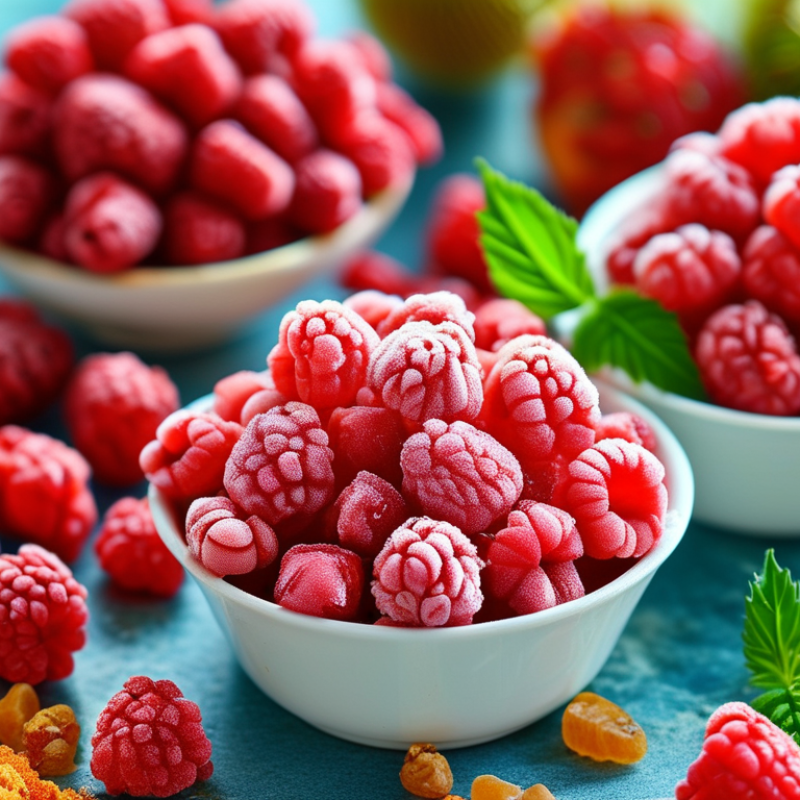
Top Freeze Dried Fruit Powder Suppliers Worldwide?

Freeze-Dried Fruit Powder: Process, Nutrition, and Up to 99% Moisture Removal

Freeze-dried fruit powder begins with carefully selected, ripe fruit. The fruit is cleaned, cut, and rapidly frozen. In a vacuum chamber, ice changes directly into vapor through sublimation. This avoids the liquid stage that can damage delicate structure. With controlled pressure and temperature, the process can remove up to 99% of moisture. Actual results depend on the fruit, slice size, and drying cycle.

The finished powder keeps much of the fruit’s natural color, aroma, fiber, and flavor. Some vitamin C may decline through oxygen, light, or storage time. It is not nutritionally identical to fresh fruit. That distinction matters. A reliable supplier should provide moisture data, microbiological testing, allergen information, and clear batch records. Packaging should resist humidity, since powder absorbs water quickly after opening. A practical check includes solubility, particle size, taste, and odor. Clumping can reveal poor handling. A bright color alone proves very little. Supplier claims should be compared with laboratory results, not attractive photographs. Even careful production has limits, and those limits deserve honest reporting.

Global Market Size, 2024–2030 Growth, and Major Supplier Regions

Top Freeze Dried Fruit Powder Suppliers Worldwide?

The global freeze dried fruit powder market was estimated at roughly USD 1.5–2.0 billion in 2024. Forecasts commonly indicate 7–9% annual growth through 2030. Demand is rising in smoothies, infant nutrition, bakery fillings, supplements, and convenient food products. However, market figures vary because suppliers report powders, pieces, and blended ingredients differently.

North America remains a strong supplier region, supported by advanced processing equipment and strict quality systems. Europe focuses on traceable sourcing, clean-label formulas, and premium berry ingredients. China offers broad production capacity and competitive pricing, while India is expanding in mango, banana, strawberry, and tropical fruit powders. Latin America provides close access to important fruit-growing areas, especially for berries and tropical varieties.

Quality is not judged by color alone. Experienced buyers inspect moisture content, water activity, particle size, solubility, aroma retention, and microbial test results. A reliable supplier should provide batch records, origin details, allergen statements, and a current certificate of analysis. Packaging also matters. Foil-lined bags and oxygen control can protect powder during long transport.

The picture is not perfectly clean. Public growth estimates sometimes disagree. Some suppliers also describe spray-dried products as freeze dried, which can confuse purchasing teams. A practical evaluation should compare test samples, shelf-life data, production capacity, and delivery performance before signing a large contract. Small details often expose weak consistency.

Top Freeze Dried Fruit Powder Suppliers Worldwide? - Global Market Size, 2024–2030 Growth, and Major Supplier Regions

Global market overview and supplier-region comparison for freeze-dried fruit powders. Market values are shown in USD billions.
Data Category 2024 2030 2024–2030 CAGR Interpretation
Global Market Snapshot
Global freeze dried fruit powder market $1.12B $1.86B 8.9% Growth is supported by clean-label foods, beverage applications, sports nutrition, bakery, confectionery, and shelf-stable fruit ingredients.
Estimated incremental market value $0.74B Approximate additional market value expected between 2024 and 2030.
Average annual growth rate 8.9% Calculated from the estimated 2024 and 2030 market values.
Major Supplier and Production Regions
Region 2024 Market Value 2024 Share 2030 Share Supplier-Region Characteristics
Asia-Pacific $0.329B 29.4% 34.6% Broad raw-fruit availability, expanding processing capacity, and strong export potential. Common supply bases include China, India, Japan, South Korea, Thailand, Vietnam, and Australia.
North America $0.338B 30.2% 28.5% Strong demand for premium ingredients, organic products, functional foods, and retail-ready powders. Processing is concentrated around established food-ingredient and agricultural regions.
Europe $0.319B 28.5% 25.8% Well-developed ingredient processing, strict food-safety controls, and high demand for organic, natural, and traceable fruit powders.
Latin America $0.072B 6.4% 6.2% Competitive access to tropical and subtropical fruits, including mango, banana, pineapple, strawberry, and açaí. Export growth depends on drying capacity and logistics.
Middle East & Africa $0.062B 5.5% 4.9% Emerging processing base with opportunities in dates, berries, citrus, baobab, hibiscus, and other regional fruit ingredients. Capacity and cold-chain infrastructure remain uneven.
Product and Application Indicators
Dimension Leading or Fast-Growing Segment Market Position Growth Outlook Key Demand Drivers
Fruit type Strawberry and berry powders Leading premium segment High Strong color, flavor, antioxidant positioning, and use in dairy, snacks, bakery, and nutrition products.
Fruit type Banana, mango, pineapple, and other tropical fruits High-volume segment High Wide availability, recognizable flavor profiles, and rising demand for tropical formulations.
End use Food and beverage manufacturing Largest application group High Use in smoothies, flavored dairy, bakery mixes, confectionery, sauces, instant beverages, and snack coatings.
End use Dietary supplements and sports nutrition Fast-growing application Very high Demand for recognizable fruit ingredients, natural flavors, micronutrient positioning, and convenient powdered formats.
Product specification Organic, non-GMO, allergen-controlled, and clean-label grades Premium-value segment Very high Retail and foodservice buyers increasingly request traceability, certifications, low additive content, and transparent sourcing.
Common Supplier Evaluation Criteria
Quality and safety Typical buyer requirements Microbiological testing, pesticide-residue compliance, heavy-metal controls, foreign-material prevention, allergen management, and documented batch traceability.
Technical specification Important purchasing parameters Moisture level, water activity, particle size, color retention, solubility, bulk density, flavor intensity, packaging format, and shelf life.
Certification profile Frequently requested certifications HACCP-based food-safety systems, ISO 22000 or FSSC 22000, organic certification, non-GMO verification, kosher, halal, and applicable regional compliance.
Data note: Market values and regional shares are rounded estimates synthesized from publicly available industry forecasts and trade information for the freeze-dried fruit powder category. The scope covers freeze-dried fruit powders sold as food, beverage, supplement, bakery, confectionery, and ingredient inputs; it excludes whole freeze-dried fruit pieces and conventional air-dried fruit powders. Regional shares may not total exactly 100% because of rounding.

Top Worldwide Suppliers Ranked by Capacity, Certifications, and Fruit Range

The leading freeze-dried fruit powder suppliers are best ranked by verifiable capacity, certification depth, and processing control. Large-scale processors usually operate several freeze-drying lines, climate-controlled warehouses, and metal detection systems. However, published capacity figures are often incomplete. That deserves caution.

FAOSTAT’s 2022 dataset recorded more than 900 million tonnes of global fruit production, creating a broad raw-material base. Yet supply reliability depends on harvest geography, not volume alone. Suppliers with multi-region sourcing rank higher because one failed crop should not stop production. BRCGS, FSSC 22000, ISO 22000, HACCP, and organic certification offer useful screening points. Certification is not proof of perfect quality. Recent audit findings and batch records matter more.

The strongest fruit-range suppliers provide powders from berries, tropical fruits, citrus, stone fruits, and vegetables. They also document moisture, water activity, particle size, microbiological limits, and allergen controls. Grand View Research’s 2024 market assessment links freeze-dried fruit demand with clean-label products and extended shelf life. That trend favors suppliers offering low-temperature processing and consistent color retention. Still, a wide catalog can hide uneven performance. Ask for samples from different harvests. Compare solubility, aroma, and color after storage. Capacity wins large contracts, but narrower specialists may deliver better flavor. Supplier rankings should remain provisional until independent testing confirms the paperwork.

Top Freeze Dried Fruit Powder Suppliers Worldwide

Regional supplier-screening benchmark based on fruit supply capacity, certification coverage, and product-range breadth. Company names and brand data are excluded.

Capacity is represented by the region’s reported fruit-production base; certification coverage reflects widely recognized food-safety and organic frameworks; fruit range indicates the number of commercially common fruit categories suitable for powder processing. Scores are normalized to a 0–100 benchmark for comparison.

Supplier Quality Metrics: COA Testing, ISO 22000, and Microbial Limits

Top Freeze Dried Fruit Powder Suppliers Worldwide?

Choosing freeze-dried fruit powder suppliers worldwide requires more than comparing prices and product photographs. A current Certificate of Analysis (COA) should identify the lot, production date, test methods, and laboratory approval. Check moisture, water activity, particle size, color, and nutrient values against agreed specifications. Do not accept a generic COA. It may describe another batch. A reliable supplier can explain deviations and provide retained-sample records when questions arise. That response often reveals more than polished sales language.

ISO 22000 certification indicates a documented food safety management system, not automatic product perfection. Verify the certificate scope, issuing body, validity, and processing site. Audits should connect hazard analysis with supplier approval, allergen controls, sanitation, traceability, and recall exercises. Ask for recent audit findings. A certificate can expire. Site visits or video inspections may expose gaps that documents miss, especially around powder handling and storage.

Microbial limits deserve lot-specific attention because low-moisture powders can still carry contamination risks. Request results for total plate count, yeast and mold, coliforms, Salmonella, and relevant pathogens. Limits should match destination requirements and the intended application, including beverages or bakery mixes. Testing frequency matters. One clean report is not enough. In practical sourcing work, unclear sampling plans create avoidable disputes. Review packaging seals, warehouse humidity, and transport conditions before approval. Some specifications remain imperfect. They should be challenged.

MOQ, Pricing, Shelf Life, and Applications Across 5 Key Industries

Top Freeze Dried Fruit Powder Suppliers Worldwide?
MOQ, pricing, shelf life, and application requirements vary by supplier and fruit type. Current B2B quotations often place standard MOQ between 25 and 100 kilograms. Certified organic or customized blends may require 200 kilograms or more. Indicative pricing ranges from US$18 to US$45 per kilogram. Strawberry and raspberry powders usually cost more than apple or banana powders. Grand View Research identifies food and beverage as a major freeze-dried fruit market segment, while Innova Market Insights reports strong interest in clean-label ingredients and fruit-based nutrition.
Shelf life commonly reaches 18 to 24 months in sealed, moisture-barrier packaging. Storage should remain cool, dry, and away from direct light. One opened pouch can lose quality quickly. In beverages, fruit powder improves color and flavor without refrigeration. Bakeries use it in fillings, icings, and dry mixes. Nutraceutical companies add it to sachets and functional blends. Cosmetic formulators use it in masks and botanical powders. Foodservice operators prefer it for smoothies, desserts, and portion control. These are five active industries, but performance still depends on water activity, particle size, and processing temperature.
Tips: Request a recent certificate of analysis, pesticide testing, microbiological results, and a retained sample. Compare price per usable kilogram, not only the quoted price. Reports from the Food and Agriculture Organization emphasize post-harvest quality control, yet supplier documentation is not always complete. That gap deserves attention. A low MOQ may hide higher freight costs or inconsistent color between batches. Test one production lot before signing a larger contract.