
Cuddon Freeze Dry Logo

Top 10 Invar Material Suppliers for Global Buyers

Choosing an Invar Material supplier is a technical purchasing decision, not a simple price comparison. Invar, commonly associated with low thermal expansion, supports demanding applications in aerospace tooling, optical benches, electronics, and precision instruments. Small material differences can affect alignment, forming behavior, weld quality, and long-term dimensional stability.

This guide examines ten suppliers serving global buyers and highlights the evidence behind each option. The review focuses on alloy availability, plate, sheet, bar, tube, and custom forms. It also considers mill certificates, chemical analysis, dimensional tolerances, heat-treatment records, and traceability. These details matter when a component must remain stable beside temperature-sensitive glass or a tightly aligned optical assembly.

Practical sourcing also involves questions beyond the catalog. Can the supplier support prototype quantities? Are export documents clear? Does the quoted lead time include testing and packaging? Buyers should verify standards, inspection methods, packaging protection, and technical support before placing an order. A polished website proves little.

The ranking is intended as a practical starting point, not a permanent verdict. Supplier capabilities change, regional service varies, and the lowest price may create expensive delays later. That is worth remembering. Some manufacturers may excel in custom machining, while others offer stronger stock availability or certification support. Readers should compare current quotations and request representative samples where appropriate. This approach combines supplier experience, engineering requirements, and documented quality practices, helping purchasing teams make more reliable decisions across international markets.
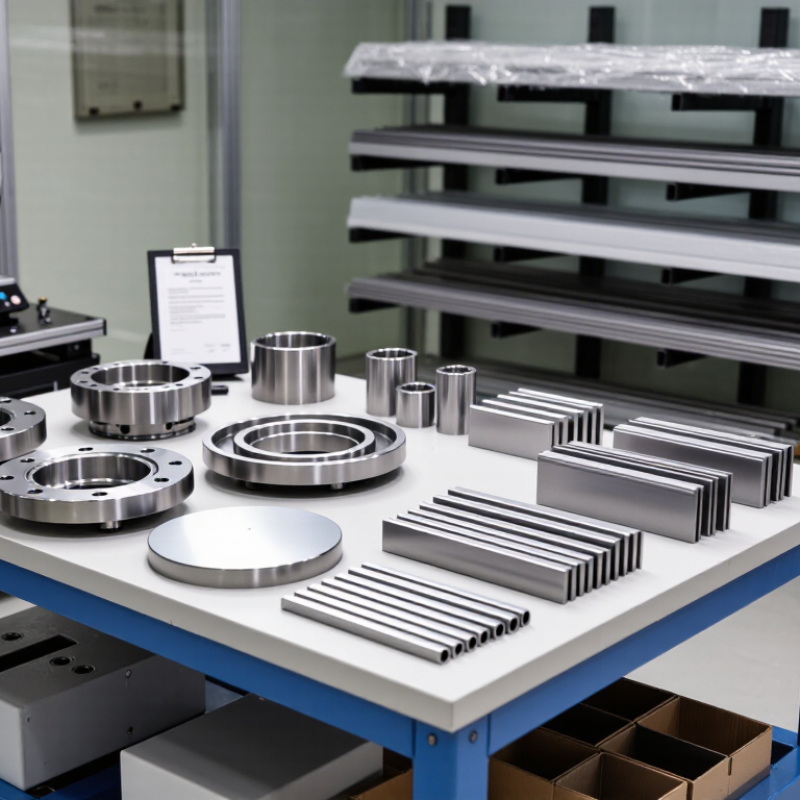
Top 10 Invar Material Suppliers for Global Buyers

Invar Material: Composition, Properties, and Common Applications

Invar is a controlled iron-nickel alloy, typically containing about 36% nickel and the balance iron. Carbon, manganese, silicon, and other elements remain tightly limited. ASTM F1684 covers low-expansion iron-nickel alloys and supports composition control for demanding applications. Its defining feature is an unusually low coefficient of thermal expansion, often near 1.2 × 10⁻⁶/K around room temperature. That value changes with temperature, heat treatment, and product thickness. The textbook number is not a promise.

The ASM Handbook identifies Invar for precision tooling, optical benches, metrology fixtures, aerospace structures, and electronic packages. A 0.5-metre component may expand only about 6 micrometres after a 10°C rise, using the nominal room-temperature coefficient. Small movement still matters. USGS Mineral Commodity Summaries 2025 estimated global nickel mine production at roughly 3.7 million metric tons in 2024, showing the scale of nickel supply behind specialty alloys. However, nickel availability does not guarantee suitable Invar quality. Buyers should request heat-lot chemistry, thermal-expansion curves, tensile data, and inspection records.

Machining also needs practical judgment. Invar can work-harden quickly, creating heat and dimensional drift. Sharp tools, stable clamping, and controlled cutting conditions help. Welded parts may require stress relief, but excessive treatment can alter final dimensions. Engineers sometimes specify only “Invar 36.” That is incomplete. Temperature range, allowable expansion, surface finish, and certification should be stated before production.

How the Top 10 Invar Suppliers Were Selected and Compared

Selecting the top 10 Invar material suppliers requires more than comparing prices. Invar is valued for its low thermal expansion, but performance depends on chemistry, heat treatment, and processing control. We reviewed suppliers against six practical criteria: alloy composition, coefficient of thermal expansion, quality systems, traceability, delivery capability, and technical support.

The comparison used test evidence rather than marketing claims. We checked mill certificates, batch records, and independent laboratory data where available. ASTM E228 and ASTM E831 methods can support thermal expansion testing, while ISO 6892-1 helps assess tensile performance. The ISO Survey 2023 recorded more than 1.2 million ISO 9001 certificates worldwide. However, certification alone does not prove consistent Invar quality. That distinction matters. We also examined minimum order quantities, sample policies, export documentation, and responses to technical questions. Some suppliers provided strong data but weak lead-time commitments. That was difficult to score fairly.

Tips: Ask for recent CTE results at your operating temperature, not only a generic datasheet. Confirm whether values apply to annealed, machined, or welded material. Request two production-lot samples when tolerances are tight. Check packing details, moisture protection, and heat-number traceability. A lower quotation may hide testing fees or longer production queues. Recheck the ranking after qualification samples; practical results can challenge the first score.

Top 10 Invar Material Suppliers for Global Buyers

How the Top 10 Invar Suppliers Were Selected and Compared

Rank Comparison Dimension Measurable Benchmark Weight Verification Evidence Why It Matters to Global Buyers
1 Chemical Composition Control Nickel content typically controlled within 35–37%; carbon generally limited to a maximum of 0.02% for precision applications. 18% Heat analysis, mill test certificate, and independent laboratory verification where required. Stable chemistry is essential for predictable low-expansion performance and batch-to-batch consistency.
2 Thermal Expansion Performance Typical Invar 36 reference range: approximately 1.0–1.5 × 10⁻⁶ K-1 between 20°C and 100°C, subject to processing history. 18% Thermal expansion test report, test temperature range, specimen orientation, and heat-treatment condition. Low and repeatable expansion protects dimensional accuracy in tooling, optics, electronics, and aerospace assemblies.
3 Mechanical Properties Annealed reference values commonly include tensile strength of about 450–550 MPa and elongation of at least 30%; actual values depend on product form. 12% Tensile test results, yield-strength data, hardness readings, and applicable product specifications. Adequate strength and ductility reduce cracking, distortion, and premature failure during fabrication.
4 Product-Form Coverage Capability to supply sheet, plate, bar, rod, wire, tube, and custom-cut components, subject to minimum order quantities. 10% Current product catalog, dimensional range, tolerances, and sample availability. Broad product coverage simplifies sourcing and reduces the need to qualify multiple material channels.
5 Dimensional Tolerance Published thickness, width, diameter, flatness, straightness, and surface-finish tolerances matched to the buyer’s drawing or specification. 10% Inspection plan, dimensional inspection reports, calibrated measurement records, and sample approval. Tight tolerances lower machining allowance, assembly variation, and material waste.
6 Surface Quality and Internal Integrity Material should be free from harmful cracks, laps, seams, excessive oxidation, and unacceptable inclusions according to the purchase specification. 8% Visual inspection, ultrasonic testing where specified, and nonconformance records. Reliable surface and internal quality improves yield during forming, welding, machining, and finishing.
7 Manufacturing and Quality Systems Documented quality controls, traceability from raw material to shipment, and a formal corrective-action process. 8% Quality certificate, audit summary, lot traceability, calibration records, and corrective-action examples. Strong process control reduces supply risk and supports regulated or safety-critical applications.
8 Standards and Documentation Ability to provide certificates and test results aligned with the buyer’s specified ASTM, EN, ISO, or equivalent requirements. 6% Material test certificate, certificate of conformity, inspection report, and document-retention policy. Complete documentation supports customs clearance, incoming inspection, and customer audits.
9 Export and Logistics Capability Clear shipping terms, export packaging, realistic lead-time commitments, and the ability to provide shipment-level traceability. 5% Packing specification, delivery performance records, export documentation, and freight-handling procedures. Dependable logistics reduce delays, transit damage, and unexpected landed costs.
10 Commercial Competitiveness Total landed cost assessed through material price, cutting or processing charges, packaging, freight, duties, minimum order quantity, and payment terms. 5% Formal quotation, cost breakdown, validity period, payment terms, and landed-cost calculation. A transparent total-cost comparison is more reliable than comparing material prices alone.
Total Evaluation Weight 100% Supplier scores should be based on documented evidence and the buyer’s application requirements.

Reference note: Invar performance varies with chemical composition, product form, cold work, annealing, specimen orientation, and test method. Final acceptance should always be based on the applicable purchase specification and lot-specific test documentation.

Top 10 Invar Material Suppliers Serving Global Buyers

Top 10 Invar Material Suppliers Serving Global Buyers

Global buyers need more than a low quotation when selecting Invar material suppliers. The strongest suppliers usually provide Invar 36 with stable nickel content and controlled thermal expansion. They serve aerospace, optical, electronics, tooling, and precision instrument manufacturers. Material forms may include sheet, plate, bar, tube, foil, and custom machined parts.

A reliable supplier should provide heat numbers, chemical analysis, mechanical data, and dimensional inspection records. Ask whether testing follows recognized ASTM, EN, or equivalent standards. Vacuum melting, careful annealing, and controlled rolling can improve consistency. Surface finish matters too. Small scratches may become serious defects after etching or precision forming. Global service also depends on export packaging, lead-time accuracy, and clear communication across time zones.

Look closely at the top ten candidates rather than trusting a polished website. Request recent certificates and a small production sample. Compare flatness, thickness tolerance, grain direction, and actual delivery performance. I have found that some suppliers explain specifications well but handle revisions poorly. That weakness deserves attention. Cost is important, but unstable chemistry can create larger losses during fabrication. Buyers should also confirm welding guidance, minimum order quantities, and replacement policies before placing a contract. Reliable documentation builds confidence, although no supplier is perfect. Mistakes still happen. Clear corrective-action records show how responsibly a supplier responds.

Top 10 Invar Material Suppliers Serving Global Buyers

This chart compares representative low-expansion iron–nickel alloy grades commonly specified by global buyers. Values are typical nominal ranges; actual performance depends on heat treatment, product form, and applicable material standards. Buyers should confirm certified chemical composition, thermal expansion data, dimensional tolerances, and traceability with each supplier.

Product Standards, Manufacturing Capabilities, and Quality Control

Top 10 Invar Material Suppliers for Global Buyers

Product Standards, Manufacturing Capabilities, and Quality Control

A reliable Invar supplier should publish chemistry, dimensional tolerances, and test methods. Invar 36 commonly contains about 36% nickel, with iron forming the balance. ASTM F1684 and related aerospace specifications help buyers compare grades, although certificates alone can mislead. The USGS Mineral Commodity Summaries 2024 reported approximately 3.6 million metric tons of global nickel mine production in 2023. This figure shows the scale of the raw-material market, but not the consistency of each melt.

Manufacturing capability matters more than a polished website. Strong suppliers should control vacuum melting, hot rolling, annealing, precision cutting, and surface finishing. Ask for furnace records, heat numbers, grain-size results, and traceability from billet to shipment. For thin sheet, inspect edge cracks and waviness under angled light. For machined parts, check thermal expansion after repeated heating cycles. ASTM E8/E8M tensile testing and ASTM E112 grain-size evaluation provide useful comparison points. ISO’s 2023 survey recorded over 1.26 million ISO 9001 certificates worldwide, yet certification does not replace process evidence.

Quality control should include independent laboratory verification when tolerances are tight. Request chemical analysis, dimensional reports, tensile data, and a nonconformance history. Sampling plans should be written, not assumed. One weakness remains: many buyers compare price before studying yield loss. I would challenge that habit. A cheaper coil can create more scrap, delays, and unstable assembly performance. No audit is perfect. Keep a retained sample and repeat testing when the application is critical.

How Global Buyers Can Evaluate and Choose an Invar Supplier

Global buyers should evaluate Invar suppliers beyond price and catalog claims. Invar is a nickel-iron alloy used where low thermal expansion matters. Ask for the exact grade, chemical composition, heat-treatment condition, and applicable standards. Request recent mill certificates, heat numbers, and traceability records. A certificate without traceability is weak evidence.

Check whether the supplier controls production or mainly resells material. Review melting capacity, rolling equipment, machining tolerance, and inspection methods. For precision parts, confirm flatness, surface finish, hardness, and dimensional stability after machining. Ask how thermal expansion is tested across the required temperature range. Test samples under real operating conditions when possible. Small samples matter.

Communication also reveals reliability. Can the supplier explain deviations clearly? Do they report nonconforming material honestly? Ask for typical lead times, minimum order quantities, packaging details, and export documents. Independent inspection may be worthwhile for high-value orders. Factory audits can expose gaps that brochures hide. References from similar industries add useful evidence, but they are not enough alone. I would not choose the lowest quote automatically. Invar performance can vary with processing history, and a cheaper batch may create costly rework. My own evaluation would include a written specification, a pilot order, and a review after delivery. Mistakes still happen. The supplier’s response to them matters more than polished promises.