
Cuddon Freeze Dry Logo

What Is a Chicken Layer Cage?

A Chicken Layer Cage is a housing unit designed for hens that produce eggs. It typically includes a resting area, feed trough, and drinkers, with eggs directed toward a collection point. Designs vary by farm and equipment supplier. Some systems use several cage tiers, while others include different layouts and automated features. The details matter. A poorly adjusted drinker can leave a hen without easy access to water, and a blocked egg belt can cause breakage or delays. Daily observation still counts.

Understanding the equipment means looking beyond its metal frame. Farm staff monitor feed and water access, ventilation, cleanliness, egg handling, and the condition of the birds. They also follow the standards and welfare requirements that apply in their location; these are not identical everywhere. A cage may help organize routine tasks, but it cannot replace skilled care or regular inspection. The terminology can be confusing, too: suppliers may use similar labels for systems with different dimensions and features. That deserves a closer look. A useful overview of the Chicken Layer Cage should explain how its parts work, what managers check during everyday use, and which questions buyers should ask before comparing models. It should also acknowledge that housing design involves practical trade-offs, and that equipment descriptions alone do not tell the whole story about hens’ welfare.
What Is a Chicken Layer Cage?

Definition and Purpose of a Chicken Layer Cage

A chicken layer cage is a housing unit designed for hens that have begun laying eggs. It separates birds into groups and provides access to feed and water. The cage may include perches, nest areas, and a sloped floor that moves eggs toward a collection point. Manure often falls below the birds or is removed through a belt. The exact layout varies. The label sounds simple. The daily work isn’t.

Its purpose is to make routine care and egg handling more organized. Staff can check feed and water lines, collect eggs, and notice changes in a hen’s condition. For example, a drop in feed intake or a bird sitting apart may call for closer attention. A cage does not manage these tasks by itself. Clean water, suitable ventilation, dry bedding where provided, and regular health checks still matter. Small details count.

A useful definition should also leave room for scrutiny. Cage design affects how hens move, rest, and interact, so a tidy egg belt is not the only measure of a system. Stocking levels, maintenance, and daily observation all shape the birds’ experience. Even a well-planned setup can have weak points, such as a leaking drinker or a jammed belt. Those are easy to overlook.

Key Components and Basic Cage Design

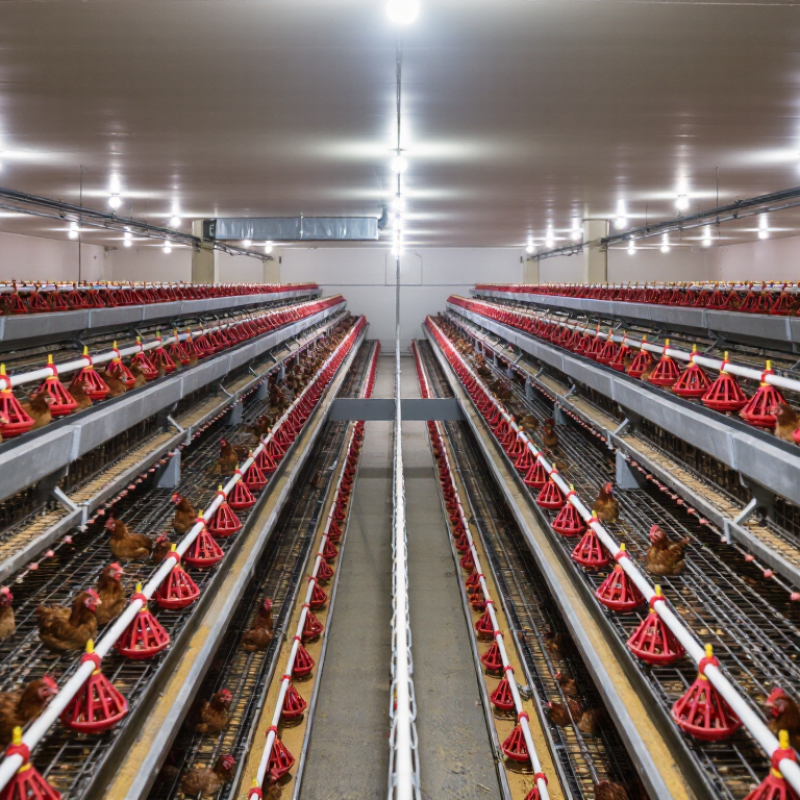
A chicken layer cage is a fitted structure, not just a wire box. Its frame supports side partitions, a sloped floor, a feed trough, drinker lines, and an egg-collection belt. The slope lets eggs roll gently toward the front, where they can be gathered without reaching into the bird area. Nipple drinkers reduce standing water, while a manure belt beneath the floor helps keep droppings away from the flock. Small parts matter. A clogged nipple or bent wire can quickly disrupt daily care.

Cage layouts also shape access and movement. Feed should run along the cage front, with drinkers positioned so birds can reach them without crowding. In enriched designs, nests, perches, and scratch areas add further components. EFSA’s 2023 scientific opinion on laying-hen welfare discusses resource allowances, including 15 centimetres of perch per hen as a design reference. That figure is useful, but it does not make every layout suitable; placement and access matter too. A tidy plan can still overlook awkward corners, uneven floors, or blocked drinkers. Those flaws are easy to miss on paper. Walk the system at bird level before treating the design as finished.

How Layer Cages House Hens and Collect Eggs

A chicken layer cage is a housing unit for hens that produce eggs for people to eat. Cage designs vary, but many use rows of compartments with shared feeding and watering equipment. Hens reach through openings to eat from a trough, while drinker lines provide water inside the unit. Good airflow matters, especially when many birds live in one building. The details can look plain, but small design choices affect daily access to food, water, and resting space.

Egg collection often relies on a gently sloped floor. A newly laid egg rolls toward the front of the cage and onto a moving belt. The belt carries eggs to a collection area, where workers or equipment can inspect them for cracks or dirt. It sounds simple. In practice, belt speed, floor angle, and careful handling all matter; a rough transfer can damage eggs. Some systems also include perches or nesting areas, while others offer less space for these behaviors. That difference deserves attention, not just the convenience of collecting eggs. A clean belt helps, but it cannot replace regular checks of the hens and their housing.

Common Types of Layer Cage Systems

What Is a Chicken Layer Cage?
Common Types of Layer Cage Systems

A layer cage is an enclosed housing unit designed for hens that produce eggs. It typically includes feed and water lines, a sloped floor for egg collection, and space for manure removal. The system’s layout affects daily checks, cleaning, and how easily workers can reach each bird. Small details matter.

Common systems include conventional cages and enriched colony cages. Conventional units generally group hens in compact compartments, with feed and water available along the front. Enriched systems add features such as perches, nest areas, or a scratch surface. A-frame and H-frame describe how cage tiers are arranged, rather than the type of cage itself. A-frames are often lower and easier to access; H-frames can use more tiers and automated belts. The best fit depends on flock size, building space, and maintenance capacity. More tiers are not automatically better.

Tips: Before choosing, check aisle width, drinker access, egg flow, and manure-belt service points. Look at the layout from a worker’s perspective. A tidy drawing can still hide awkward access. Ask an experienced poultry adviser to review the plan.

What Is a Chicken Layer Cage? - Common Types of Layer Cage Systems

System type Typical layout and features Space and facilities Common advantages Considerations
Conventional (battery) cage Small groups of hens are housed in wire cages, usually arranged in rows and tiers. Feed and water are supplied from equipment outside or along the cages; eggs commonly roll onto collection belts. Space allowances depend on local regulations and production standards. Conventional cages generally do not provide a nest, perches, or a litter area for normal scratching and dust bathing. Can simplify egg collection, feeding, and manure handling, and can support high stocking density. Provides limited opportunity for several natural behaviours. Legal status and permitted use vary by country and region.
Enriched (furnished or colony) cage A larger cage houses a group of hens and includes facilities such as a nest area, perches, and a litter or scratching area. Systems may be arranged in one or more tiers. Requirements differ by jurisdiction. Under European Union rules, enriched cages must provide at least 750 cm² of cage area per hen, including at least 600 cm² of usable area, along with specified facilities. Offers hens more space and behavioural facilities than a conventional cage while retaining some automated housing and egg-collection functions. Still confines hens in cages. Facility design, group size, litter condition, and management affect how effectively hens can use the available resources.
A-frame cage configuration Cage rows are arranged in a sloping, A-like profile. The arrangement may be used with conventional or enriched cages; the frame shape describes equipment layout, not the level of behavioural provision. Often selected to suit building width, tier arrangement, manure handling, and access for daily inspection. The actual space per hen depends on the cage design and applicable rules. Can make practical use of floor space and may provide straightforward access to cage rows, depending on the installation. Capacity and ease of access depend on the number of tiers, building design, and equipment layout. An A-frame label alone does not indicate welfare features.
H-frame cage configuration Cage rows are arranged in a more vertical, rack-like structure and commonly use multiple tiers. H-frame equipment can be designed for conventional or enriched cage systems. Installations may include automated feeding, egg belts, and manure belts. Space per hen and required facilities are determined by the cage specification and local regulations. Can accommodate multiple tiers and integrate with automated egg and manure handling in suitable buildings. Higher or denser layouts require careful ventilation, lighting, inspection access, and maintenance. The frame style does not by itself define hen space or welfare provision.

Note: A-frame and H-frame describe equipment layouts, while conventional and enriched describe cage designs and the facilities provided to hens. Rules and space allowances vary by location; check current local requirements before selecting a system. In the European Union, conventional battery cages for laying hens have been prohibited since 2012.

Animal Welfare and Management Considerations

A chicken layer cage is an enclosure for hens producing table eggs. Its design affects movement, nesting, perching, and access to feed and water. A cage may simplify egg collection and routine checks, but it limits space for natural behaviors. That trade-off matters.

EFSA’s 2023 scientific opinion recommends at least 4,000 cm² of space per hen and a maximum flock size of 3,000 birds. These are expert recommendations, not a guarantee of good welfare. Stocking density alone tells little about feather loss, injuries, or whether hens can reach resources without competition. Look closely. Staff should check drinker flow, ventilation, litter condition, and birds’ behavior each day. A hen repeatedly avoiding a feeder deserves attention, even when records look normal. Small problems can hide in tidy spreadsheets.

Management also includes careful handling and timely veterinary review. Sudden changes in egg output, feed intake, or mortality can signal health or environmental stress. The EFSA assessment identifies restricted movement and difficulty performing comfort behaviors as welfare concerns in cage systems. Good monitoring can reduce preventable harm, but it cannot remove every limitation of confinement. That is an uncomfortable point worth stating plainly. (EFSA, 2023, Welfare of laying hens)