
Cuddon Freeze Dry Logo

Why Choose a Mud Bricks Machine for Your Business?

Choosing the right equipment can shape the daily rhythm of a brick-making business. A Mud Bricks Machine may help convert suitable local soil into consistent building units with less manual effort. Its value depends on more than purchase price. Soil quality, moisture control, power supply, production space, and operator skill all affect results.

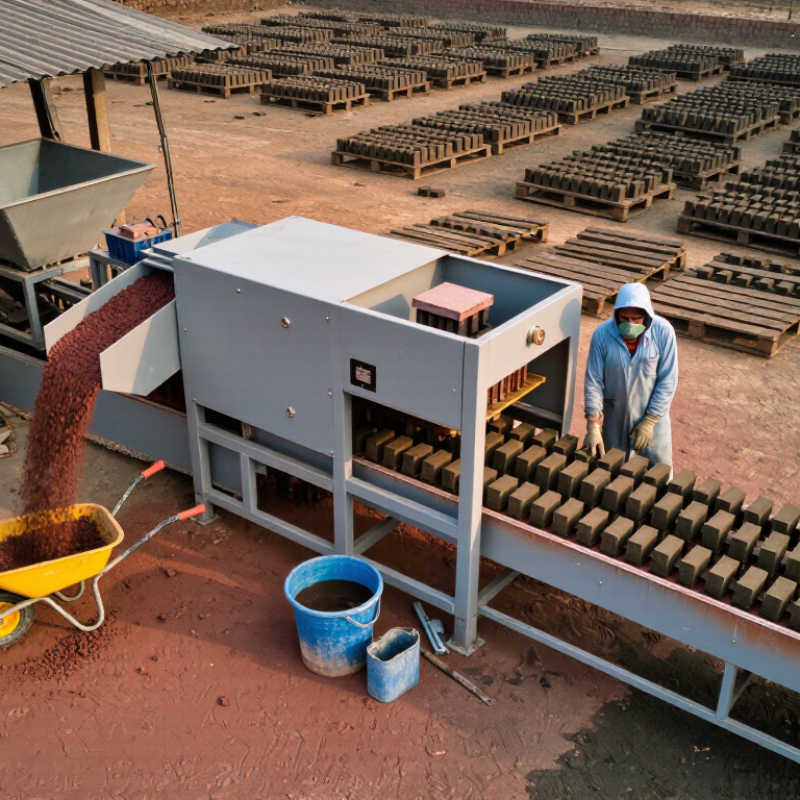
Picture a small production yard. Prepared soil enters the mixer, measured water improves consistency, and the machine presses each brick into a defined mold. Uniform shapes can simplify stacking, transport, and quality inspection. Experienced operators also reduce material waste by checking pressure, mold wear, and brick edges throughout the shift. Small adjustments matter.

But this machine is not a guaranteed solution. Some soils contain too much clay, sand, or organic material. Poorly cured bricks may crack under heat or rain. That risk deserves attention. A practical buyer should test local soil before investing and request clear technical guidance from the manufacturer. Independent engineering advice can strengthen the decision, especially when projects must meet regional construction requirements.

Maintenance is another overlooked detail. Dust can enter moving parts, while uneven feeding may reduce output and increase wear. Staff need training, protective equipment, and a clean workflow. Claimed production rates should be compared with real operating conditions, not accepted blindly. The best choice balances capacity, durability, repair support, and long-term operating costs. In some businesses, a simpler machine may be wiser. Careful evaluation creates a stronger foundation for sustainable growth.
Why Choose a Mud Bricks Machine for Your Business?

Understanding How Mud Bricks Machines Work

Why Choose a Mud Bricks Machine for Your Business?

Understanding How Mud Bricks Machines Work

A mud bricks machine combines prepared soil, water, and pressure to form consistent building units. The process begins in a mixing chamber. Workers add screened soil, sand, and a measured amount of water. A small quantity of stabilizing material may improve strength, depending on local soil conditions. Too much water creates weak, cracked bricks.

The blended material moves into a mold box. A manual lever, hydraulic system, or mechanical press compresses the mixture. Pressure removes air pockets and gives each brick a regular shape. The fresh bricks are then removed carefully and placed on a level surface. They usually require slow, protected curing. Direct sun can dry the outside too quickly. Cracks may appear.

Tips: Test the soil before production. Make several trial batches and compare their texture, weight, and strength after curing. Keep the moisture level consistent. Clean the mold after each workday, and inspect bolts, seals, and moving parts regularly. In my experience, operators often underestimate curing space. That mistake can delay delivery. Simple records help track water ratios, production speed, and rejected bricks. Local construction requirements should guide quality checks, including basic compressive-strength testing. The first batch is rarely perfect. Careful adjustment is part of the process.

Key Benefits of Using a Mud Bricks Machine

A mud bricks machine can help a small building-materials business produce blocks with more consistent dimensions and density. That consistency makes stacking easier and can reduce uneven joints during construction. Depending on the machine, operators may adjust mould size or compaction to suit tested soil mixes. A repeatable process also makes daily output easier to estimate, which helps with staffing and customer orders. Less hand-moulding can ease physical workload. It is not automatic success, though. Soil moisture, clay content, and operator technique still affect each batch.

A steady feed and simple operating routine can limit wasted material and reduce variation between bricks. Some machines are portable, while larger models need a prepared work area and reliable power. Consider cleaning access, spare-part availability, and expected production volume before choosing equipment. A machine that is too small can slow orders; one that is too large may sit idle. The trade-off is easy to miss. Test local soil and make sample bricks before committing to a production plan. Allow proper drying and curing time, too, since faster moulding does not mean bricks are ready sooner.

Tips: Keep a simple log of soil proportions, water added, and daily output. Check moulds for packed earth, and inspect sample bricks after drying. Small records help reveal what needs adjustment. Don’t expect every batch to behave perfectly.

Why Choose a Mud Bricks Machine for Your Business? - Key Benefits of Using a Mud Bricks Machine
Business Dimension Mud Bricks Machine Manual Molding Indicative Machine Advantage Business Benefit
Production consistency Uses a repeatable mold-filling and compaction process. Brick size and density can vary with operator technique. High More uniform bricks support predictable construction quality and easier inventory control.
Labor efficiency Reduces repetitive forming and compacting work for each brick. Requires more manual handling, pressing, and demolding. High Workers can focus more on soil preparation, curing, quality checks, and material handling.
Production speed Designed for repeated cycles with standardized molds. Output depends heavily on individual worker speed and physical effort. High Faster cycle repetition helps businesses respond to larger or time-sensitive orders.
Dimensional accuracy Machine molds help maintain consistent length, width, and height. Dimensions may differ between batches or operators. High Consistent dimensions can reduce alignment problems and mortar adjustments during construction.
Material utilization Controlled filling and compaction can reduce overfilling and irregular shapes. Uneven filling may create more rejected or misshapen bricks. Medium to High Better material control may lower avoidable waste when soil is properly prepared.
Energy profile Produces unfired compressed earth or mud bricks without a kiln-firing stage. Manual unfired bricks also avoid kiln firing but require more physical labor. Medium Businesses can avoid the fuel demand associated with firing, subject to local standards and product requirements.
Scalability Production can be expanded through longer operating hours, additional molds, or additional machines. Expansion generally requires adding more workers and workstations. High Machine-based production provides a clearer path for increasing capacity as demand grows.
Quality control Compaction pressure and mold dimensions can be monitored and standardized. Quality depends more on worker consistency and supervision. High Repeatable production makes it easier to establish inspection procedures and batch records.
Workplace ergonomics Reduces repeated hand pressing and some physically demanding forming tasks. Frequent lifting, pressing, bending, and demolding may increase physical workload. Medium to High Lower repetitive strain can support safer and more sustainable daily operations.
Initial investment Requires capital for the machine, site preparation, maintenance, and operator training. Usually requires less equipment investment at a very small scale. Lower for Manual Businesses should compare equipment cost with expected labor savings, output, and order volume.
Note: Actual output, brick strength, material savings, and operating costs depend on soil composition, moisture content, stabilizer use, mold size, compaction pressure, curing conditions, operator skill, and local building requirements. Soil testing and product testing should be completed before commercial production.

Business Factors to Consider Before Buying

Why Choose a Mud Bricks Machine for Your Business?

Business Factors to Consider Before Buying

A mud bricks machine can improve output, but buying decisions should begin with your business model. Estimate daily demand, available labor, and delivery distance before comparing machine sizes. A high-capacity model may look impressive, yet it can remain idle during slow months. That weakens cash flow. Calculate the full cost, including molds, electricity, maintenance, soil preparation, transport, and operator training. Ask for production data from similar working conditions, not only showroom figures. Local soil also matters. Clay content, moisture, and particle size can change brick strength and surface quality. Arrange a soil test before placing an order.

Tips: Visit an operating production site if possible. Watch the full cycle, from mixing to stacking. Check whether one worker can safely manage routine feeding and cleaning. Confirm spare-part availability and service response times. A simple maintenance record can reveal more than a polished demonstration.

Consider your sales standards and customer expectations. Some projects require consistent dimensions, while others accept natural variation. Test sample bricks for compressive strength, water absorption, drying time, and cracking. Use documented test methods and keep the results. A machine is only one part of the process. Poor curing, uneven soil, or rushed handling can reduce quality. Many buyers underestimate space requirements for drying and storage. That mistake is expensive. Review permits, workplace safety duties, and environmental requirements with qualified local professionals. A careful plan may feel slower, but changing equipment after installation is far more difficult.

Choosing the Right Machine for Your Production Needs

Why Choose a Mud Bricks Machine for Your Business?

Choosing the right machine starts with your soil, not its advertised capacity. In field assessments, clay content, sand balance, moisture, and compaction pressure strongly affect block strength. Test the soil first. A small laboratory check can prevent costly mold changes later.

The 2023 Global Status Report for Buildings and Construction reported that buildings consumed 34% of global energy demand and produced 37% of energy and process-related carbon emissions in 2022. The International Energy Agency also estimates that cement production causes about 7% of global carbon dioxide emissions. These figures explain growing interest in earth-based materials, but they do not make every mud brick machine suitable. A durable machine should match your daily target, available electricity, mold dimensions, and labor skills. Hydraulic systems may offer consistent pressure, while simpler mechanical systems can reduce maintenance demands. The best choice depends on your site.

Measure usable output, not brochure output. Record the real cycle time, rejected blocks, drying space, and operator changes during a pilot run. A machine rated at 2,000 blocks daily may produce far less with wet soil or frequent mold cleaning. That gap matters. Choose adjustable pressure and replaceable wear parts where possible. Ask for test results using comparable soil, not ideal samples. A perfect machine does not exist. Careful testing usually beats an impressive specification.

Managing Operation, Maintenance, and Product Quality

Why Choose a Mud Bricks Machine for Your Business?

Managing Operation, Maintenance, and Product Quality

A mud bricks machine can improve production consistency when operators control moisture, pressure, and feeding speed. The soil should feel cohesive, not watery, before entering the hopper. Small changes matter. Uneven feeding often creates cracked edges and weak corners. Experienced operators check the first bricks every morning, then adjust the mixture gradually. Recording moisture levels, production speed, and rejection rates makes decisions more reliable. In practice, a simple logbook often reveals problems earlier than a visual inspection.

Maintenance should be planned around real working conditions. Clean the hopper and molding chamber after each shift. Remove hardened soil before it affects the next batch. Inspect belts, fasteners, hydraulic connections, and moving surfaces weekly. Lubrication must follow the machine’s technical requirements, not guesswork. I once delayed a minor adjustment, expecting production to continue normally. It caused more uneven bricks the following day. That mistake was preventable.

Tips: Keep spare wear parts dry and labeled. Train operators to stop the machine when unusual vibration appears. Test brick dimensions with a ruler and weigh sample pieces regularly. During curing, protect fresh bricks from sudden rain and strong drying winds. Quality is not only created by the machine. It depends on soil preparation, careful handling, curing time, and honest inspection. Some batches will still fail. That is useful feedback, not wasted information.

Why Choose a Mud Brick Machine?

A machine-supported production line can improve operating control, preventive maintenance, and finished-brick quality. The chart compares practical planning benchmarks for a small-scale mud brick operation.

Managing Operations

Consistent forming and pressing help keep production uptime near the 90% range while reducing variation between batches.

Maintenance Control

Scheduled lubrication, mold inspection, and hydraulic checks support preventive-maintenance completion above 90%.

Product Quality

Controlled pressure and uniform mold filling improve dimensional conformity and first-pass acceptance of finished bricks.