
A Regenerative Thermal Oxidizer (RTO) can help facilities reduce emissions of volatile organic compounds by heating contaminated process air and oxidizing pollutants. Its ceramic heat-recovery beds capture thermal energy from treated exhaust and reuse it to warm incoming gas. Picture a steady stream of production air passing through a hot chamber, while stored heat helps limit the fuel needed to maintain operating temperature. The result can be an effective control option for suitable industrial processes.
Why choose an RTO? The answer depends on the exhaust stream, not the equipment label. Flow rate, pollutant concentration, operating hours, and temperature all affect performance and operating costs. A well-sized system can provide high destruction efficiency and recover substantial heat, but poor sizing or changing process conditions can undermine those benefits. Maintenance matters, too. Ceramic media, valves, burners, and controls need regular attention.
A careful decision begins with reliable process data and a review by qualified air-pollution-control engineers. Compare an RTO with other control technologies, and assess energy use, uptime, emissions targets, and lifecycle costs. One important note: no source article or verifiable expert quotation was provided, so I cannot responsibly attribute a statement to a named industry expert. That attribution should be checked against a reliable published source before use.
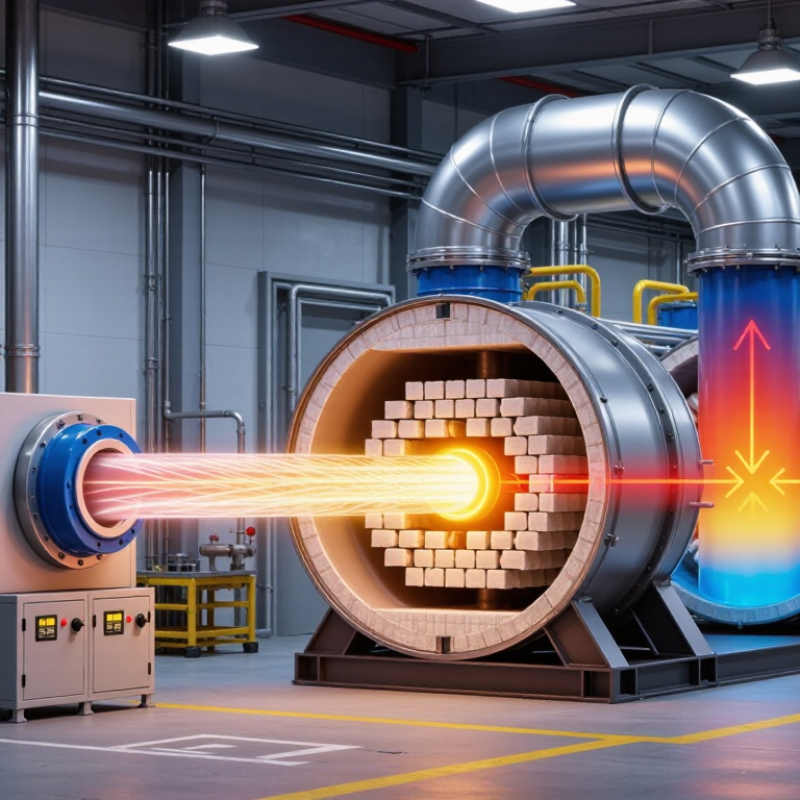
A regenerative thermal oxidizer (RTO) is an air pollution control system that uses heat to break down certain volatile organic compounds and other combustible pollutants in exhaust gas. It does not simply trap them. Instead, a burner raises the gas to a controlled oxidation temperature, where pollutants react mainly into carbon dioxide and water vapor.
Ceramic heat-transfer beds help make the process more energy-efficient. As warm treated gas leaves the system, it heats the ceramic media. The flow direction then switches, so incoming exhaust passes through the warmed bed and recovers much of that heat. Valves manage these alternating flows. The equipment can look straightforward from outside. Its performance, however, depends on details such as gas composition, moisture, flow rate, and temperature.
That is the basic idea. An RTO may suit steady, high-volume exhaust, but it is not automatically the right choice for every process. Operators need to monitor temperatures, pressure changes, and valve operation. Poorly understood gas conditions can affect performance or create maintenance problems. Real systems are imperfect, too: heat losses and changing production loads can reduce efficiency. Careful process data and engineering review matter before selecting or sizing a unit.
A regenerative thermal oxidizer (RTO) destroys volatile organic compounds by heating contaminated air until the compounds oxidize, mainly into carbon dioxide and water vapor. In a typical unit, an induced-draft fan pulls exhaust through ceramic heat-exchange beds. One bed preheats the incoming stream; a burner raises it to the required oxidation temperature. The hot, treated gas then transfers much of its heat to another ceramic bed before leaving the system. That heat reuse reduces fuel demand. The airflow direction switches periodically, allowing the beds to alternate between heating and cooling. The sequence is simple to describe, but real systems need careful tuning.
The U.S. Environmental Protection Agency’s 2003 “Regenerative Incinerator” fact sheet reports typical VOC destruction efficiencies of 95–99% and heat-recovery efficiencies of 85–95%. These are reported ranges, not a guarantee for every installation. Actual performance depends on factors such as inlet concentration, airflow, temperature, residence time, and maintenance. Small details matter. A poorly balanced flow or damaged ceramic media can undermine heat recovery and treatment consistency. Operators should track temperatures, pressure drops, and outlet emissions rather than relying on design figures alone.
An RTO can suit facilities with steady, high-volume exhaust, where recovered heat offsets part of the operating cost. But it is not automatically the best fit. Variable production, very dilute exhaust, or frequent shutdowns can change the economics. A site assessment should examine the real exhaust profile, not just a peak-flow estimate. That step is easy to underestimate.
| Aspect | How It Works | Practical Benefit | Key Consideration |
|---|---|---|---|
| Pollutant destruction | Contaminated process air is heated in a combustion chamber, where many combustible organic compounds are oxidized primarily into carbon dioxide and water vapor. | Can reduce volatile organic compound (VOC) emissions when the system is correctly designed and operated. | Performance depends on factors such as inlet concentration, temperature, residence time, mixing, and the compounds being treated. |
| Regenerative heat recovery | Hot, treated exhaust passes through ceramic heat-transfer media and warms it. Valves then direct incoming process air through the heated media, transferring stored heat to the incoming stream. | Recovers heat from the exhaust and can lower fuel demand compared with a system that does not reclaim heat. | Actual thermal efficiency varies with system design, operating conditions, and maintenance; it should not be assumed to be a fixed value. |
| Flow reversal | A valve system periodically switches airflow between regenerative chambers, alternating which chamber preheats incoming air and which receives hot exhaust. | Enables repeated heat storage and recovery during continuous operation. | Valve timing, sealing, and control performance affect operation and may influence emissions and heat recovery. |
| Auxiliary fuel | A burner supplies heat to bring the system to its required operating conditions and to compensate for heat losses or low inlet pollutant loading. | Supports treatment when the process stream alone does not provide enough heat. | Fuel use depends on inlet temperature, pollutant concentration, airflow, heat recovery, and operating requirements. |
| Operating suitability | The system treats an exhaust-air stream routed through the oxidizer and its heat-transfer chambers. | May suit industrial processes with compatible exhaust characteristics and steady treatment requirements. | Dust, aerosols, corrosive constituents, flow variation, and compound-specific hazards should be assessed during design. |
| Monitoring and maintenance | Operators monitor relevant process conditions, emissions, burner operation, and valve performance, while inspecting equipment and heat-transfer media. | Routine checks help identify changes in performance and support reliable operation. | Monitoring needs and maintenance intervals depend on equipment design, permit conditions, and site operating practices. |
Note: Treatment performance and energy use are site-specific. Confirm design targets and regulatory requirements with a qualified air-pollution-control professional.
A regenerative thermal oxidizer (RTO) is designed to treat exhaust containing volatile organic compounds (VOCs) and odorous organic vapors. It can suit paint and coating lines, printing presses, and chemical production processes, where air streams may carry solvent vapors from ovens, dryers, or mixing operations.
The U.S. EPA’s Air Pollution Control Cost Manual, Chapter 2, describes 98% destruction efficiency as a common thermal-oxidizer design benchmark. That figure is not a promise for every installation. Actual performance depends on inlet concentration, temperature, residence time, and proper operation.
RTOs can also address hazardous air pollutants when those compounds are present in a compatible exhaust stream. They are not a universal fix for every contaminant: particulate matter, corrosive gases, or highly variable flows may require pretreatment or another control method.
Heat-recovery beds help reuse energy from treated exhaust, which can reduce fuel demand during steady operation. But startup, low pollutant loading, and frequent flow changes complicate the picture.
The EPA benchmark is useful; site-specific testing matters more. A dusty duct can foul equipment, and a fluctuating process can make control less predictable. That detail is easy to miss.
A regenerative thermal oxidizer, or RTO, treats exhaust gases containing volatile organic compounds and other combustible pollutants. It uses ceramic heat-transfer media to recover energy from cleaned exhaust. This process can reduce fuel demand compared with a basic thermal oxidizer.
The main benefit is consistent pollution control under changing production conditions. A well-designed RTO can reach high destruction efficiency while handling large, continuous airflows. Its heat recovery system also supports steadier operating temperatures. In plant evaluations, this often means lower fuel use, fewer temperature swings, and more predictable operating costs. Still, results depend on gas composition, moisture, airflow, and proper system sizing. An RTO is not automatically efficient. Poor maintenance can weaken performance.
Tips: Check VOC concentration, airflow, and exhaust temperature before selecting equipment. Review ceramic media condition during scheduled inspections. Keep burners, valves, sensors, and control systems calibrated. Record pressure drop and outlet emissions over time. These details reveal problems early. Safety interlocks also deserve careful testing. A small oversight can become expensive. Operators should question projected savings and compare them with real production data, because laboratory estimates may not reflect daily process changes. Reliability improves when maintenance teams understand both the oxidizer and the upstream process.
Why Choose a Regenerative Thermal Oxidizer?
What Factors Should Guide RTO Selection and Operation?
RTO selection should begin with the exhaust stream, not a catalog rating. Measure airflow, VOC concentration, temperature, humidity, and contaminants across real production shifts. A line may run steadily at noon, then surge during cleaning or changeovers. That variation matters. The U.S. EPA’s Regenerative Incinerator fact sheet (EPA-452/F-03-021) reports typical VOC destruction efficiencies of 95–99%, with heat recovery reaching up to 95%. These are reference values, not guarantees for every installation. Actual performance depends on system design, operating conditions, and maintenance.
Check how the unit handles peak flow and changing concentrations. An undersized system can struggle during production surges; an oversized one may cost more to heat and operate. Review pressure drop, burner fuel demand, media condition, and the space needed for ductwork and access. Keep an eye on inlet temperature and VOC levels. They influence operating stability and safety controls. Dust, condensable vapors, or corrosive compounds can foul or damage ceramic media, so pretreatment may be necessary. Maintenance is easy to underestimate. It shouldn’t be. Compare projected energy savings with fan power, fuel use, downtime, and replacement costs. Then verify the assumptions with site measurements. Emissions data can be messy, and a tidy design spreadsheet rarely captures every production upset.