
Choosing the right Excavator Bucket is a practical decision with consequences for cycle time, fuel use, and wear. A bucket that is too large may slow loading in dense material. One that is too small can mean more passes and longer truck queues. The difference is visible at the face: sticky clay clinging to the corners, or a clean bucket cutting through loose aggregate.
The scale of construction makes these choices matter. The U.S. Census Bureau reported approximately $2.15 trillion in U.S. construction spending during 2024. That figure does not measure bucket performance, but it shows the size of the work where equipment efficiency counts. For technical context, Caterpillar’s Performance Handbook explains how material properties and bucket fill factors affect production estimates. ISO 7451 also provides a standardized method for stating excavator bucket capacities, helping buyers compare specifications on a consistent basis.
Capacity alone is not the answer. Consider material density, machine size, digging conditions, and the job’s loading target. A general-purpose bucket may suit mixed site work, while a narrower profile can help with trenching. There is no perfect choice for every site. Even careful estimates can miss changing moisture or ground conditions, so actual performance should be checked in the field. That part is easy to overlook. A well-matched bucket supports smoother work; a poorly matched one can turn a small compromise into repeated lost time.
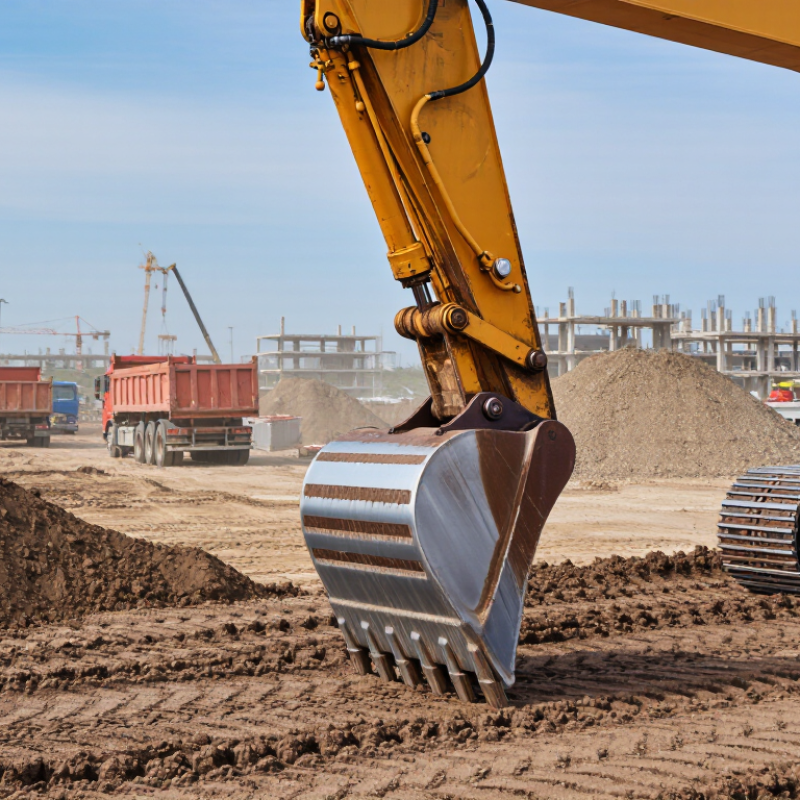
An excavator bucket cuts into soil, holds the material, and carries it to a spoil pile or truck. Its cutting edge or teeth break into the ground as the operator lowers the boom and extends the arm. Then the bucket curls inward, gathering material against its back and sides. Simple motion. But soil does not always cooperate.
The bucket connects to the excavator’s arm through pins or a compatible quick coupler. Hydraulic cylinders move the boom, arm, and bucket linkage, giving the operator control over reach and curl. To dig, the operator positions the cutting edge, draws the arm inward, and curls the bucket. To unload, the bucket rotates outward. A smooth cycle depends on balanced movements, not just hydraulic power.
Bucket shape affects how easily material enters and leaves. A narrower bucket can suit trenching, while a wider one can move loose soil faster. Teeth help penetrate firm ground, but they may leave a rougher finish than a smooth cutting edge. Capacity matters, too: an oversized load can slow work and strain the machine. There is no perfect bucket for every task. Even a sensible choice involves compromise, especially when the ground changes halfway through the job.
A general-purpose bucket handles everyday digging, loading, and backfilling in soil or loose gravel. Its moderate width and replaceable teeth make it a practical choice for mixed work. For narrow utility trenches, a trenching bucket removes less material and can leave cleaner sides. Check the planned trench width, though; an overly narrow bucket may slow digging in compacted ground. Small details matter.
A grading bucket has a wider, often smooth edge for shaping slopes, spreading soil, and cleaning ditches. It is less suited to breaking hard ground. Rock buckets use reinforced structures and tooth systems to move abrasive, chunky material, while skeleton buckets let finer soil fall through during sorting. Useful, but not magic. Material that is wet or sticky may clog the openings.
In practice, bucket categories overlap, and the job site rarely matches a neat description. Consider the excavator’s lift capacity, coupler, material, and required finish before choosing. Inspect teeth, cutting edges, and cracks regularly; a worn edge can reduce control and increase effort. I have seen crews focus on bucket width and overlook machine balance. That choice can feel efficient, until the machine handles poorly.
Why Choose the Right Excavator Bucket?
How Soil and Job Requirements Guide Bucket Selection
Bucket selection starts with the ground, not the machine alone. USDA NRCS’s Soil Survey Manual defines sand as 0.05–2 mm particles, silt as 0.002–0.05 mm, and clay as smaller than 0.002 mm. These differences matter at the cutting edge. Dry sand may spill through an overly wide, shallow bucket, while sticky clay can cling inside and slow unloading. A narrow bucket can help form a trench, but it may take more passes to move bulk material. There is no perfect choice for every site.
Match the bucket to the task as well as the soil. Trenching needs width control; loading trucks often favors capacity and clean filling. For mixed, abrasive ground, tooth condition and wear resistance deserve attention. The USACE Engineering Manual 1110-2-1906 outlines laboratory methods for characterizing soil, including grain-size analysis. That information can sharpen a selection, but moisture and compaction still change how material behaves in the field. A soil label is only a starting point.
Tips: Check a fresh soil sample, then compare bucket fill and spillage during a short trial. Note the moisture; it is easy to overlook, and it can change the result.
| Ground Conditions | Typical Job | Suitable Bucket Type | Width and Edge Guidance | Why It Fits | Selection Considerations |
|---|---|---|---|---|---|
| Loose sand, gravelly soil, or ordinary loam | General excavation and loading | General-purpose digging bucket | Choose a width that matches the machine and required trench or excavation dimensions; use teeth where penetration is needed. | A versatile shape balances digging, filling, and material retention in common site conditions. | Very wide buckets can reduce penetration in compact ground and may exceed the excavator’s safe working limits when full. |
| Dense or compacted clay | Excavating foundations or compacted ground | Heavy-duty digging bucket with suitable teeth | A narrower bucket can improve penetration; select tooth style for the ground and wear expected. | More concentrated digging force helps break into cohesive, resistant soil. | Check the bucket, teeth, and attachment are compatible with the excavator and intended duty. |
| Fragmented rock or highly abrasive material | Rock excavation and handling broken rock | Reinforced rock bucket | Use a robust cutting edge and teeth; choose a width that supports the required production without overloading the machine. | Reinforcement and wear-resistant components are designed for demanding, abrasive work. | A bucket is not a substitute for a breaker when dealing with solid rock that cannot be excavated efficiently with the bucket. |
| Utility corridors or other narrow excavations | Trenching for pipes, cables, or drainage | Narrow trenching bucket | Match bucket width to the specified trench and the installation clearance required. | A narrow profile limits unnecessary excavation and can reduce spoil handling. | Confirm trench dimensions, ground stability, and utility clearances before digging. |
| Soft soil, topsoil, or other relatively light material | Bulk excavation and loading | High-capacity general-purpose bucket | A wider or higher-capacity bucket may increase output where the material is easy to dig. | More material can be moved per pass when the excavator can safely handle the loaded bucket. | Account for material density, fill factor, reach, and machine stability—not bucket volume alone. |
| Wet, sticky clay or cohesive spoil | Excavation where material may cling to the bucket | Smooth-interior digging bucket suited to the material | Select a practical width and profile that allow material to release without compromising digging force. | A suitable interior shape can help reduce material build-up and improve cleanout. | Actual performance depends on moisture, clay composition, and bucket condition; clean the bucket as needed. |
| Loose spoil, grading areas, or shallow cleanup work | Backfilling, ditch cleaning, and finish grading | Wide ditching or grading bucket, often with a smooth edge | Use a wider bucket for broad, shallow work when the machine has adequate capacity and control. | The broad profile helps move and level loose material over a larger area. | It is generally less suited to penetrating hard ground than a narrower bucket with teeth. |
| Note: These are general selection guidelines. Bucket capacity, width, tooth configuration, and safe load depend on the excavator model, attachment setup, material density, and site conditions. Always follow the machine and attachment specifications. | |||||
Matching bucket size and design to the excavator helps protect productivity and machine stability. Start with the excavator’s operating weight, lift capacity, and hydraulic limits. A bucket that is too large may slow cycle times or make the machine feel unstable, especially on uneven ground. Too small, and the operator may need extra passes to fill a truck. Check the machine’s load chart and attachment specifications before choosing.
Bucket shape matters, too. A narrow bucket can suit trenching, while a wider bucket may move loose soil efficiently. For compacted material, a reinforced bucket with suitable teeth can help with penetration. But “heavier duty” is not always better; extra steel adds weight and may reduce the useful load. It is easy to focus on bucket capacity and overlook that trade-off.
Tips: Compare bucket width, capacity, and weight with the excavator’s specifications. Consider the material, trench dimensions, and typical haul distance. If conditions vary, ask an experienced equipment dealer or technician to review the setup. A quick fit check is worthwhile.
The best match is the one that lets the excavator work smoothly without straining its boom, hydraulics, or undercarriage. Test the choice on a representative task, then watch fill time, spillage, and machine response. Real ground can be less predictable than a specification sheet. That is worth remembering.
Why Choose the Right Excavator Bucket?
The right bucket helps an excavator move material efficiently without making the machine work harder than necessary. A narrow bucket can suit trenching, while a wider one may move loose soil faster. Match the bucket to the material, task, and machine capacity. A poor fit can mean extra passes, uneven loads, and more strain on the boom and linkage. It can also affect stability, especially when lifting a heavy, full bucket.
Tips: Check the machine manual and bucket condition before work. Look for worn cutting edges, loose pins, and cracks. Keep loads within rated limits. Small checks matter.
Bucket choice also influences wear over time. Abrasive gravel can wear cutting edges quickly, while sticky clay may cling inside and slow dumping. The details are easy to underestimate. If the bucket is too large, operators may compensate with awkward movements or partial loads. That is not always obvious from the cab. Review actual digging conditions and ask experienced operators what they see across a typical shift. The best choice may still involve trade-offs; conditions change, and a bucket that works well on one site may not suit the next.