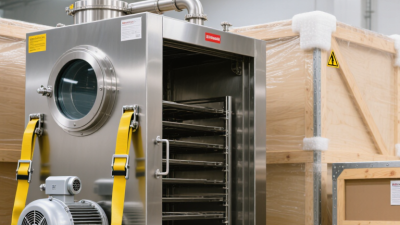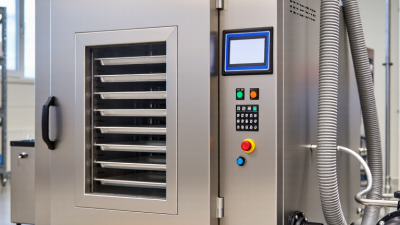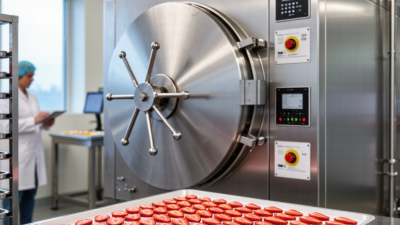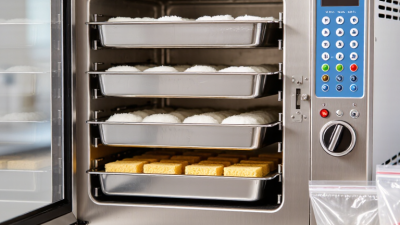
Global buyers entering 2026 need more than a long product list. They need dependable Freeze Drying Supplies that match product sensitivity, batch size, facility conditions, and local compliance requirements. A laboratory may require sterile vials, stoppers, shelves, vacuum pumps, and calibrated sensors. A small food producer may need trays, moisture barriers, cleaning tools, and reliable packaging equipment. The correct choice affects texture, shelf life, energy use, and operating consistency.
Dr. Michael J. Pikal, a respected lyophilization scientist, has emphasized, “The process must be designed around the product.” This principle remains practical. Delicate fruit, vaccines, cultures, and pharmaceutical formulations do not tolerate identical temperature or pressure profiles. Buyers should examine condenser capacity, chamber volume, temperature uniformity, pump performance, and after-sales support. Documentation matters too. Certificates, material specifications, validation records, and service instructions can prevent expensive misunderstandings across borders.
Details reveal quality.
Yet no supplier is perfect. Product descriptions may appear complete, while replacement parts remain difficult to obtain. Delivery estimates can also change during peak seasons. This guide therefore compares Freeze Drying Supplies through a realistic global-buying lens. It considers performance, compatibility, maintenance, safety, sustainability, and total ownership cost. Some recommendations may need further testing in your facility. That is not a weakness. It is a necessary reminder that successful freeze drying depends on both good equipment and disciplined process control.
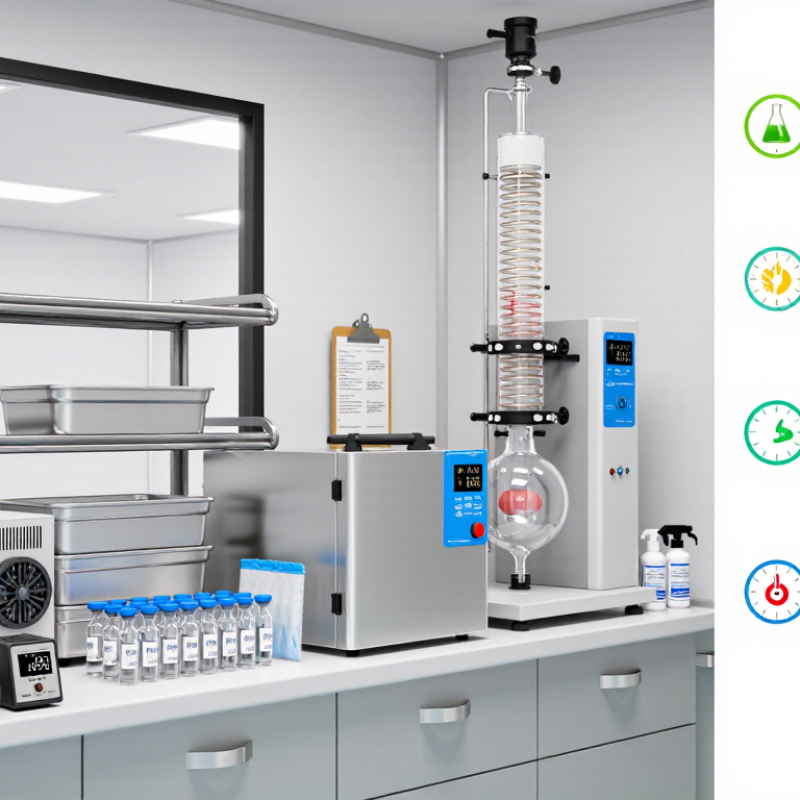
Freeze drying supplies are the working parts and consumables that protect product quality during sublimation. They include trays, vacuum seals, condenser components, pump oil, sterile containers, moisture barriers, and temperature sensors. Each item supports a different control point. Small failures can create large losses.
Grand View Research estimates that the global freeze-drying equipment market reached about USD 2.5 billion in 2023. Its report projects strong growth through 2030, driven by pharmaceuticals, biotechnology, and food preservation. This growth changes purchasing priorities. Buyers need compatibility, traceability, and service life, not only low prices. The wrong gasket may leak under deep vacuum. A weak moisture barrier can soften a carefully dried product within weeks.
Practical testing should include chamber temperature, vacuum stability, residual moisture, and seal performance. The International Council for Harmonisation provides quality guidance for pharmaceutical production, while the United States Pharmacopeia publishes standards related to packaging and moisture protection. These references help buyers compare specifications across countries. They do not replace local validation.
Material choice still deserves careful review. Silicone seals may tolerate repeated cycles, but every formulation behaves differently. Stainless steel trays are durable, though surface finish can affect cleaning effort. A 2024 industry outlook from MarketsandMarkets identifies automation and process monitoring as major market drivers. That sounds convincing, yet smaller facilities may gain more from reliable sensors than complex software. I would not assume the newest accessory is the safest investment. A basic supply checklist, tested under real loads, often reveals uncomfortable gaps.
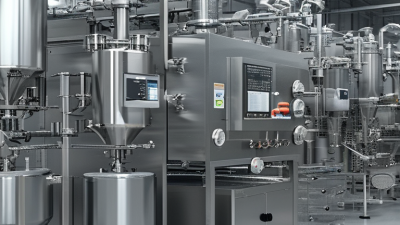
2026 Top Freeze Drying Supplies for Global Buyers
Essential Freeze Drying Equipment for Different Production Scales
Freeze-drying equipment should match batch size, product sensitivity, and available utilities. Grand View Research reported strong growth in the global lyophilization equipment market, driven by pharmaceutical, biotechnology, and specialty food production. However, market estimates vary because some reports include only machines, while others include chambers, condensers, and service systems.
Small laboratories usually need compact units with 1–5 kilogram capacity, stainless-steel shelves, vacuum monitoring, and simple data logging. These systems support formulation trials and small food samples. A reliable condenser matters. It must capture ice efficiently without exhausting the vacuum pump. Operators should also check shelf uniformity using temperature probes, not visual inspection alone. Small mistakes become expensive during scale-up.
Pilot facilities often require 10–50 kilogram systems, automatic pressure control, and cleanable product-contact surfaces. Industrial buyers may need 100 kilograms or more per cycle, redundant refrigeration, automated cleaning, and validated batch records. MarketsandMarkets estimated the freeze-drying market could grow from about 2.7 billion dollars in 2024 to 4.4 billion dollars by 2029. The figure is useful, but not absolute. Reports use different definitions.
Energy consumption deserves attention. Poor insulation, undersized vacuum pumps, and frequent door opening can increase operating costs. A practical purchasing test is simple: request cycle data, condenser recovery rates, temperature uniformity results, and maintenance records. The cheapest machine may not remain cheap.
| Production Scale | Recommended Equipment | Typical Batch Capacity | Condenser Temperature | Typical Vacuum Range | Suitable Materials | Essential Supplies and Selection Notes |
|---|---|---|---|---|---|---|
| Home and Pilot Use | Compact benchtop freeze dryer with a vacuum pump and removable product trays | Approximately 1–5 kg of fresh material per batch, depending on tray loading | About −50°C to −55°C | Generally below 500 mTorr during primary drying | Fruit, vegetables, herbs, cooked meals, confectionery, and small food samples | Choose stainless-steel food-contact surfaces, a transparent chamber or inspection window, oil or oil-free pump options, vacuum-rated hoses, drain accessories, and a reliable power adapter for the destination country. |
| Laboratory and Research | Laboratory freeze dryer with programmable shelf temperature, product temperature monitoring, and data logging | Approximately 2–15 L of product per batch | About −50°C to −85°C, selected according to solvent and formulation requirements | Typically 50–500 mTorr, with process-specific control | Biological samples, laboratory reagents, cultures, pharmaceutical development samples, and heat-sensitive formulations | Prioritize calibrated temperature probes, shelf uniformity, recipe storage, vacuum measurement, sterile or cleanable product-contact components, and compatibility with the intended solvents. |
| Small Commercial Production | Production freeze dryer with heated shelves, larger condenser, automatic process control, and configurable tray loading | Approximately 10–50 kg of fresh material per batch | About −60°C to −80°C | Commonly 50–300 mTorr during primary drying | Premium foods, ingredients, pet treats, botanical products, and small-scale contract manufacturing | Evaluate condenser ice capacity, shelf area, loading height, cycle repeatability, automatic defrosting, clean-in-place options, vacuum pump service access, and spare-part availability. |
| Medium Industrial Production | Industrial batch freeze dryer with hydraulic or motorized shelf movement, automated recipe control, and integrated refrigeration | Approximately 50–250 kg of fresh material per batch | About −70°C to −85°C for many water-based products | Often 50–250 mTorr, depending on product and equipment design | Food ingredients, nutraceuticals, botanical extracts, starter cultures, and commercial research batches | Check heat-transfer uniformity, condenser capacity, chamber volume, PLC and data-logging functions, validation support, hygienic design, electrical frequency, and local installation requirements. |
| Large Industrial Production | Large-scale freeze-drying system with automated loading, recipe management, vacuum isolation, and controlled unloading | Approximately 250–1,000 kg or more of fresh material per batch | About −70°C to −90°C, depending on process design | Typically 50–200 mTorr during primary drying | High-volume food products, pharmaceutical intermediates, biological materials, and export-oriented contract production | Require a documented process-validation strategy, redundant monitoring, automated CIP or cleaning procedures, energy and cooling-water planning, industrial vacuum pumps, operator safety systems, and regional technical support. |
| Aseptic Pharmaceutical Production | Validated pharmaceutical freeze dryer with sterile chamber design, controlled stoppering, isolator or restricted-access integration, and electronic batch records | From laboratory scale to several hundred kilograms, based on vial count and product format | Often −70°C to −85°C for aqueous pharmaceutical formulations | Commonly 50–200 mTorr, controlled by the validated cycle | Injectable formulations, vaccines, diagnostic reagents, proteins, and other moisture-sensitive products | Specify validated sensors, 21 CFR Part 11-compatible data handling where required, sterile filtration, cleanroom interfaces, automatic leak testing, chamber integrity testing, and documented qualification protocols. |
How to Choose Freeze Drying Supplies for Global Operations
Selecting freeze drying supplies for global operations requires more than comparing prices. Start with the product and process. Tray size, chamber capacity, condenser temperature, and vacuum performance must match your batch requirements. A small mismatch can increase drying time and reduce consistency.
Check the details that are easy to overlook. Confirm electrical voltage, frequency, plug type, and replacement-part availability for each destination. Choose stainless steel trays with smooth surfaces and reliable seals. Vacuum hoses, filters, sensors, and pump oil should have clear specifications and traceable documentation. Packaging also matters. Use moisture-barrier pouches, suitable closures, and storage materials tested for long-distance transport.
Run a trial batch before placing a large order. Measure product temperature, drying time, final moisture, and package seal strength. Keep records for every batch. These records support quality checks and help local teams repeat the process accurately. Ask suppliers for technical drawings, material information, safety documents, and service procedures. Import rules and electrical requirements vary by country, so local verification remains necessary.
Do not trust catalog photos alone. They show appearance, not durability. A lower-priced component may create higher costs through delays or failed batches. One assumption deserves review: the largest machine is not always the best choice. Practical fit, operator training, maintenance access, and dependable support often matter more than maximum capacity.
For global buyers, packaging is the protection system for freeze-dried products. These foods quickly absorb moisture after opening. High-barrier pouches, foil laminates, and rigid containers help control moisture, oxygen, light, and physical damage. Packaging should also provide reliable heat seals and clear lot identification. According to Future Market Insights’ 2024 industry analysis, the freeze-dried food market is expected to grow steadily through 2034. That growth increases demand for dependable packaging and storage materials.
Material selection needs measurable evidence. Request water vapor transmission rate, oxygen transmission rate, seal strength, and drop-test results from suppliers. Desiccants and oxygen absorbers can support quality, but they must match the package volume and product type. The FAO reports that 13.2% of food is lost after harvest before retail. Better storage design cannot solve every loss, but it can reduce avoidable moisture damage. In practice, I have found that oversized pouches waste space and create weak seals. Smaller formats often perform better.
Tips: Use multilayer high-barrier pouches for lightweight shipments. Choose rigid containers when crushing is likely. Store sealed packs in cool, dry areas away from direct light. Test samples after transport simulation, not only before shipment. Read the full report.
One detail is often missed. Opening the package changes the protection level immediately. Resealable closures help, but they are not perfect. Buyers should validate real opening and closing behavior before large orders. Data guides the decision, yet field testing exposes the uncomfortable gaps.
International buyers need more than a freeze dryer, trays, and moisture absorbers. They need traceable, validated supplies. The FAO/WHO Codex General Principles of Food Hygiene, revised in 2022, places hazard control responsibility on each food business. ISO 22000:2018 also requires documented hazard analysis and control measures. For packaging, request food-contact declarations, migration testing, lot numbers, and material specifications. A clean certificate is not proof of performance.
Freeze-dried products are highly sensitive to oxygen, humidity, and seal failure. Many validation programs target water activity below 0.30, but the correct limit depends on the product and process. FDA 21 CFR Part 117 requires preventive controls for covered food facilities, while EU Regulation 852/2004 emphasizes HACCP-based hygiene systems.
Suppliers should provide calibration records, stainless-steel grade information, temperature limits, and inspection reports. I have seen purchasing teams accept attractive specifications without checking test methods. That mistake is expensive.
Tips: Compare certificates with the actual shipment lot. Test seal strength and water activity after transport simulation. Use packaging with strong moisture and oxygen barriers. Ask whether results came from an accredited laboratory. Do not assume one compliance file works worldwide; import rules, labeling duties, and language requirements differ by market. The UNEP Food Waste Index Report 2024 highlights the scale of food waste, making longer shelf life valuable, but shelf life must be proven through real-time or accelerated studies. Some studies remain incomplete. That uncertainty deserves a written risk decision.