What Is a Freeze Dryer and How to Buy One?
A freeze dryer, or lyophilizer, removes ice from frozen material through sublimation. The chamber stays cold while a vacuum lowers pressure. Moisture leaves without passing through a liquid stage. This protects structure, flavor, and many heat-sensitive compounds. The result may resemble a light, crisp sponge rather than ordinary dried food.
The market is expanding. Grand View Research reports continued growth in global lyophilization equipment demand, driven by pharmaceuticals, biotechnology, and specialty foods. MarketsandMarkets also identifies automation, small-batch production, and improved process control as important purchasing trends. These reports describe opportunity, not a guarantee. A cheap machine can still deliver expensive mistakes.
Dr. John F. Carpenter, a recognized lyophilization researcher, offers a useful principle: “Understand the product before designing the cycle.” That advice matters when you Buy Freeze Dryer equipment. Consider batch weight, shelf temperature, condenser capacity, vacuum stability, data recording, cleaning, and technical support. A benchtop unit may suit laboratory samples. It may fail badly with thick trays or high-moisture loads.
Look closely.
Ask whether the supplier provides cycle-development help, service records, replacement parts, and realistic throughput data. Review the FDA’s Process Validation guidance when the equipment supports regulated production. Confirm electrical requirements before delivery. Measure the doorway, too.
No buying checklist is perfect. Product behavior can change between batches. Ice may retreat unevenly, leaving a dry surface and a wet center. For that reason, a responsible buyer should test representative material before committing to a larger system. The best freeze dryer is not always the largest or most automated model. It is the one that matches the material, workload, operator skill, and evidence available.
What Is a Freeze Dryer and How Does It Work?
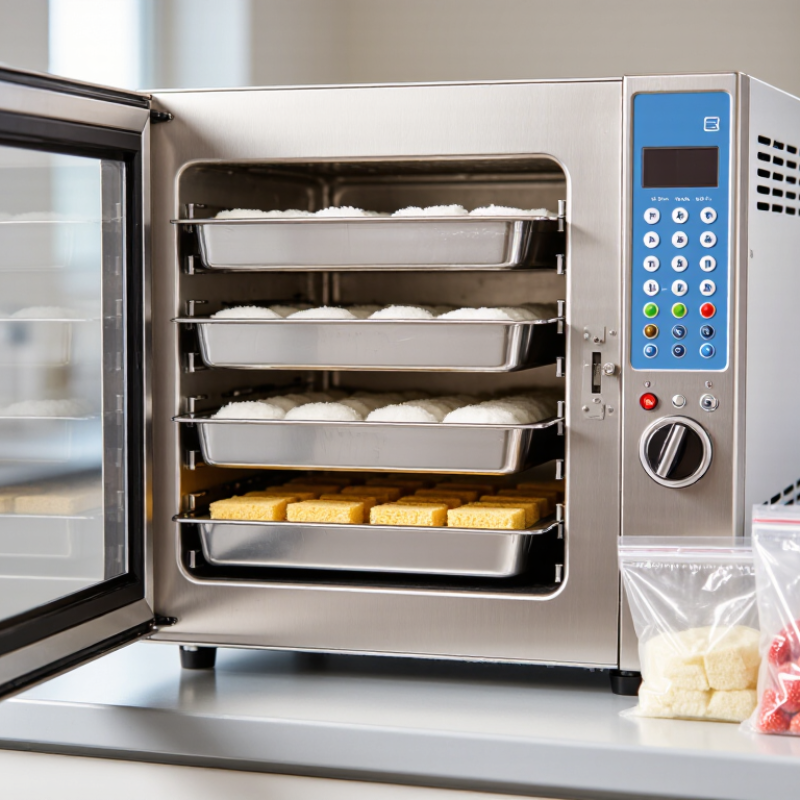
A freeze dryer removes water from frozen food through sublimation. Sublimation means ice changes directly into vapor without becoming liquid. The machine first freezes the material, often below -30°C. Then, a vacuum pump lowers the chamber pressure. Gentle heat encourages frozen moisture to leave the food as vapor.
The vapor travels toward a colder condenser and becomes ice again. This separation protects shape, color, aroma, and many nutrients better than ordinary dehydration. In practice, small fruit pieces may remain crisp, while meat becomes light and porous. Results depend on slice thickness, sugar content, and the final moisture level. The process is not quick. A full batch can take many hours, sometimes overnight. I have found that rushing the final drying stage creates soft centers, even when the outside feels dry.
Tips: Check chamber capacity, vacuum performance, pump maintenance, and electrical requirements before buying. Choose a unit that matches your typical batch size, not your occasional ambition. Look for clear temperature controls and reliable cycle alerts. A removable condenser can simplify cleaning. Noise matters too, especially in a small kitchen. Ask about replacement seals and oil before purchasing. These details seem minor until the machine runs beside you for twelve hours. Also, leave space around the unit for ventilation. My own imperfect rule is simple: test a small batch first, record its weight, and compare it after storage. Even careful settings may need adjustment.
What Is a Freeze Dryer and How to Buy One?
| Dimension | Key Information | Why It Matters When Buying |
|---|---|---|
| Definition | A freeze dryer, also called a lyophilizer, removes water from a frozen product by converting ice directly into vapor. | It is designed for low-temperature dehydration rather than conventional hot-air drying. |
| Primary Process | The process generally includes freezing, primary drying through sublimation, and secondary drying to remove remaining bound moisture. | A complete cycle requires suitable control of temperature, vacuum pressure, shelf heat, and drying time. |
| Freezing Stage | The material is frozen below its freezing point so that its water forms ice crystals. | Uniform freezing can improve product structure and help produce more consistent drying results. |
| Primary Drying | A vacuum lowers the pressure, allowing ice to sublime directly from solid ice into water vapor. | The vacuum system must reach and maintain the pressure required for the intended load and product type. |
| Secondary Drying | Controlled heating removes moisture that remains attached to the dried material after most ice has sublimated. | This stage helps improve storage stability, but excessive heat may damage sensitive products. |
| Product Benefits | Freeze-dried products are lightweight, porous, and often retain their original shape, aroma, color, and rehydration ability better than many heat-dried products. | Choose this method when quality, long-term storage, and easy rehydration are more important than the lowest initial cost. |
| Typical Applications | Common uses include food preservation, laboratory samples, pharmaceutical materials, biological products, and field or emergency supplies. | The application determines the required chamber size, temperature range, cleanliness, documentation, and control precision. |
| Batch Capacity | Capacity is commonly specified by the amount of material that can be processed per batch, often in kilograms or liters. | Select a capacity based on actual batch size, product thickness, tray area, and expected future demand—not only chamber volume. |
| Condenser Temperature | The condenser captures water vapor as ice and must generally be colder than the product during drying. | A sufficiently low condenser temperature helps protect the vacuum pump and maintain efficient vapor capture. |
| Vacuum System | The vacuum pump removes air and water vapor from the chamber. Oil-sealed and oil-free pump designs have different maintenance requirements. | Check ultimate vacuum, pumping speed, noise, oil-change requirements, vapor tolerance, and replacement-parts availability. |
| Temperature Control | Some systems provide basic shelf control, while advanced units monitor and program product and shelf temperatures. | More precise control is valuable for heat-sensitive, high-value, or repeatable production processes. |
| Automation | Programmable recipes, sensors, alarms, data logging, and automatic end-point detection can reduce manual supervision. | Automation improves repeatability and helps document process conditions for quality control. |
| Material Compatibility | Product-contact surfaces are commonly made from corrosion-resistant materials such as stainless steel or suitable laboratory-grade materials. | Verify compatibility with acids, solvents, biological materials, cleaning agents, and required sanitation procedures. |
| Installation Requirements | Requirements may include adequate floor space, electrical capacity, ventilation, drainage, ambient-temperature control, and a suitable installation surface. | Confirm the site conditions before purchase to avoid overheating, unstable operation, or installation delays. |
| Energy Consumption | Energy use depends on chamber size, load, condenser temperature, cycle length, ambient conditions, and pump configuration. | Compare operating costs as well as purchase price, especially when the unit will run frequently. |
| Maintenance | Routine tasks may include cleaning the chamber, defrosting the condenser, inspecting seals, checking filters, and servicing the vacuum pump. | Review maintenance intervals, service access, consumable costs, and the availability of technical support. |
| Safety Considerations | Users should follow operating instructions, protect against cold surfaces, handle vacuum equipment correctly, and use appropriate ventilation for volatile materials. | Confirm that the equipment includes suitable alarms, pressure protection, electrical safety features, and clear operating procedures. |
| Best Buying Checklist | Define the product type, batch size, cycle frequency, target moisture level, temperature sensitivity, available space, power supply, budget, and required documentation. | A written specification makes it easier to compare suitable units objectively and prevents paying for features that are not needed. |