
2026 Top Home Freeze Dryer Types for Global Buyers
A Home Freeze Dryer is no longer a niche appliance for a few dedicated homesteads. It can help households preserve garden produce, leftovers, and seasonal ingredients, but the right type depends on batch size, available space, and tolerance for maintenance. Grand View Research valued the global freeze-drying equipment market at about US$2.7 billion in 2023 and forecast continued growth through 2030. That figure covers industrial and other equipment, not home machines alone. A useful distinction.
Food-engineering researcher Gustavo V. Barbosa-Cánovas has published extensively on food processing and dehydration. A practical buyer’s takeaway from that work—not a verbatim quotation—is: “Capacity matters only when the process suits the food and the batch.” It is easy to focus on tray count. Yet pump type, drying time, noise, and cleanup can shape everyday use just as much. Small details count: a warm pump in a utility room, or trays that do not fit the food you actually preserve.
This guide compares the main home freeze dryer types for global buyers in 2026, including differences in capacity and vacuum-pump design. It also considers operating conditions and local service availability, which product listings can gloss over. No single model is best for everyone. Market forecasts cannot predict the experience of one household, either. Use them as context, then compare specifications against your real storage space, power supply, and typical harvest.
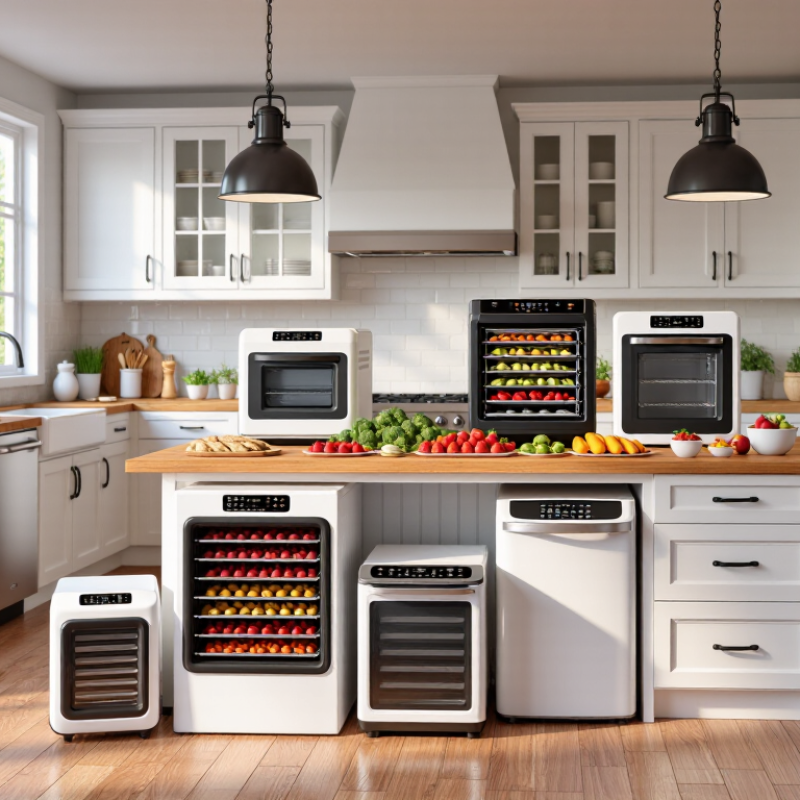
How Home Freeze Dryers Preserve Food
A home freeze dryer preserves food by removing water while keeping the food frozen. The machine first chills prepared ingredients until their moisture becomes ice. It then creates a vacuum and applies controlled heat. Under low pressure, ice changes directly into vapor instead of melting into liquid. This process is called sublimation. That distinction matters.
The dried food often keeps much of its original shape, color, and flavor. Strawberries may remain light and crisp, while cooked meals can become porous and rehydrate with water. Results vary with slice thickness, sugar content, and machine settings. I would not treat every batch as predictable; dense pieces can retain moisture in the center even when their surfaces feel dry.
Freeze-drying does not sterilize food or make careless storage safe. Let pieces cool, then pack them promptly in clean, moisture-resistant airtight containers. Add an appropriate oxygen absorber when suitable, and store packages in a cool, dark place. Moisture is the enemy. If food softens, smells unusual, or shows signs of spoilage after storage, do not rely on appearance alone. A home freeze dryer can extend shelf life, but careful preparation, complete drying, and sound packaging still determine how well food keeps.
| Type | Typical use | Capacity considerations | How it preserves food | Practical trade-offs |
|---|---|---|---|---|
| Compact home unit | Occasional small batches, snacks, herbs, fruit, or trying freeze-drying at home. | Usually has fewer trays and less usable shelf area than larger household models. Actual batch weight depends on the food’s water content and how it is cut and arranged. | Freezes the food, then uses a vacuum and controlled heat to make ice sublime directly into water vapor. Removing water slows many spoilage reactions and microbial growth. | Takes less space, but small batches can mean more processing cycles for a large harvest. Allow room for ventilation and operation. |
| Standard household unit | Regular home use, including seasonal produce, cooked meals, and ingredients for a household pantry. | Offers a middle ground in tray area and batch size. Compare usable tray dimensions, load guidance, and the space needed for the full machine setup. | Low pressure lets frozen ice pass into vapor; a cold trap or condenser collects that vapor. The food’s porous structure is often retained, helping it rehydrate when water is added. | Provides more room for batches but needs suitable electrical service, a stable surface, ventilation, and time for drying and cleanup. |
| Large-capacity home or shared-use unit | Frequent processing, larger gardens, or sharing batches among several households. | Typically provides more tray area, but a larger stated load does not guarantee the same batch size for every food. Dense, thick, or high-moisture loads may need more processing time. | Uses the same freeze–vacuum–sublimation process as other home units. Drying continues until the food reaches an adequately low moisture level; load size and food preparation affect cycle time. | Can reduce the number of batches for large quantities, but requires more installation space and may have greater power and operating needs. Check local electrical compatibility. |
Food preservation and buying notes: Freeze-drying is not sterilization and does not make spoiled or unsafe food safe. For storage, dry food thoroughly, package it promptly in moisture- and oxygen-resistant airtight packaging, and keep it in a cool, dry place. Shelf life varies with food, residual moisture, packaging, and storage conditions. Home-unit capacities and electrical requirements vary by model and market; check local voltage, frequency, plug, and service requirements before purchase.
Related Posts
-
Top Home Freeze Dryer Which One Is Best?
-
2026 Best Freeze Dry Machine For Home Which One?
-
How to Buy a Freeze Dryer for Your Business
-
2026 Top Freeze Dry Machine Innovations to Transform Food Preservation?
-
How to Buy a Freeze Dryer for Your Business
-
Top 10 Harvest Freeze Dryer Suppliers in China 2026?