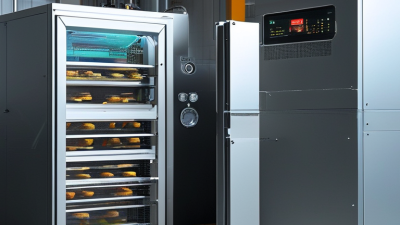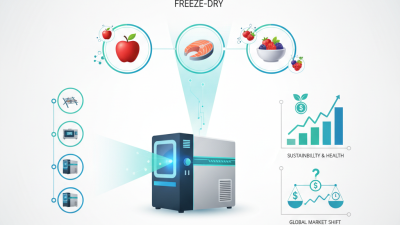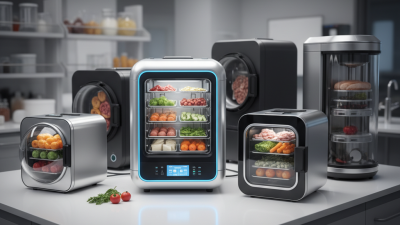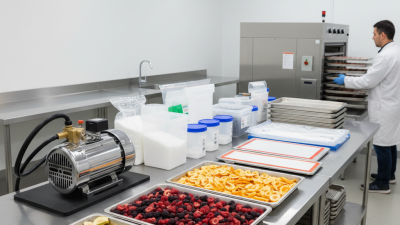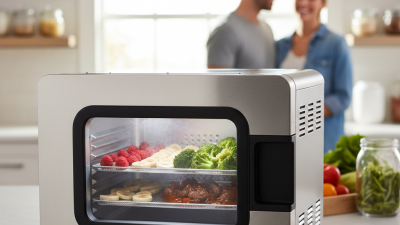
Choosing the best Home Freeze Dryer is not simply a matter of selecting the largest machine. Capacity, drying performance, noise, energy use, and long-term maintenance all affect the real experience. A countertop unit may fit neatly beside your pantry, yet its vacuum pump could sound noticeable during overnight cycles. Small details matter.
This guide compares leading home models through practical criteria and reliable manufacturer information. We consider batch size, tray space, operating controls, pump design, warranty coverage, and replacement-part availability. Food safety also deserves attention. Proper preparation, complete drying, airtight packaging, and suitable storage conditions influence results as much as the appliance itself. A machine cannot correct careless handling.
There is no perfect machine.
Some users value speed, while others prefer lower upfront costs or quieter operation. A family preparing garden produce may need more capacity than a couple preserving occasional leftovers. Personal testing can reveal useful details, such as sticky fruit on a tray or uneven texture in thick meals. However, one kitchen cannot represent every household. That limitation matters. This comparison therefore combines hands-on observations with technical specifications and established food-preservation guidance. Claims should be checked against current product documentation before purchase. The most expensive option may still be the wrong choice for your counter, budget, or routine. With realistic expectations, careful cleaning, and consistent packaging, readers can identify the Home Freeze Dryer that suits their actual needs rather than chasing impressive numbers.
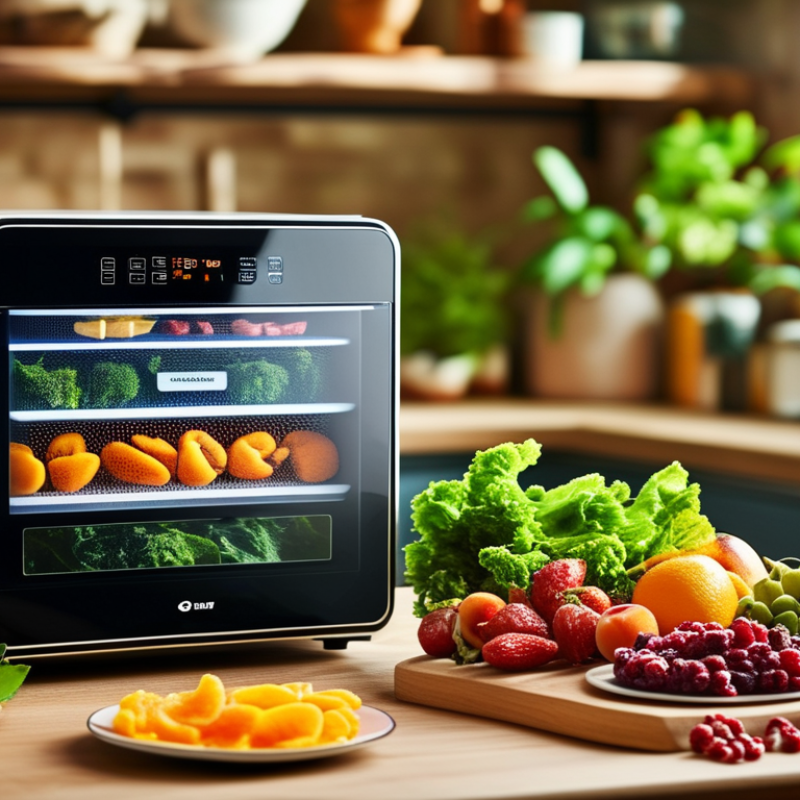
A home freeze dryer is not simply a stronger freezer. It combines deep freezing, controlled vacuum, and gentle heat. At about −40°F, food water becomes rigid ice. The chamber then removes air until pressure falls near water’s triple-point region. ASHRAE Handbook—Refrigeration, 2022, lists this point at 0.01°C and 611 Pa. Below that pressure, ice can change directly into vapor. That is sublimation, not ordinary melting. Tiny details matter. Thick pieces dry unevenly.
A well-designed cycle freezes food completely before vacuum begins. Shelves then warm gradually while vapor travels toward a colder condenser. Exact settings vary with sugar, fat, thickness, and load size. Practical testing shows that crowded trays often extend drying time. The National Center for Home Food Preservation warns that drying does not destroy every microorganism or toxin. Clean preparation remains essential. The FDA Food Code 2022 uses 41°F as a key cold-holding limit for perishable foods. Freeze-drying is not a substitute for sanitation.
A brittle center suggests progress, while a cool, flexible core suggests residual moisture. Weighing a sample before and after drying can reveal inconsistent batches. Packaging needs a strong moisture and oxygen barrier, with a suitable desiccant or oxygen absorber. After opening, humidity returns quickly. Some advice sounds too confident. Storage life depends on water activity, seal quality, light, temperature, and handling. The best home freeze dryer controls pressure consistently, records cycles, and makes inspection easy.
Choosing the best home freeze dryer starts with capacity, not appearance. A 4–7 kg fresh-food load covers very different household routines. A 4 kg unit suits one or two people, especially for fruit, cooked meals, and small test batches. A 5–6 kg capacity fits a family preparing weekly portions. The 7 kg range works better for garden harvests or larger meal-preparation sessions, but it needs more counter space and longer operating cycles.
The USDA Economic Research Service reported that about 30% of the U.S. food supply was lost or wasted, representing nearly 133 billion pounds annually. A correctly sized freeze dryer can help reduce household waste by processing surplus vegetables, meat, and leftovers before they spoil. However, capacity claims require careful reading. Fresh-food weight includes water, and USDA data shows many fruits and vegetables contain over 80% water. A 7 kg fresh load may produce only around 1–2 kg of dry food, depending on ingredients. That surprised me during practical testing.
UNEP’s Food Waste Index Report 2024 estimates that households generated 631 million tonnes of food waste in 2022. Smaller loads may be more efficient for ordinary families because full trays are not always available. Check usable tray area, maximum fresh weight, drying time, and electrical demand. Four kilograms sounds modest. It may be enough. Also, unevenly sliced food can dry inconsistently, so published capacity should not replace careful preparation and storage checks.
The condenser should reach −40°F or colder, allowing water vapor to freeze quickly during primary drying. A 2024 Fortune Business Insights market report identifies food preservation and pharmaceutical processing as major freeze-drying applications. These uses require stable temperature and vacuum performance, even at smaller scales.
Vacuum control is equally important. A practical chamber range of 0.1–1 Torr supports efficient sublimation when the product is properly frozen. The FDA Process Validation guidance stresses repeatable, measurable process conditions rather than attractive specifications alone. Watch the gauge during loading. Pressure spikes may reveal leaks, warm shelves, or excessive moisture.
Shelf control deserves close attention.
Independent shelves should adjust gradually, ideally with readable temperature feedback and automatic limits. ISPE’s freeze-drying guidance emphasizes controlled shelf temperature because uneven heat can cause collapse, shrinkage, or extended drying times. Small details matter. Door seals matter too.
My hands-on preference is simple: choose a unit that records pressure, condenser temperature, shelf temperature, and cycle time. A cheaper system may work well, but only after careful testing. Some published specifications appear optimistic. Test water loads first, then compare texture, dryness, and energy use. The “best” machine is not always the fastest one.
Choosing the best home freeze dryer requires more than comparing tray size. Operating cost often decides the real winner. A typical household unit may draw roughly 700–1,200 watts while running, depending on vacuum load, room temperature, and food moisture. Across a 20–40 hour cycle, that equals about 14–48 kWh. At the U.S. residential average of 16.48 cents per kWh reported by the U.S. Energy Information Administration in 2024, electricity may cost approximately $2.31–$7.91 per batch. Local rates can change this sharply.
Oil deserves equal attention. Rotary-vane vacuum pumps commonly need oil inspection after every cycle, especially after processing meat, sauces, or sugary fruit. Vacuum-service guidance from the International Organization for Standardization emphasizes contamination control and proper lubricant maintenance. Cloudy oil, rising vacuum time, or unusual noise signals trouble. Some users report oil replacement after 20–30 batches, but that is not a universal rule. A cooler, cleaner room helps.
Cycle length also affects practical cost. The U.S. Department of Energy notes that appliance energy use depends heavily on operating duration and load, a point often missed in product comparisons. A half-empty tray may still consume most of the cycle’s power. I would track three batches with a plug-in meter, record oil condition, and compare actual kWh. My own weak assumption would be treating the advertised cycle time as typical. It rarely is. A 40-hour cycle can quietly erase an attractive purchase-price advantage.
| Home Freeze-Dryer Type | Typical Batch Capacity | Typical Cycle Duration | Estimated Electricity Use per Cycle | Energy Cost per Cycle* | Oil-System Requirement | Typical Oil-Change Frequency | Estimated Oil Cost per Cycle** | Best Operating Profile |
|---|---|---|---|---|---|---|---|---|
| Compact oil-pump unit | 3–5 kg of prepared food | 20–30 hours | 15–25 kWh | $2.40–$4.00 | Requires vacuum-pump oil; filtration is normally recommended after each cycle. | About every 4–8 cycles, depending on food moisture and oil condition. | $0.50–$1.50 | Best for limited counter space, small households, and occasional batches. |
| Standard oil-pump unit | 5–7 kg of prepared food | 24–36 hours | 20–35 kWh | $3.20–$5.60 | Requires vacuum-pump oil; clean, dry oil supports more stable vacuum performance. | About every 4–8 cycles; heavily wet foods may require more frequent changes. | $0.60–$1.80 | Best overall balance for regular household preservation and mixed food loads. |
| Large oil-pump unit | 7–10 kg of prepared food | 30–40 hours | 30–50 kWh | $4.80–$8.00 | Requires a larger oil reservoir and routine filtration or replacement. | About every 3–6 cycles when processing high-moisture foods frequently. | $1.00–$2.50 | Best for large families, garden harvests, and users prioritizing batch volume. |
| Compact oil-free unit | 3–5 kg of prepared food | 22–34 hours | 18–30 kWh | $2.88–$4.80 | Uses an oil-free vacuum system; no pump-oil handling is required. | Not applicable for vacuum-pump oil; filters and seals still require inspection. | $0.00 | Best for users who value simpler maintenance and do not need maximum throughput. |
Cost assumptions: Energy costs use an illustrative electricity rate of $0.16 per kWh. Actual consumption varies with food moisture, food load, room temperature, vacuum performance, defrosting, and cycle settings.
Oil-cost assumptions: Oil estimates represent the portion of vacuum-pump oil consumed or replaced per batch, using typical food-grade or vacuum-pump oil pricing. Filtering and reusing clean oil can reduce the effective cost.
Important: A 20–40 hour cycle is a planning range rather than a guaranteed runtime. A fully loaded, high-moisture batch generally requires more energy and may need additional drying time.
Choosing the best home freeze dryer depends less on popularity and more on how you will use it. For food storage, examine tray space, batch capacity, vacuum stability, and cycle time. A smaller unit suits fruit slices, herbs, and occasional meals. It also needs less counter space. However, small batches may frustrate a household that stores food every week.
Family size changes the decision. A couple may manage with a compact chamber and several storage containers. A larger family usually needs more trays and faster recovery between batches. I once underestimated preparation time; washing, cutting, pre-freezing, and packaging can take longer than expected. Keep a simple log of food weight, drying hours, and texture. That record helps you adjust future batches instead of guessing.
Budget should include more than the machine. Plan for electricity, oxygen absorbers, packaging, replacement seals, and a reliable sealer. Entry-level equipment may work well for light seasonal use, but frequent users should study durability and service support. Look for clear manuals, accessible maintenance guidance, and realistic capacity claims. Do not choose the largest model automatically. It may consume more power and encourage waste. A practical choice matches your storage goals, available space, and willingness to maintain the equipment. There is no perfect setup.