What Is the Best Dry Freezer in 2026?
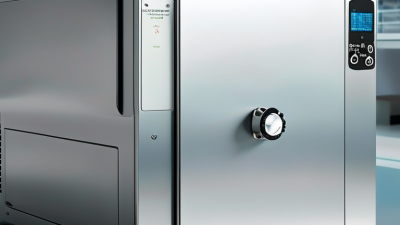
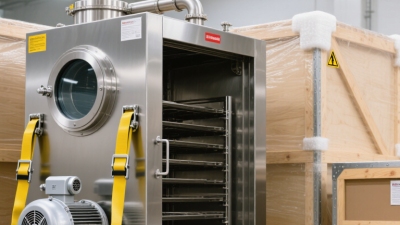
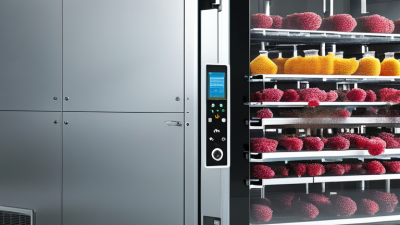
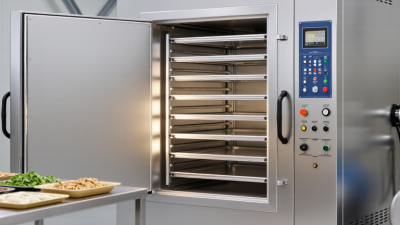
A Dry Freezer can look simple on a product page: a stainless-steel chamber, trays, and a quiet pump. Yet choosing the best model in 2026 takes more than comparing capacity. The term “Dry Freezer” is not always used consistently; many buyers mean a freeze dryer, which removes ice from frozen material under vacuum. That distinction matters when comparing specifications, cycle times, and operating costs.
Market demand offers useful context, but not a buying shortcut. Grand View Research estimated the global freeze-drying equipment market at about USD 2.3 billion in 2023 and projected an 8.4% compound annual growth rate from 2024 to 2030. Its report covers commercial equipment broadly, not just home machines. Michael J. Pikal, a prominent pharmaceutical freeze-drying researcher, has emphasized how formulation and process conditions affect drying performance. His research is a reminder: equipment alone cannot guarantee consistent results. I cannot verify a verbatim quotation from him, so attributing one here would be misleading.
Look closely at the details you can test: usable tray area, vacuum-pump noise, service access, and the time required to complete a real batch. A full tray is not the same as a full successful cycle. And advertised capacity can flatter. This guide compares models by practical workload, reliability, energy use, and support—not by headline claims alone. Some comparisons will remain imperfect, because manufacturers do not report every measure in the same way. That limitation deserves attention.
What a Dry Freezer Is and How It Works
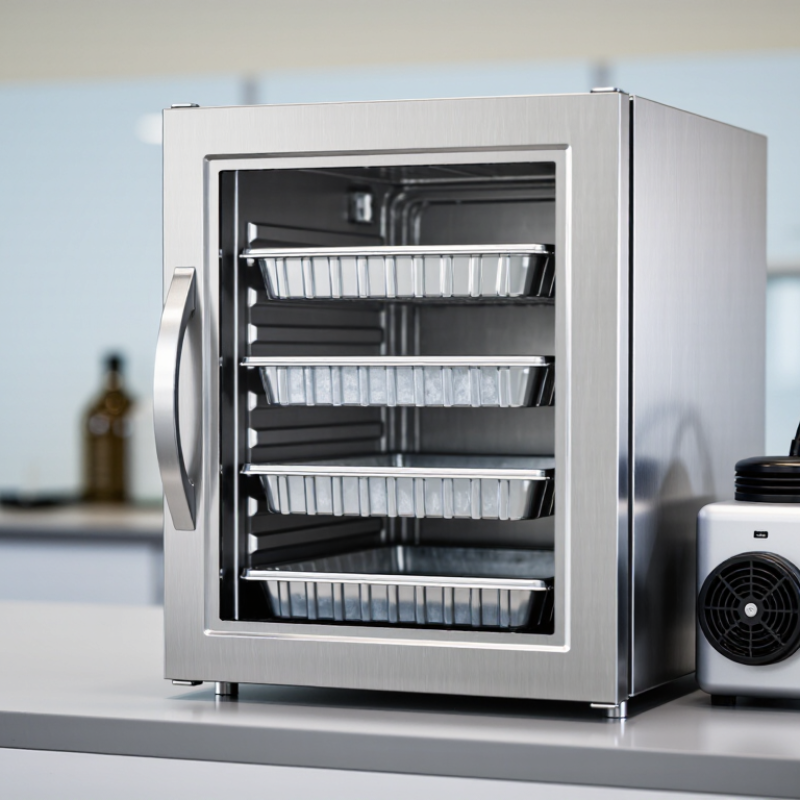
A “dry freezer” usually refers to a freeze dryer, a machine that removes water from frozen material. It is not simply a colder household freezer. Food is chilled until its water becomes ice, then placed in a low-pressure chamber. The name is a little misleading.
Under vacuum, ice changes directly into water vapor, a process called sublimation. A cold condenser captures much of that vapor before it reaches the pump. Gentle heat helps remaining ice leave the food without melting it. The cycle can take many hours. Exact timing depends on food thickness, sugar content, load size, and machine settings.
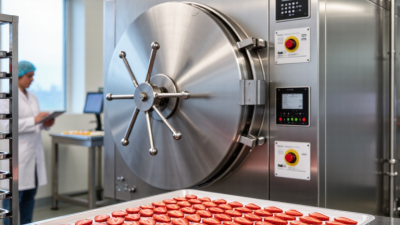
The result is light, porous food that can regain texture when water is added. A strawberry, for example, may look crisp and feel brittle rather than leathery. Drying is not sterilizing, though. Clean preparation, a complete cycle, and moisture-resistant packaging matter for storage. Check the thickest pieces; a cool, damp center may need more drying time. Results vary, and that can be frustrating.
Key Features That Determine Dry Freezer Performance
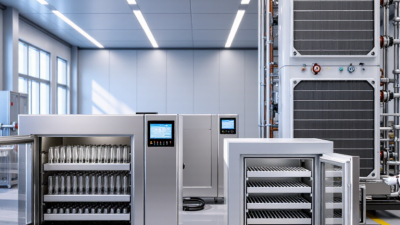
A capable dry freezer is judged by control, not its lowest temperature alone. Check shelf-temperature uniformity, vacuum stability, condenser capacity, and sensor calibration. Uneven shelves can leave a tray of fruit brittle at the edges but damp in the center. That matters.
Cycle data should be repeatable. The U.S. FDA’s process-validation guidance calls for qualified equipment and documented process controls, useful benchmarks when comparing monitoring and data-logging features. Look for clear alarms, traceable records, and probes that can be calibrated. More buttons do not mean better control.
Energy use deserves attention, too. The International Institute of Refrigeration’s 2019 report estimates refrigeration accounts for about 17% of global electricity consumption. That figure covers refrigeration broadly, not freeze-dryers alone, but it puts insulation, compressor efficiency, and idle-power use in perspective. One caveat: a larger condenser is not automatically better if the load is small or poorly matched. Compare performance at your actual batch size, and review how the unit handles defrosting and routine cleaning. Small details matter. A slightly awkward control interface can slow loading and invite mistakes; test it before purchase.
Types of Dry Freezers Available in 2026
In 2026, “dry freezer” can describe several kinds of cold-storage equipment, so check the intended use before comparing models. Upright ultra-low-temperature freezers offer shelf-based access to samples. Their narrow footprint suits laboratories with limited floor space, though frequent door openings can warm nearby contents.
Chest-style units hold temperature steadily and often use less energy, but finding a small vial at the bottom takes effort. A labeled inventory helps.
Portable dry shippers are another option for transporting temperature-sensitive materials. They retain cold vapor inside an absorbent lining and are designed to limit free liquid during movement. They are not plug-in freezers, and their hold time depends on preparation and ambient conditions.
Not interchangeable.
Compact undercounter freezers can serve smaller facilities, but their usable capacity and temperature range may not suit every sample.
Compare operating temperature, recovery after opening, alarm functions, and backup-power needs. A freezer that looks ideal on paper may be awkward in a crowded room; door clearance and service access deserve a real measurement, not a guess.
How the Leading Dry Freezers of 2026 Compare
In 2026, leading dry freezers differ most in temperature stability, usable capacity, recovery time, and energy use. Upright models make small boxes easier to reach, but frequent door openings can warm nearby samples. Chest designs often hold cold air better, though retrieving items at the bottom gets old quickly. Check temperature logs, alarm settings, and performance after a door opening—not just the lowest temperature on the display.
Energy matters over years of operation. ENERGY STAR’s laboratory-grade freezer data reports that certified models use about 10% less energy than standard models on average. That is useful, but not a verdict: room temperature, loading, and maintenance change real-world consumption. For vaccine-related storage, CDC guidance specifies -50°C to -15°C for frozen vaccines; other materials may require different limits. Look for clear validation data and confirm the freezer suits the intended contents. A quiet unit is nice. A reliable recovery curve matters more. Some published tests use ideal conditions, so I would treat them as a starting point, not a guarantee.
What Is the Best Dry Freezer in 2026? - How the Leading Dry Freezers of 2026 Compare
| Freezer type |
Typical temperature |
Cooling method |
Best suited for |
Key advantage |
Main trade-off |
| Vapor-phase liquid-nitrogen storage freezer |
Often approximately −150°C to −190°C; varies by location and load |
Liquid nitrogen cools samples through cold vapor rather than immersing them in liquid |
Long-term storage of samples requiring cryogenic temperatures |
Very low storage temperatures without direct liquid contact |
Requires nitrogen supply, monitoring, and suitable room ventilation |
| Liquid-nitrogen dry shipper |
Designed to keep payloads cryogenic; performance depends on the unit and holding time |
Porous absorbent retains nitrogen and releases cold vapor during transport |
Transporting frozen biological samples |
Reduces the risk of free liquid nitrogen spilling during shipment |
A transport container, not a substitute for a high-capacity long-term storage freezer |
| Upright ultra-low-temperature (ULT) freezer |
Commonly adjustable within approximately −60°C to −86°C |
Mechanical refrigeration, usually with insulated compartments and powered controls |
Organized laboratory or clinical sample storage with frequent access |
Shelves and racks make samples relatively easy to organize and retrieve |
Uses continuous electricity; door openings can affect temperature stability |
| Chest-style ULT freezer |
Commonly adjustable within approximately −60°C to −86°C |
Mechanical refrigeration with a top-opening insulated cabinet |
Bulk storage where floor space and access pattern suit a chest design |
Cold air tends to remain inside when the lid is opened |
Samples at the bottom can be harder to reach; requires overhead clearance |
| Compact ULT freezer |
Commonly designed for operation near −80°C; check the specified operating range |
Small-capacity mechanical refrigeration |
Smaller labs, point-of-use storage, or limited sample inventories |
Smaller footprint than full-size ULT cabinets |
Lower capacity; verify recovery performance and backup plans for critical samples |
How to choose: For cryogenic vapor storage, consider a vapor-phase liquid-nitrogen freezer; for shipping, choose a qualified dry shipper; for routine storage near −80°C, compare ULT freezers. “Dry freezer” is not a single standardized product category, and actual temperature, capacity, and hold time depend on the specific unit, loading, and operating conditions.
How to Choose a Dry Freezer for Your Needs
Choosing the best dry freezer starts with the material you plan to process, not the largest capacity on a product sheet. For freeze-drying, compare usable shelf area, batch size, condenser capacity, and the lowest operating temperature. A unit that handles small research samples may struggle with bulky, moisture-rich loads. Leave room for uneven batches.
Check how clearly the system displays temperature, pressure, and cycle status. Readable controls and recorded cycle data help operators spot inconsistent results. Ask how often seals, filters, and the vacuum pump need attention, and whether replacement parts are readily available. Maintenance matters. A quiet machine is pleasant, but reliable service and clear operating instructions matter more.
Think about the space around the unit, too. Measure doorways, bench clearance, ventilation, and the route for draining or cleaning components. If possible, test a representative sample before committing; food, biological materials, and other products can dry differently. This step takes time. It can also reveal that your preferred settings need adjusting. Energy use, noise, and staff training are easy to overlook, especially when comparing models in a showroom. Keep a simple checklist of your typical batch, available space, and service needs.