Cuddon Freeze Dry Logo

Top 10 Freeze Dryer For Sale Options for Global Buyers

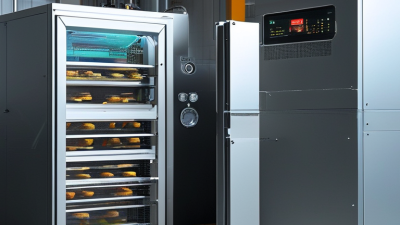
Choosing the right Freeze Dryer For Sale is becoming more important as pharmaceutical, food, biotechnology, and laboratory applications expand worldwide. MarketsandMarkets’ Freeze Drying Equipment Market report projects continued market growth through 2028, driven by biologics, vaccines, specialty foods, and research demand. Grand View Research also identifies automation, controlled processing, and energy efficiency as major equipment trends. These figures suggest opportunity, but they do not make every machine a smart purchase.

Thomas A. Jennings, a recognized lyophilization author, wrote, “Freeze-drying is a process in which water is removed from a frozen product by sublimation.” That principle still guides practical buying decisions. A reliable unit must control freezing speed, shelf temperature, chamber pressure, condenser capacity, and vacuum stability. Buyers should also inspect shelf area, ice capacity, batch size, drying-cycle records, alarm systems, and after-sales support. A shiny stainless-steel chamber means little without dependable sensors and documented performance.

This guide reviews ten Freeze Dryer For Sale options for global buyers. It considers laboratory models, pilot systems, and larger production units. The comparison includes capacity, control systems, maintenance needs, energy use, compliance documentation, and supplier reputation. No shortlist is perfect. A cheaper unit may create higher service costs later. A powerful machine may be excessive for small batches. Buyers should question unclear specifications, especially vague vacuum ratings or incomplete validation records. The final choice should match the product, facility, budget, and technical team—not merely the advertised price.
Top 10 Freeze Dryer For Sale Options for Global Buyers

Freeze-Drying Fundamentals: −40°C Shelves, −50°C Condensers, and Vacuum Control

Top 10 Freeze Dryer For Sale Options for Global Buyers

Freeze-Drying Fundamentals: −40°C Shelves, −50°C Condensers, and Vacuum Control

A reliable freeze dryer begins with controlled freezing. Shelves reaching −40°C can solidify many water-based products evenly. However, shelf temperature is not the same as product temperature. Core probes provide better evidence during processing. Uneven freezing may create large ice crystals and weaken the final structure. I have seen attractive cycles fail because operators trusted the display without checking the product center.

A condenser near −50°C captures water vapor before it reaches the vacuum pump. This protects the pump and supports stable pressure. Vacuum control must remain gradual, especially during primary drying. Excessive pressure reduction can cause foaming, collapse, or slow sublimation. Good equipment should offer pressure sensors, adjustable shelves, alarms, and accessible cleaning points. Calibration records also matter. Small measurement errors can change the result.

Tips: Check the lowest shelf temperature under load, not only in an empty chamber. Confirm condenser capacity for your batch size. Run a leak test before production. Keep product probes calibrated. Leave space between trays for vapor movement. Do not copy a published cycle blindly; formulation, tray depth, and moisture content change the process. A short trial batch is often wiser. Even experienced users miss details. Review the data, question unstable readings, and improve the cycle patiently.

Global Buyer Metrics: Compare 10 Models by 1–2,000 L Capacity and Power

Top 10 Freeze Dryer For Sale Options for Global Buyers

Global buyers should compare capacity with electrical demand, cooling design, and batch flexibility. A practical ten-option range includes 1, 5, 10, 25, 50, 100, 250, 500, 1,000, and 2,000 liters. Typical installed power may range from 2–4 kW at 1 liter to 140–280 kW at 2,000 liters. These figures are planning estimates, not guaranteed consumption. Shelf loading, condenser temperature, vacuum-pump type, and ambient conditions can change the result.

Small scale changes quickly. The 1–25 L options suit laboratories and pilot trials, while 50–250 L units support process development and limited production. Larger 500–2,000 L systems require stronger utilities, floor loading, drainage, and often industrial water cooling. A 2024 MarketsandMarkets assessment places the freeze-drying equipment market in the multi-billion-dollar range, with pharmaceutical demand remaining a major growth driver. That growth does not make every large chamber economical.

ISPE facility guidance recommends sizing critical utilities around validated operating conditions, not catalog capacity alone. Buyers should request electrical-load curves, vacuum performance, condenser recovery data, and voltage-frequency compatibility. The International Energy Agency also identifies industrial refrigeration as a significant electricity-use area, so heat rejection deserves attention. I would not trust a low quoted power figure without test conditions. A first sizing pass can still be wrong. Verify the actual product load, cycle duration, local service capability, and qualification documentation before placing an order.

Top 10 Freeze Dryer for Sale Options for Global Buyers

Global Buyer Metrics: Compare 10 anonymized configurations by nominal chamber capacity and installed electrical power.

The comparison covers laboratory, pilot, and industrial freeze-drying capacity classes from 1 L to 2,000 L. Power figures represent typical installed electrical power for the corresponding configuration; final requirements vary with refrigeration system, vacuum pump, condenser temperature, voltage, and local operating conditions.

Performance Screening: Evaluate <100 mTorr Vacuum, Ice Capacity, and Drying Rate

Top 10 Freeze Dryer For Sale Options for Global Buyers

Performance screening should begin with vacuum behavior, not catalog price. A reliable unit should reach below 100 mTorr under practical operating conditions. An empty chamber reading can look impressive, yet loaded trays may tell a different story. Ask for vacuum curves, leak-test results, and readings taken near the product.

Ice capacity shows how much frozen water the condenser can capture per batch. Compare this number with your real load, not an ideal laboratory sample. A unit rated for 10 kilograms may struggle when food pieces are thick or unevenly arranged. Drying rate also matters. Review kilograms of water removed per 24 hours, shelf temperature range, and typical cycle duration. Faster is not always better. Excess heat can damage texture, color, or sensitive nutrients.

Tips: Request a test using your actual product. Record starting weight, ending weight, chamber pressure, and cycle time. Check whether capacity figures include water only or total product weight. Confirm electrical frequency, service access, and spare-part availability in your region. I would also leave operating headroom; buying at the exact rated limit often creates disappointing cycles. Sometimes, a smaller load dries more consistently.

Top 10 Options: Match Benchtop, Pilot, and Production Freeze Dryers to Use Cases

Top 10 Freeze Dryer For Sale Options for Global Buyers

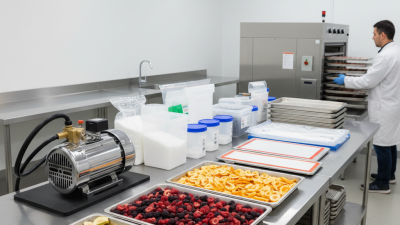
Choosing among the top ten freeze dryer options starts with the process, not the price. Benchtop units suit research samples, small formulations, and laboratory method development. Look for 0.1–0.5 square meters of shelf area, adjustable shelf temperatures, and a condenser below −50°C. Small batches need control. Pilot systems typically offer 1–10 square meters of shelf space. They help teams test loading patterns, cycle duration, vial spacing, and scale-up behavior before production. A pilot dryer should include reliable vacuum measurement, shelf mapping, and repeatable stoppering when sealed vials are required.

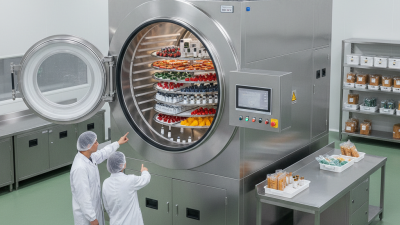
Production options demand stronger engineering. Buyers should compare condenser capacity, automatic loading, cleaning systems, recipe control, and backup utilities. Some systems use more than 50 square meters of shelf area, depending on the application. MarketsandMarkets reported continued growth in the global lyophilization equipment market, driven by sterile manufacturing and biologic development. Grand View Research also identifies automation and energy efficiency as major equipment priorities. These reports support investment, but market forecasts cannot replace site trials. They rarely reveal maintenance delays or difficult product transfer.

Match the ten options to real operating conditions: benchtop for discovery, pilot for validation, and production for consistent throughput. Review chamber dimensions against actual trays and vial formats. Check electrical standards, vacuum-pump servicing, refrigerant requirements, and local technical support. The U.S. FDA’s process-validation guidance emphasizes documented control and repeatability. That means a cheaper dryer may become expensive if cycles vary between operators. I would request sample data, factory acceptance criteria, and a witnessed test. A polished brochure is not proof. Measure the risk.

Top 10 Freeze Dryer For Sale Options for Global Buyers - Top 10 Options: Match Benchtop, Pilot, and Production Freeze Dryers to Use Cases

Rank Freeze Dryer Option Typical Shelf Area Typical Batch Size Condenser Temperature Typical Ice Capacity Typical Vacuum Range Best Use Case Key Buying Considerations
1 Entry-Level Benchtop Freeze Dryer 0.10–0.20 m² 1–3 L of solution −50 to −55°C 2–4 kg per cycle 0.05–1.0 mbar Education, formulation screening, and small laboratory batches Compact footprint, simple controls, single-phase power, and limited batch capacity
2 Laboratory Benchtop Shelf Freeze Dryer 0.20–0.40 m² 2–6 L of solution −55 to −85°C 4–8 kg per cycle 0.01–1.0 mbar Research laboratories, food trials, diagnostics, and sample preservation Shelf temperature control, data logging, vacuum stability, and condenser temperature
3 Research-Grade Benchtop Freeze Dryer 0.30–0.60 m² 4–10 L of solution −80 to −90°C 6–12 kg per cycle 0.01–0.5 mbar Temperature-sensitive biological materials and process development Low condenser temperature, programmable shelf ramps, sterile accessories, and validation records
4 Compact Pilot Freeze Dryer 0.60–1.20 m² 10–25 L of solution −60 to −80°C 15–30 kg per cycle 0.01–0.5 mbar Scale-up studies, pilot food production, and process optimization Scalable shelf geometry, loading method, product temperature sensors, and cycle repeatability
5 Pilot Pharmaceutical Freeze Dryer 1.00–2.50 m² 20–60 L of solution −70 to −85°C 25–60 kg per cycle 0.005–0.5 mbar Injectables, biologics, clinical batches, and aseptic process development Cleanable chamber, stoppering system, sterile filtration, automatic control, and electronic records
6 Mobile or Compact Production Freeze Dryer 2.00–4.00 m² 40–100 L of solution −60 to −80°C 50–100 kg per cycle 0.01–0.5 mbar Contract manufacturing, specialty foods, and flexible production sites Transport dimensions, utility requirements, installation access, and remote service support
7 Medium Production Freeze Dryer 4.00–8.00 m² 80–200 L of solution −60 to −80°C 100–250 kg per cycle 0.01–0.5 mbar Regular commercial production of foods, cultures, and pharmaceutical materials Condenser recovery rate, automatic loading, clean-in-place capability, and energy consumption
8 Large Production Freeze Dryer 8.00–16.00 m² 160–400 L of solution −60 to −80°C 200–500 kg per cycle 0.005–0.5 mbar High-volume pharmaceutical, biotechnology, and food manufacturing Facility utilities, refrigeration redundancy, automated material handling, and regulatory compliance
9 Aseptic Production Freeze Dryer with Stoppering 5.00–20.00 m² 100–500 L of solution −70 to −85°C 150–600 kg per cycle 0.005–0.5 mbar Sterile injectable products and regulated pharmaceutical manufacturing Validated cleaning, sterilization, chamber integrity, automatic stoppering, and batch documentation
10 High-Throughput Industrial Freeze Dryer 16.00–40.00+ m² 300–1,000+ L of solution −60 to −85°C 500–1,200+ kg per cycle 0.005–0.5 mbar Large-scale commercial production with continuous or multi-shift operation Factory layout, refrigeration redundancy, automation integration, preventive maintenance, and lifecycle cost
Data note: The specifications shown are typical market ranges for each equipment class. Actual capacity, cycle time, energy demand, and throughput vary with product formulation, fill depth, container type, loading pattern, condenser design, and operating conditions.

Compliance and Ownership: Verify GMP, 21 CFR Part 11, Voltage, Warranty, and Service

When comparing freeze dryers for sale, compliance should be checked before capacity, speed, or appearance. A machine described as GMP-ready should include clear material specifications, cleaning guidance, calibration records, and documented quality procedures. Request sample IQ, OQ, and maintenance documents before placing an order. Marketing language alone is not evidence.

Paperwork matters. For electronic controls, verify whether the system supports secure user access, audit trails, electronic signatures, and controlled data export. 21 CFR Part 11 applies to electronic records and signatures, so confirm how the complete workflow is validated. Ask whether software updates affect validation status. This detail is often overlooked.

Check the socket. Confirm local voltage, frequency, phase, plug type, and starting current with an electrical professional. A 230-volt, three-phase model may not suit a small laboratory designed for 110-volt, single-phase service. Warranty terms also need careful reading. Check coverage periods, vacuum pump exclusions, shipping responsibility, labor costs, and replacement-part availability. Reliable suppliers should provide service contacts, response targets, installation support, and remote troubleshooting. A local technician network can matter more than a low purchase price. I have seen buyers focus on the initial quotation and regret weak after-sales support later. That judgment can be imperfect, but it reflects a practical risk: downtime may cost more than the equipment. Request references from comparable facilities, not only polished testimonials.