Cuddon Freeze Dry Logo

Why Buy a Freeze Dryer for Your Business?

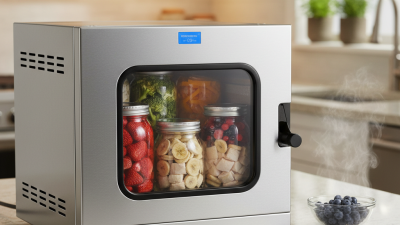
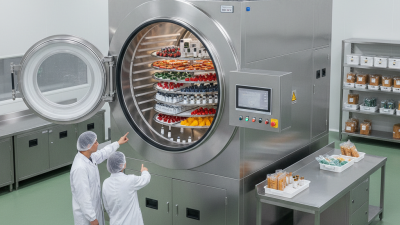
Choosing whether to Buy Freeze Dryer is a serious business decision, not an impulse purchase. A commercial freeze dryer can protect product quality, extend shelf life, and create new revenue opportunities. It is used for fruits, vegetables, herbs, coffee, prepared meals, and other permitted food products. The right machine can preserve color, shape, aroma, and texture while reducing dependence on cold-chain storage.

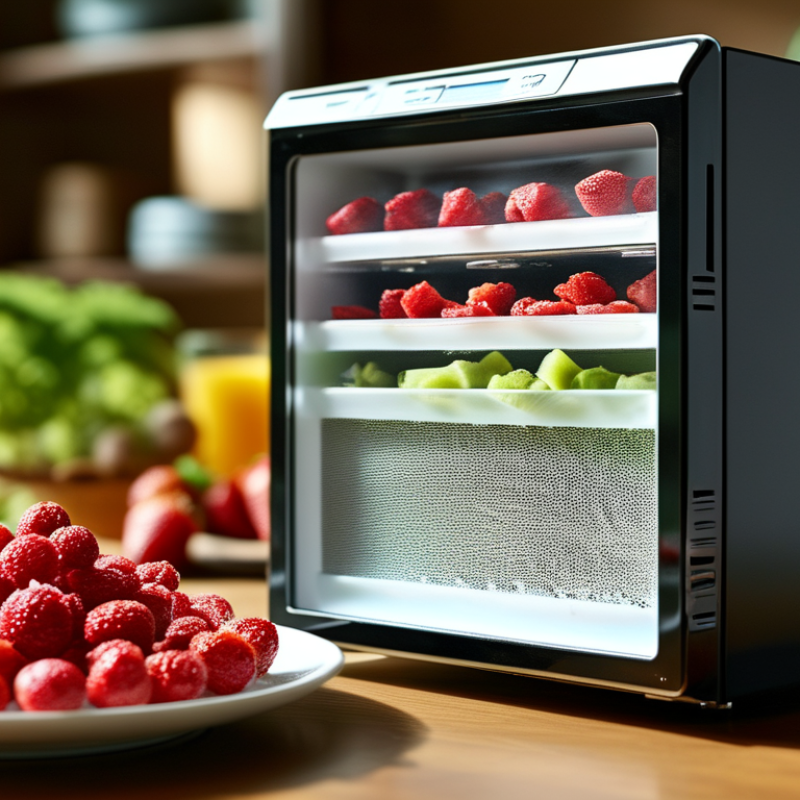
Dr. John F. Carpenter, a recognized lyophilization researcher, has emphasized, “The goal of lyophilization is to produce a stable product with an acceptable appearance and rapid reconstitution.” That principle matters in daily operations. A tray of sliced strawberries should leave the chamber light, crisp, and evenly dried. Uneven loading or poor temperature control can create soft centers, dark edges, and wasted batches. Small details matter.

A business must examine capacity, vacuum performance, cycle time, energy use, cleaning requirements, and technical support. The cheapest unit may become expensive when downtime interrupts orders. Operators also need practical training. A freeze dryer is not a simple oven. It demands testing, records, maintenance, and consistent procedures.

Profit is possible. It is not automatic. Packaging, labeling, storage, and customer education also influence results. Some products may need several trial cycles before reaching a dependable texture. That learning period can feel frustrating, but it reveals the machine’s real limits. Before you Buy Freeze Dryer equipment, compare expected production volume with actual demand, available floor space, and long-term operating costs. A careful purchase can support quality, credibility, and steady growth.
Why Buy a Freeze Dryer for Your Business?

What Is a Freeze Dryer and How Does It Work?

A freeze dryer removes moisture from food, ingredients, and other suitable materials at low temperatures. It does not simply bake products dry. The process begins by freezing the material into a solid state. Then, a vacuum reduces air pressure inside the chamber. Under this pressure, ice changes directly into vapor through sublimation. The vapor moves toward a cold condenser, where it freezes again. A final drying stage removes moisture that remains inside the product.

The result is usually lightweight and porous. Small air pockets help dried fruit rehydrate faster and preserve much of its original shape. However, performance depends on slice thickness, sugar content, loading weight, and temperature control. A crowded tray may dry unevenly. That is a real problem. Operators should check moisture levels, product texture, and package seals before storage. Freeze drying can support business growth, but it requires careful testing rather than guesswork.

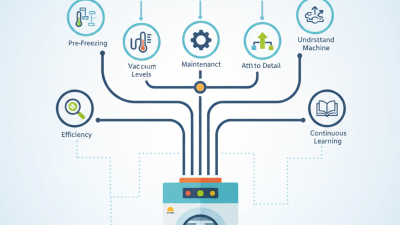
Tips: Keep pieces similar in size. Leave space between tray items. Pre-freeze thick products thoroughly. Record each batch’s time, temperature, and final texture. Use moisture-resistant packaging after drying. Do not assume a crisp surface means the center is dry; that assumption can cause avoidable waste.

Which Business Products Benefit Most from Freeze-Drying?

Which Business Products Benefit Most from Freeze-Drying?

Freeze-drying suits products that must stay lightweight, stable, and visually appealing. Specialty food companies can preserve berries, herbs, coffee, soups, and ready-to-eat meals. The process removes water under low temperatures, helping protect shape, aroma, and many heat-sensitive nutrients. According to the FAO’s State of Food and Agriculture 2019, about 14% of global food production is lost between harvest and retail. Shelf-stable formats can reduce some losses, although freeze-drying cannot solve poor packaging or weak distribution.

Nutraceutical businesses may use it for probiotic cultures, botanical extracts, and powdered supplements. Research laboratories also benefit from precise, dry samples with longer storage potential. The global lyophilization equipment market was valued at approximately USD 2.3 billion in 2023, according to Grand View Research, showing strong industrial demand. However, the equipment is expensive and energy-intensive. I would not freeze-dry every product. High-moisture foods, fragile ingredients, and low-margin goods may not justify the cost. That decision needs real batch testing.

Tips: Measure moisture before and after processing. Test texture after rehydration. Use oxygen-barrier packaging. Record cycle time, yield, and electricity use. A product may look excellent in a sample jar, then disappoint at scale. Pricing should include labor, maintenance, packaging, and failed batches—not only machine capacity.

What Business Advantages Does a Freeze Dryer Provide?

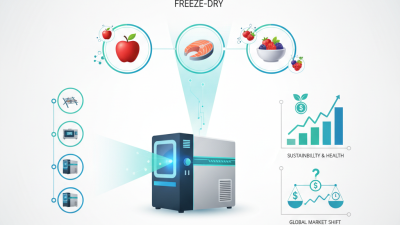
A freeze dryer can turn fragile ingredients into higher-value products with long storage potential. The advantage is not simply preservation. It is flexibility. Fruits, herbs, dairy ingredients, and prepared meals can become lightweight formats for online sales, emergency supplies, hospitality, or specialty retail. The United Nations Environment Programme reported that 1.05 billion tonnes of food were wasted in 2022. Freeze drying cannot solve waste alone, but it may help businesses use seasonal surplus before quality declines.

The commercial case depends on product quality and process control. Freeze drying removes ice through sublimation under vacuum, usually preserving shape, aroma, and rehydration performance better than conventional hot-air drying. A 2024 industry market analysis projects continued growth in freeze-drying equipment demand through the decade, supported by pharmaceutical, food, and biotechnology applications. That trend suggests stronger customer acceptance, but it does not guarantee profit. Electricity use, chamber capacity, batch time, packaging, and labor can change the calculation quickly.

Small details matter. A crisp strawberry should remain intact after packing, not arrive as powder. Operators must monitor moisture, seal packaging carefully, and test water activity before setting shelf-life claims. A pilot batch is essential. It may expose uneven drying or disappointing yield. That is useful evidence, not failure. Businesses can then price products more accurately, reduce avoidable returns, and decide whether premium positioning justifies the equipment investment.

Why Buy a Freeze Dryer for Your Business?

Commonly reported performance ranges show how freeze drying can support longer shelf life, lower shipping weight, and premium product quality.

Freeze drying typically removes most of a product’s water while preserving its structure, flavor, and appearance. The resulting products are lightweight, shelf-stable, and easy to rehydrate, which can help businesses reduce logistics costs and create higher-value product lines. Actual results vary by ingredient, formulation, packaging, and process settings.

How to Assess Capacity, Costs, and Equipment Requirements

A freeze dryer should be sized from water removal, not advertised chamber volume. USDA FoodData Central lists strawberries at roughly 91% water. Therefore, a 100-kilogram batch may leave only about 9 kilograms of dry solids before processing losses. That difference affects cycle time, condenser capacity, and packaging demand. Measure your real product, tray thickness, and loading pattern during pilot runs. A full shelf is not always an efficient shelf.

Calculate capacity in kilograms of water removed per batch. Then divide by planned operating hours and annual production targets. Published research in the Journal of Food Engineering reports that freeze-drying energy use can vary widely with product composition, freezing temperature, and cycle design. Treat energy estimates as ranges, not promises. Electricity costs include refrigeration, vacuum pumps, defrosting, and facility ventilation. My first sizing mistake would be ignoring peak utility demand.

Equipment requirements extend beyond the chamber. FDA 21 CFR Part 117 emphasizes sanitary design, process controls, and documented preventive controls for applicable food operations. Allow space for cleanable surfaces, product staging, maintenance access, and moisture-resistant packaging. The ASHRAE Handbook—Refrigeration identifies refrigeration load, condenser performance, and ambient conditions as key design factors. Obtain measured cycle data, vacuum performance, service intervals, and spare-parts pricing. A cheaper machine can become expensive when downtime interrupts production.

What Operational and Regulatory Factors Should You Consider?

Why Buy a Freeze Dryer for Your Business?

What Operational and Regulatory Factors Should You Consider?

A freeze dryer can protect product quality, but capacity must match real demand. Estimate batch size, cycle time, loading weight, and cleaning time before choosing equipment. A machine may look large enough until frozen product occupies every tray. Utility needs also matter. Check electrical supply, water requirements, vacuum performance, ventilation, and backup power. Downtime becomes expensive when one small component stops production.

Regulatory planning deserves equal attention. Food, supplement, and pharmaceutical operations may follow different rules in each jurisdiction. Review applicable hygiene, labeling, traceability, and worker-safety requirements before installation. Document critical limits, product temperatures, pressure changes, and drying endpoints. Validation should show that the process delivers consistent moisture levels and protects the intended quality. Written sanitation procedures are essential. So are training records.

Do not overlook the building. Floors, drainage, airflow, storage, and cleanable surfaces can affect inspections and daily work. Operators need clear procedures for loading, unloading, cleaning, and handling failed batches. A pilot run can expose problems that spreadsheets miss, especially slow freezing or uneven drying. No calculation is perfect. Recheck assumptions after several cycles, and allow space for maintenance. It is tempting to buy maximum capacity, but unused capacity still consumes energy, floor space, and labor. A careful review with qualified engineers and local regulatory advisers can prevent expensive redesigns.

Why Buy a Freeze Dryer for Your Business? - What Operational and Regulatory Factors Should You Consider?
Category Decision Factor Typical Planning Data Operational Implication Regulatory or Validation Consideration
Production Batch capacity Small commercial units commonly process approximately 5–100 kg of ice per batch; larger production systems can process several hundred kilograms or more. Capacity should be calculated from water removal requirements, not only from tray volume. Product thickness and formulation strongly affect throughput. Document the approved loading pattern, maximum fill depth, and batch-size limits in standard operating procedures.
Production Cycle duration A complete cycle commonly takes about 18–48 hours, although dense, sugary, fatty, or thick products may require longer cycles. Long cycles affect inventory planning, order lead times, equipment utilization, and the number of batches possible per week. Establish validated cycle parameters and define acceptance criteria for residual moisture and product appearance.
Product Quality Freezing temperature Product is normally frozen below its critical temperature; many water-based products are frozen within approximately −40°C to −20°C before primary drying. Freezing rate and product formulation influence ice-crystal size, pore structure, reconstitution time, and final appearance. Use documented thermal studies to identify the product’s collapse temperature or eutectic temperature where applicable.
Product Quality Chamber pressure Primary drying commonly operates under vacuum conditions of approximately 50–300 mTorr, equivalent to about 0.067–0.400 mbar. Pressure must be balanced with shelf temperature and product temperature to prevent melting, collapse, or incomplete drying. Calibrate pressure sensors and record pressure, shelf temperature, product temperature, and cycle alarms for every batch.
Product Quality Residual moisture Many freeze-dried foods are controlled at low single-digit moisture levels; pharmaceutical targets are product-specific and may be lower or higher depending on stability requirements. Excess moisture can reduce shelf life, cause texture loss, and increase the risk of chemical or microbiological deterioration. Set product-specific limits using validated analytical methods such as loss-on-drying, Karl Fischer titration, or an equivalent method.
Utilities Electrical demand Small and medium systems may require approximately 5–30 kW of connected electrical load; actual consumption depends on refrigeration, vacuum, condenser size, and cycle length. Electrical infrastructure, peak demand, operating cost, and backup power requirements should be assessed before purchase. Confirm local electrical-code compliance, equipment certification, grounding, emergency isolation, and preventive-maintenance records.
Facilities Installation space Allow additional clearance beyond the machine footprint for loading, unloading, service access, airflow, vacuum-pump maintenance, and safe personnel movement. Insufficient clearance can restrict maintenance and create avoidable downtime or safety hazards. Food and pharmaceutical facilities may require controlled zoning, hygienic surfaces, pest-control measures, and documented cleaning procedures.
Labor Staffing and training Routine operation generally requires trained personnel for preparation, loading, cycle review, unloading, packaging, cleaning, and recordkeeping. Automation may reduce hands-on time, but it does not eliminate the need for competent operators and quality review. Maintain training records, approved work instructions, deviation procedures, and authorization lists for operators.
Packaging Moisture and oxygen protection Freeze-dried products are highly hygroscopic. High-barrier packaging with an effective seal and, where appropriate, oxygen control is commonly required. Packaging must be completed quickly in a low-humidity environment to prevent moisture pickup after drying. Verify package integrity, seal strength, migration suitability, labeling, and shelf-life performance under defined storage conditions.
Food Compliance Food safety system Commercial food production commonly uses prerequisite programs, sanitation controls, traceability, allergen controls, and a HACCP-based preventive system. Freeze-drying does not replace hygienic processing or eliminate all food-safety hazards. Relevant frameworks may include Codex HACCP principles, FDA 21 CFR Part 117 in the United States, or applicable national food-hygiene legislation.
Pharmaceutical Compliance GMP and process validation Pharmaceutical or sterile products require documented control of critical process parameters, materials, equipment, cleaning, and environmental conditions. Equipment selection must support repeatable cycles, data recording, alarm management, and controlled change procedures. Applicable requirements may include 21 CFR Parts 210 and 211, relevant national GMP rules, and sterile-processing requirements where applicable.
Data Integrity Electronic records Commercial systems may record temperature, pressure, time, alarms, user actions, and cycle status electronically. Reliable data helps investigate deviations, demonstrate consistency, and identify equipment-performance trends. Electronic records and signatures may need controls consistent with requirements such as FDA 21 CFR Part 11, including access control, audit trails, and backup procedures.
Maintenance Preventive maintenance Routine tasks typically include vacuum-pump servicing, gasket inspection, condenser defrosting, sensor calibration, refrigeration checks, and leak testing. Maintenance quality directly affects vacuum stability, cycle repeatability, energy use, and unplanned downtime. Use an approved maintenance schedule, calibration program, spare-parts list, service records, and documented equipment-release procedures.
Business Case Return-on-investment drivers Key inputs include equipment cost, installation, utilities, labor, packaging, maintenance, yield, selling price, batch throughput, and expected operating days. Internal production may improve control and product differentiation, but the investment is difficult to justify if demand is irregular or batch utilization is low. Prepare a documented capacity model and confirm that the intended claims, product category, facility, and market are legally permitted before commercialization.
Risk Management Product and process trials Representative trials should test formulation, fill depth, freezing profile, drying cycle, packaging, storage, and reconstitution or performance characteristics. Pilot data reduces the risk of buying equipment that cannot achieve the required quality or throughput. Retain trial protocols, raw data, deviation reports, test results, and final process specifications as part of the technical file.
Planning ranges are general industry-oriented values and can vary substantially by product formulation, solids content, tray loading, equipment design, facility conditions, and jurisdiction. Final operating limits and regulatory obligations should be confirmed through product trials, qualification, validation, and review of the applicable local requirements.