Choosing a Large Freeze Dryer is not simply a matter of selecting the biggest chamber. Capacity, product behavior, energy use, cleaning access, and cycle control must work together. A machine may hold more trays, yet perform poorly when shelves heat unevenly or vapor flow becomes restricted. That hidden mismatch can damage product quality and increase operating costs.
Louis Rey, a pioneer in industrial freeze-drying, famously described the process this way: “Freeze-drying is not a drying process, but a freezing process followed by sublimation.” His statement remains highly practical. It reminds buyers to examine freezing performance, condenser capacity, vacuum stability, and sublimation control before comparing external dimensions. A reliable Large Freeze Dryer should also offer accurate sensors, traceable data, robust door sealing, and a service plan supported by trained technicians. Small details matter. A difficult-to-clean drain can delay production. A poorly designed shelf can create uneven temperatures across one batch.
These ten tips focus on decisions that are easy to overlook. They consider real operating conditions, including batch size, formulation sensitivity, room layout, maintenance routines, and future expansion. Experience shows that specifications alone do not guarantee results. A larger chamber can become an expensive mistake if the facility lacks sufficient cooling water, electrical capacity, or vacuum support. That possibility deserves honest attention. No system is perfect. Even experienced teams can underestimate loading patterns or cleaning time. Careful testing, supplier references, factory acceptance checks, and pilot trials can reduce those risks. The right choice should protect product quality today while remaining practical five years from now.
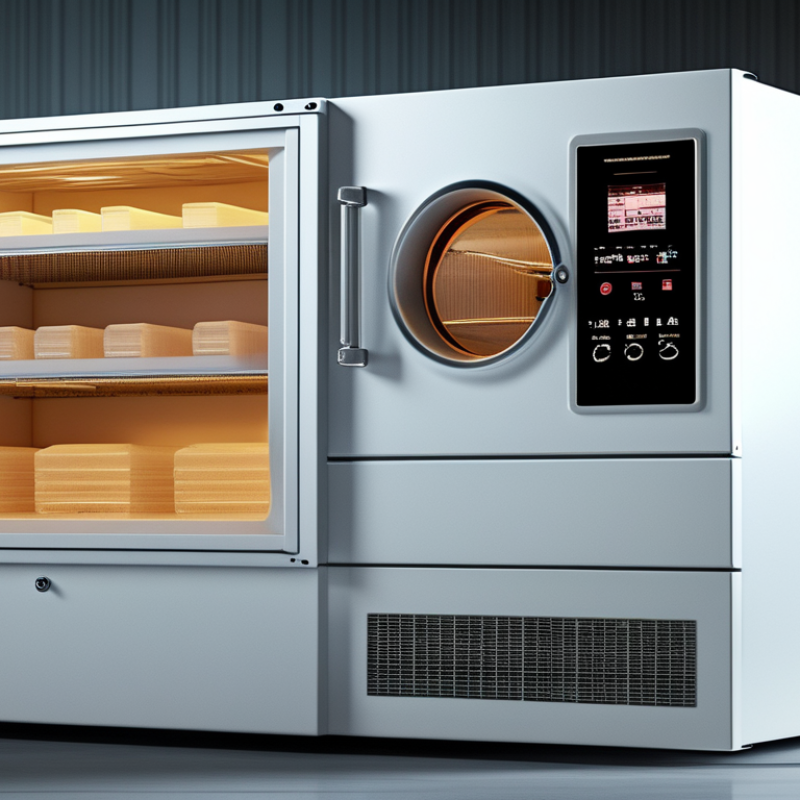
Choosing a Large Freeze Dryer
Define Capacity and Batch-Size Requirements
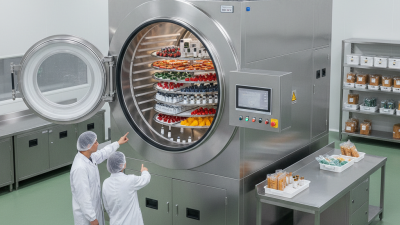
Capacity decisions should begin with the product, not the machine’s outer dimensions. Measure the material’s weight, tray depth, moisture content, and expected expansion during freezing. A laboratory sample may fit easily, while a production batch can spread unevenly across shelves.
Record your normal batch size and your busiest realistic batch. Do not design around an occasional maximum. It can waste floor space, energy, and maintenance time. Calculate usable shelf area, not advertised chamber volume. A 20-millimeter layer may dry differently from a 10-millimeter layer, even with identical ingredients.
I recommend testing several sample loads before approving a purchase. Place containers at the front, center, and rear shelves, then compare drying time and final moisture. Keep these records. They help verify performance and support future capacity decisions. A rough estimate is not enough.
Leave practical room for loading and unloading. Operators need space to handle trays without touching nearby surfaces. Consider whether one large batch or several smaller batches better matches your workflow. Smaller batches may improve scheduling, but they can increase labor and cleaning frequency. I once underestimated loading time because the calculation ignored tray handling. That mistake looked minor on paper and became expensive during daily operation.
Ask for documented shelf dimensions, condenser capacity, temperature limits, vacuum performance, and recommended load conditions. Confirm that these figures reflect usable operating conditions, not only ideal test results. Include seasonal demand, product growth, and staff training when comparing equipment.
A large freeze dryer should be judged by three linked systems: freezing, vacuum, and drying. Do not rely on chamber volume alone. Review the shelf temperature range, cooling rate, condenser capacity, and batch uniformity. PDA Technical Report No. 60 identifies these variables as central to lyophilization cycle control. A practical evaluation should include product thermocouples, pressure readings, and repeatable load tests. Empty-chamber results can mislead.
Freezing performance needs close attention. Ask whether shelves can reach approximately -40°C or below, and how evenly they cool across the chamber. Uneven freezing can create different ice structures, extending primary drying. During sublimation, many systems operate near 50–200 mTorr, while condensers commonly reach below -60°C. These figures are useful reference points, not automatic guarantees. The FDA Process Validation guidance also stresses objective evidence from representative production conditions. Test a full load, not only a convenient small batch.
Vacuum performance should be checked for leak rate, pressure stability, and recovery after loading. A stable vacuum supports predictable heat and mass transfer. Drying performance then depends on shelf control, condenser loading, endpoint detection, and product temperature. Watch the chamber pressure closely. Small fluctuations matter. I would request cycle data from several runs, including failed or slow batches. That part is often missing. A clear chamber may still conceal poor airflow, weak sensors, or uneven heat transfer. Select equipment that records raw data, supports calibration, and allows engineers to challenge its assumptions.
| No. | Evaluation Dimension | Practical Reference Values | What to Evaluate | Why It Matters | Preferred Selection Signal |
|---|---|---|---|---|---|
| 1 | Usable Product Capacity | Specify usable shelf area and batch load separately; typical large systems provide approximately 5–50 m² of shelf area. | Confirm the rated load in kilograms, the maximum fill depth, vial or tray configuration, and whether the stated capacity is based on actual usable shelf area. | Nominal chamber volume does not directly indicate how much product can be processed uniformly. | Capacity is documented with shelf area, product load, and validated load conditions. |
| 2 | Freezing Temperature and Uniformity | Product shelves commonly operate down to approximately −40°C to −60°C; shelf uniformity is often targeted within about ±2°C under defined conditions. | Review the lowest shelf temperature, cooling rate, sensor locations, temperature mapping, and performance at partial and full loads. | Consistent freezing creates a predictable ice structure and helps control primary drying time. | The system reaches the required temperature without excessive variation between shelves or shelf positions. |
| 3 | Freezing Rate Control | The process should support programmable freezing ramps rather than only a fixed cooling cycle. | Check ramp-rate control, hold steps, nucleation options where needed, and the ability to reproduce the approved recipe. | Freezing rate affects ice-crystal size, pore structure, product resistance, and final reconstitution behavior. | Multiple recipes can be stored and repeated with traceable shelf-temperature control. |
| 4 | Vacuum Level and Control | Many freeze-drying cycles operate around 0.05–0.30 mbar, depending on product, condenser temperature, and process design. | Evaluate the controllable pressure range, pressure stability, leak-rate testing, capacitance-manometer accuracy, and vacuum-control response. | Stable chamber pressure supports controlled sublimation and reduces the risk of product collapse or extended drying. | Pressure remains stable at the set point and is measured with a suitable absolute-pressure sensor. |
| 5 | Vacuum Pumping and Isolation | Pumping capacity must match chamber volume, product load, vapor flow, and the intended cycle time; the system should include isolation and protection functions. | Review pump-down time, vapor-handling capability, isolation-valve operation, oil-backflow protection, and maintenance access. | Insufficient or unstable pumping can lengthen cycles and make pressure control unreliable during peak sublimation. | The vacuum system reaches operating pressure quickly and maintains it during high vapor loads. |
| 6 | Condenser Temperature and Ice Capacity | Large condensers commonly operate near −70°C to −85°C, with ice capacities selected according to batch size and vapor load. | Compare minimum condenser temperature, ice-holding capacity in kilograms, defrost time, vapor-path design, and condenser recovery between batches. | The condenser captures water vapor and protects the vacuum system; insufficient capacity can reduce process stability. | Condenser performance exceeds the expected vapor load with adequate reserve capacity. |
| 7 | Primary Drying Control | The equipment should independently control shelf temperature and chamber pressure, with product-temperature monitoring throughout the load. | Assess shelf heating and cooling response, product thermocouple or wireless-sensor options, endpoint logic, and protection against product temperature limits. | Primary drying is usually the longest phase and has the greatest effect on product structure and cycle duration. | The system can maintain product temperature below the product-specific collapse or eutectic limit. |
| 8 | Secondary Drying Capability | Shelf temperatures may be raised to approximately +20°C to +60°C, depending on product sensitivity and process requirements. | Verify the maximum controlled shelf temperature, ramp programming, hold-time control, pressure range, and moisture endpoint measurement options. | Secondary drying removes bound water and helps achieve the required residual-moisture specification. | The system provides controlled temperature ramps without overshoot and supports product-specific hold periods. |
| 9 | Drying Uniformity and Scale-Up | Uniformity should be demonstrated across edge, center, top, and bottom locations at representative loads. | Request heat-transfer data, shelf mapping, product-temperature profiles, batch-to-batch repeatability, and results from full-load trials. | Large chambers can develop temperature and vapor-flow differences that are not visible in small-scale tests. | Full-load validation shows consistent endpoint moisture and product appearance across the chamber. |
| 10 | Data, Safety, and Maintenance | The control system should record critical parameters at a configurable interval and provide alarms, recipe security, and service access. | Evaluate electronic batch records, audit trails, user permissions, alarm history, calibration access, cleanability, door sealing, and preventive-maintenance requirements. | Reliable records and maintainable hardware support process repeatability, troubleshooting, compliance, and equipment availability. | Critical data are protected, exportable, time-stamped, and supported by clear calibration and maintenance procedures. |
A shorter cycle can improve capacity, but it may increase utility costs.
Empty space still consumes energy. An oversized dryer can run inefficiently when partially loaded.
From practical evaluations, maintenance often changes the original cost estimate.
Keep cycle records for several months before making a final comparison. My early estimates focused too much on peak power and missed standby consumption. That mistake was expensive.
Also, cycle time is not always consistent. Product thickness, loading pattern, and shelf temperature can shift results.
A reliable decision uses measured data, written assumptions, and a total operating-cost model. Small differences per batch become significant across a full production year.
Choosing a Large Freeze Dryer: Check Equipment Materials, Controls, Safety, and Maintenance
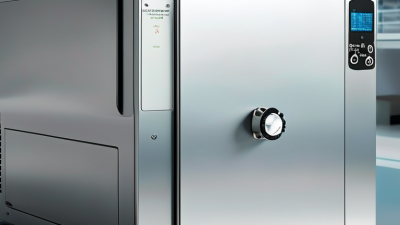
Tip: Inspect the chamber, shelves, and product-contact surfaces before comparing capacity. Stainless steel should resist corrosion and tolerate repeated cleaning. Smooth welds matter because tiny crevices can trap moisture. I have seen impressive machines lose reliability because their door seals were difficult to inspect. Ask for material certificates and clear surface-finish details. Do not trust appearance alone.
Tip: Controls should show shelf temperature, product temperature, vacuum level, condenser temperature, and cycle time clearly. A well-designed interface helps operators notice abnormal readings early. Recipes should be adjustable, but access to critical settings should require permission. Data recording also supports quality reviews and troubleshooting. Keep an independent temperature sensor for verification. It feels excessive, but one sensor can drift.
Safety features deserve a physical inspection. Look for door interlocks, vacuum protection, pressure relief, emergency stops, and alarms that remain visible in a noisy room. Operators need training, not only a manual. Maintenance access should be practical, with reachable filters, pumps, sensors, seals, and drain points. Ask how calibration is performed and how quickly replacement parts can arrive. Keep service records beside the equipment. A rushed inspection may miss weak points. No checklist is perfect. Allow time for a trial run with water or an approved test load. Watch for unusual vibration, unstable vacuum, temperature variation, and difficult cleaning.
10 Tips for Choosing a Large Freeze Dryer
Choosing a large freeze dryer starts with the installation site, not the product brochure. Measure every doorway, lift, corridor, and service route before ordering. Check floor loading, ceiling height, drainage, ventilation, cooling water, and electrical capacity. Leave clear space around the chamber and vacuum pump for maintenance. Tight layouts create expensive problems.
Compliance needs careful attention. Ask for electrical, pressure, refrigerant, and machinery documentation for your operating region. Confirm that the equipment supports required validation records, calibration certificates, alarms, and temperature mapping. Your quality team should review these documents before purchase. A shiny certificate is not enough.
Warranty language deserves slow reading. Identify coverage periods, excluded parts, response times, labor terms, and travel charges. Ask who handles emergency repairs and how replacement components are stocked. Request service references from facilities with similar production loads. I once underestimated installation access, and a minor pump issue became a long delay. That mistake still influences my checklist. Supplier support should include commissioning, operator training, maintenance schedules, and clear escalation contacts. Test their response before signing. Send technical questions and note how precisely they answer. Vague promises often become vague support.
Assess installation needs, compliance, warranty, and supplier support before selecting a system.
The chart presents an illustrative allocation of procurement review effort for a large freeze dryer. Installation and process performance typically require the most detailed assessment, while compliance, warranty terms, lifecycle cost, and supplier support should be verified before final approval. Actual priorities should be adjusted to match facility utilities, product requirements, regulatory scope, production volume, and validation strategy.