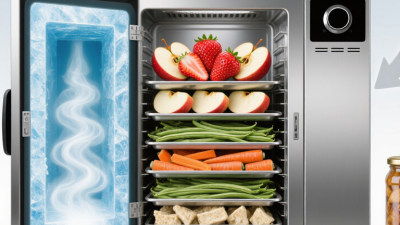
Why Choose a Food Freeze Dryer for Sale?
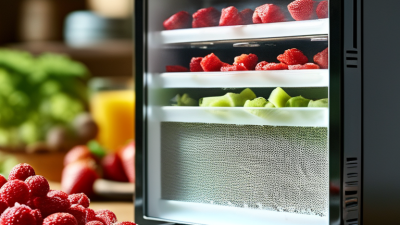
Choosing a Food Freeze Dryer For Sale can make sense when you want to preserve seasonal ingredients, prepare lightweight meals, or reduce the amount of food that spoils at home. Freeze drying removes ice from frozen food under controlled vacuum conditions, but results depend on preparation, equipment, and storage. Thin strawberry slices, for example, usually dry more evenly than thick, crowded pieces. Small details matter.
A good purchase starts with realistic needs. Consider batch capacity, available counter space, cycle time, noise, power requirements, and the cost of bags or containers. Compare the manufacturer’s stated capacity with the amount of food you actually plan to process; a large chamber may be wasteful for occasional use. Check whether cleaning instructions are clear and whether replacement parts and customer support are available. These are practical questions, not glamorous ones.
The finished food should be completely dry before it is sealed in suitable moisture-resistant packaging. A soft or cold spot may indicate that more drying is needed, so inspect pieces rather than relying on appearance alone. Store sealed food in a cool, dry place, and follow the machine’s manual for operation and maintenance. That matters.
Freeze drying is not effortless, and it may not suit every household. Not always. Electricity use, upfront cost, and long processing times deserve an honest comparison with simpler preservation methods. A carefully chosen machine can offer flexibility, but only when its capacity and ongoing demands fit your routine.
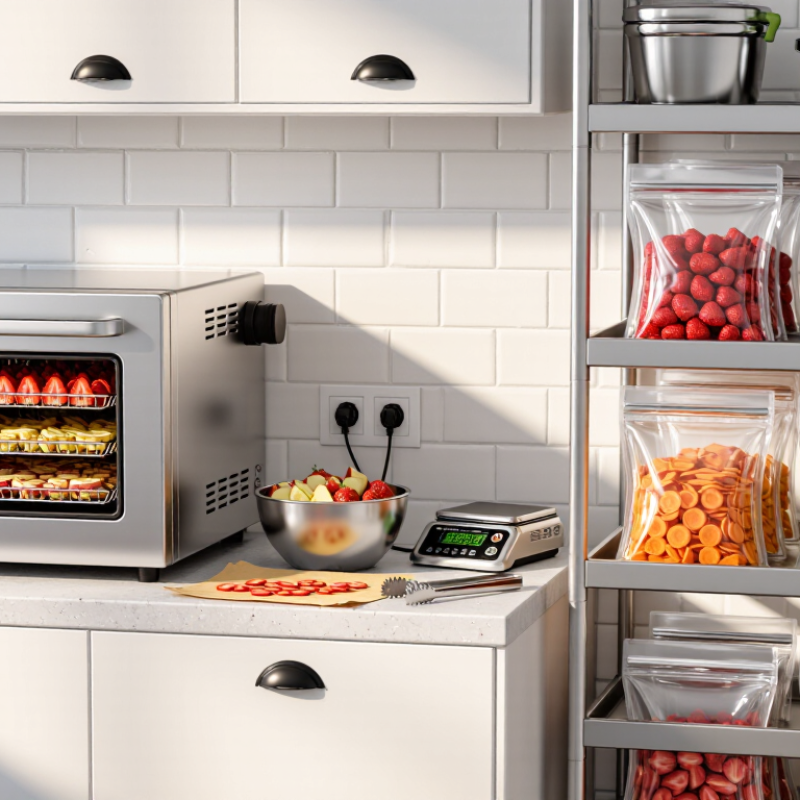
Freeze-Drying Defined: Ice Sublimation Below Water’s 611 Pa Triple-Point Pressure
A food freeze dryer removes water while helping preserve a food’s shape, color, and flavor. Its key process is sublimation: frozen water changes directly from ice to vapor. Water’s triple point is about 611 pascals absolute pressure, near 0.01°C. Below that pressure, liquid water is not stable under the right temperature conditions.
That pressure matters, but it is not the whole story. The food must stay frozen as controlled heat encourages ice to leave the product as vapor. A vacuum system removes that vapor, while a cold trap helps collect it. The process takes time. A thin apple slice and a thick piece of fruit will not dry at the same rate; size and moisture both matter.
If you are comparing a food freeze dryer for sale, look beyond the advertised pressure. Check whether the machine provides clear readings, adjustable settings, and enough tray space for your usual batches. Drying results can vary with food preparation and load size. The theory sounds tidy; real food is less obedient. Even a dry-looking piece may hold moisture inside, so follow reliable testing and storage guidance rather than judging by appearance alone.
Why Choose a Food Freeze Dryer for Sale?
Freeze-drying removes ice by sublimation under reduced pressure. The chart compares an illustrative freeze-drying chamber pressure with water’s triple-point pressure.
At pressures below water’s triple point (about 611 Pa), ice can transition directly to vapor. A chamber pressure near 10 Pa is an illustrative operating value; actual settings vary by equipment and process.
How a Food Freeze Dryer Works: Freezing, Vacuum, and Secondary Drying
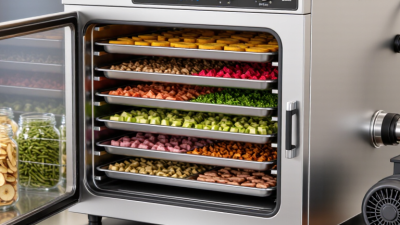
A food freeze dryer removes moisture while helping preserve a food’s shape and structure. The process starts by freezing prepared food on chilled trays. Small, evenly cut pieces freeze more consistently than thick chunks. Keep pieces similar. A crowded tray can slow drying and leave damp spots.
Once the food is frozen, the chamber creates a vacuum. Under low pressure, ice changes directly into vapor instead of melting first. This stage, called primary drying, removes much of the frozen water. You may see vapor collect as frost on a cold condenser. The pump and refrigeration system must work together; a vacuum alone cannot dry the food.
Secondary drying gently raises the temperature to release moisture still bound within the food. This final stage matters for storage, though it takes time and energy. A dry piece should feel crisp, not cool or leathery inside. Results can vary with food thickness, sugar content, and machine loading, so one timer setting rarely suits every batch. When comparing a food freeze dryer for sale, look for clear controls, reliable temperature and vacuum monitoring, and enough tray space for your usual portions. The process is precise, but not effortless. A little trial and error is normal.
Why Choose a Food Freeze Dryer for Sale? - How a Food Freeze Dryer Works: Freezing, Vacuum, and Secondary Drying
Note: Operating conditions and cycle time vary with food type, piece size, load thickness, formulation, and equipment. The ranges shown are general examples, not a substitute for product-specific testing.
Food Safety and Water Activity: FDA’s 0.85 aw Regulatory Threshold
A food freeze dryer for sale may promise crisp strawberries, lightweight meals, and longer storage. But dryness by touch is not a safety measurement. Water activity, written as aw, describes how much water is available for microbial growth. It differs from moisture percentage: two foods with similar moisture can have different aw values.
The FDA’s 0.85 aw threshold matters in several regulatory contexts, but it is not a universal guarantee that food is safe. Many disease-causing bacteria cannot grow below this level, yet some organisms may survive. Molds and yeasts can also tolerate drier conditions. A brittle apple slice is not proof. Neither is a long storage history.
For a freeze-dried product, measure aw with a suitable, calibrated meter and test representative samples, including thicker pieces that may dry more slowly. Keep records. Then protect the food from humid air with clean handling and moisture-resistant packaging. Small details count. A jar opened beside a steaming kettle can take on moisture quickly. Freeze-drying reduces available water; it does not sterilize food or correct unsafe handling. Equipment can help produce consistent batches, but the process still needs verification. I’d be cautious about trusting a single reading, especially when pieces vary in size.
Food Quality and Shelf Life: Why Low Moisture Still Requires Airtight Packaging
Why Choose a Food Freeze Dryer for Sale?
Freeze-dried food can feel crisp and nearly weightless, but “dry” does not mean protected from humidity. In storage, porous pieces can absorb water from the air, softening their texture and creating conditions that shorten shelf life. The FDA uses water activity of 0.85 as an important regulatory benchmark for certain food-safety controls; it is not a universal guarantee of safety or quality. Packaging still matters. USDA’s National Center for Home Food Preservation recommends storing dried foods in airtight containers and checking for moisture before storage.
Use packaging with a strong moisture barrier, such as a properly sealed foil-laminate pouch, and keep it away from heat and direct light. A clear jar looks convenient, but every opening lets in fresh air and humidity. For larger batches, divide food into single-use portions. That small extra step can protect the rest of the batch. It is easy to overlook.
Tips: Let food cool fully before packing. Add an appropriate food-grade desiccant only when its use and handling instructions are clear. Check seals and inspect stored food for soft spots, condensation, or unusual odor. The FDA’s water-activity guidance helps explain microbial risk, but it cannot predict every quality change; oxygen, light, temperature, and packaging performance also affect storage life. For a specific product, follow validated storage guidance rather than assuming one shelf-life estimate fits all.