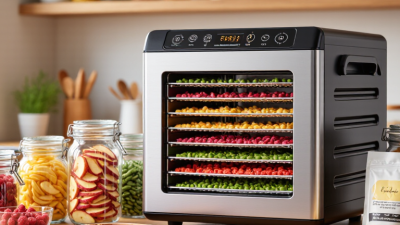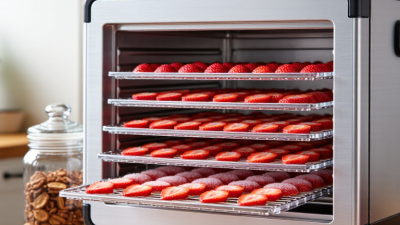
Choosing a Home Freeze Dryer in China takes more than comparing prices or attractive product photos. Buyers need to understand how each machine performs during real batches, from freezing evenly to removing moisture consistently. Small details matter: tray dimensions, condenser capacity, vacuum-pump options, control settings, and the time required for a typical cycle. A clear specification sheet helps, but it cannot answer every practical question.
This guide examines Chinese manufacturers through criteria that matter to household users and small-scale producers. It considers product range, manufacturing experience, quality-control procedures, technical documentation, customization, and access to spare parts. Manufacturer status also deserves a closer look. Some suppliers operate production facilities; others may primarily coordinate sales or sourcing. Ask for recent product manuals, warranty terms, test records, and a live demonstration when possible. Look closely. Reliable comparisons should distinguish verified information from claims that still need confirmation. No single factory will suit every buyer, and published specifications may not reflect performance with every food or recipe. That uncertainty is worth acknowledging. The following overview offers a practical starting point for identifying promising manufacturers, asking sharper questions, and deciding which equipment deserves a closer technical review.

A home freeze dryer relies on water’s phase behavior, not merely on a cold chamber. NIST reference data place water’s triple point at 0.01°C and approximately 611.657 Pa. Below this pressure, ice can turn directly into vapor without first becoming liquid. That change is sublimation. A useful benchmark.
For manufacturers in China, this physical boundary helps buyers interpret pressure specifications and process claims. A chamber reading below 611 Pa supports sublimation, but it does not prove even drying or reliable results. Product thickness, ice load, shelf temperature, and vapor removal all matter. NIST data define the reference point; they do not prescribe one operating pressure for every food. Practical settings vary. Look for vacuum readings under load, temperature uniformity data, and clear test methods. A tray of sliced strawberries may dry differently from a dense block, even in the same machine. That detail is easy to underestimate. It deserves scrutiny. A pressure gauge can also drift, so calibration records and repeatable batch tests strengthen confidence more than a headline specification alone.
| Evaluation Dimension | Verified Fact or Specification to Check | Why It Matters for a Home Freeze Dryer |
|---|---|---|
| Water’s triple point | Water’s triple point is approximately 0.01°C and 611.657 Pa absolute pressure (about 611 Pa). | This is the thermodynamic reference for distinguishing ice, liquid water, and water vapor. It is not, by itself, a complete operating setting. |
| Chamber pressure | During primary drying, chamber pressure is generally maintained below water’s triple-point pressure; actual process pressure depends on the product and equipment. | Check that pressure is reported as absolute pressure and that the stated operating range and measurement method are documented. |
| Primary drying | Frozen water is removed mainly by sublimation: ice changes directly into water vapor when heat is supplied under suitable low-pressure conditions. | A useful specification should explain how the unit controls heat input and removes water vapor, rather than describing vacuum alone as sufficient. |
| Secondary drying | After most visible ice has been removed, additional drying can reduce residual moisture by desorbing water from the product. | Controls and instructions for the final drying stage can affect product storage stability and consistency. |
| Cold trap or condenser | A freeze dryer typically captures water vapor on a colder condenser surface, where it re-freezes as ice. | Compare the stated ice-collection capacity, defrost method, and cleaning procedure with the intended batch size and use frequency. |
| Vacuum pump and seals | A vacuum pump lowers chamber pressure; chamber seals and connections must limit air leakage for the system to maintain vacuum. | Look for pump requirements, maintenance instructions, replacement-part availability, and a stated procedure for checking leaks. |
| Batch capacity | Useful capacity information includes tray or shelf area, recommended loading, and the manufacturer’s stated maximum batch load. | Maximum load alone may not predict drying time; food type, piece thickness, water content, and loading arrangement also matter. |
| Temperature monitoring | Product temperature and shelf temperature are different measurements; the product’s temperature changes during freezing and drying. | Check which temperatures are measured, how they are displayed, and whether operating guidance accounts for different foods. |
| Cycle time and energy use | Cycle duration and electricity consumption vary with the load, starting temperature, food composition, and operating conditions. | Treat published figures as condition-dependent; ask what test load and cycle were used when comparing specifications. |
| Manufacturer documentation | Review the rated electrical supply, pressure range, operating instructions, safety information, warranty terms, and service arrangements. | Clear, testable specifications and accessible support make it easier to assess suitability without relying on unsupported performance claims. |
Note: The 0.01°C and approximately 611 Pa values describe water’s triple point. They are scientific reference values, not a universal temperature-and-pressure recipe for every food or freeze dryer.

When comparing home freeze dryer manufacturers in China, start with shelf area, not the largest batch figure in a brochure. Shelf area, usually stated in square feet or square metres, indicates how much tray space is available. Ask whether the quoted figure covers every shelf and whether shelf spacing can change. A large area may still be awkward for thick fruit slices or taller containers. Details matter.
Batch capacity and load in kilograms are related, but they are not interchangeable. Confirm whether a stated load refers to fresh food, frozen food, or dry product; each can produce a different number. Ask for a typical batch example, such as sliced apples or cooked vegetables, and check the recommended loading depth. Too much material can slow drying and leave uneven results. It happens.
Reliable comparisons use the same basis for every machine: usable shelf area, recommended kilograms per batch, and any stated maximum load. Request a written specification, plus operating conditions behind the figures. Check whether capacity assumes a particular food moisture level or preparation method. These points are easy to overlook, even by careful buyers. A manufacturer that explains limits clearly is more useful than one offering a single impressive number. Still, published capacity may not match every kitchen’s real batches. Test with your own foods when possible, and treat estimates as estimates.
A comparison of representative household-scale configurations by shelf area, batch capacity, and maximum load
These rounded compact, mid-size, and large configuration points are illustrative comparisons, not a manufacturer ranking or verified specifications for particular models. Actual shelf area and usable load vary by model and product; check each machine’s technical datasheet before comparing.
When comparing home freeze dryer manufacturers in China, look beyond advertised capacity. A condenser temperature of −40°C is a useful reference, but it does not prove that a unit will perform consistently. Ask how the temperature is measured, how quickly the condenser reaches it, and whether the figure was recorded during a real drying cycle. Small details matter. A sensor reading from an empty, already-cold machine may not represent performance with a full chamber.
Chamber vacuum deserves equal attention. Check the stated pressure and its units, such as pascals or millibars; lower absolute pressure means a stronger vacuum. Ask where the pressure sensor sits and how long the machine takes to reach its target. A reading taken near the pump may differ from conditions inside the chamber. This is easy to overlook.
Request test records showing condenser temperature and chamber pressure over time, ideally with a realistic load. Ask about leak testing, pump compatibility, and service support, too. Specs on a brochure can look reassuring, yet leave out the conditions behind the numbers. I would not treat one successful test as proof of repeatability. That caution is reasonable.
When comparing home freeze dryer manufacturers in China, ask for measured performance data, not just advertised capacity. Energy consumption should be recorded in kilowatt-hours per completed batch, with batch weight and product type stated. A reading without those details is hard to compare. Small batches can use more energy per kilogram.
Cycle time depends on moisture, slice thickness, loading, and final dryness. Request test records for a representative food load, including freezing, drying, and completion times. Then repeat the test with your own product if possible. One neat factory run is not enough. Real batches vary, and a specification sheet may not show that.
Check the control system’s exported data. It should log shelf temperature, product temperature, vacuum pressure, alarms, and timestamps throughout the cycle. Ask whether operators can review trends and retrieve records after a fault. Controls matter when results drift. Tips: Request raw logs, energy-meter readings, and repeat-test results. Compare identical loads, and check that sensors have current calibration records. A clear explanation of test conditions is more useful than a polished performance claim.
A credible ranking of Chinese home freeze-dryer manufacturers should start with verifiable certifications, not polished product photos. The ISO Survey 2022 identifies China as the country with the largest number of ISO 9001 certificates. Still, a certificate alone does not prove that a factory’s quality system covers freeze-dryer design, assembly, and final testing. Check the issuing body, certificate scope, and expiry date. Ask for inspection records and a sample batch report. Details matter.
Production capacity comes next. UNIDO’s International Yearbook of Industrial Statistics describes China as the world’s largest manufacturing producer, but national scale does not confirm any individual supplier’s output. Request the actual annual production figure, current lead time, and available parts inventory. Compare those figures with chamber size, shelf area, and stated batch capacity. Capacity can mislead. A large catalogue is not evidence of steady delivery.
After-sales support should affect the ranking as much as factory size. Ask how quickly technicians respond, whether remote troubleshooting is available, and which spare parts are stocked locally. Request written warranty terms and a service contact before ordering. These checks are less impressive than a showroom demonstration, but more useful when a vacuum pump needs attention. Public data rarely verifies service quality, so treat unsupported response-time promises cautiously.